
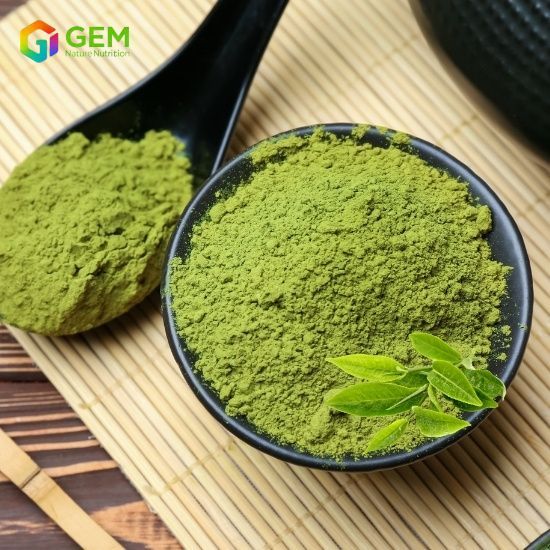
Matcha
Matcha bulk ingredient for B2B formulation sourcing. Request a specification sheet, batch COA, and documentation from GEM.
| 规格名称 | 规格值 |
|---|---|
| Plant Used | Green leaf |
| Plant Origin | China |
| Shelf Life | 24months |
| Packing | 20kg/drum |
| Stock | Regular storage |
Matcha
Matcha is an ultra-fine green tea powder (Camellia sinensis) produced through shaded cultivation, steam-fixing, and stone grinding. GEM supplies grades A through 7A for beverage, bakery, ceremonial, and natural colorant applications.
Matcha Quick View
Botanical Source: Camellia Sinensis
Grade: A; AA; AAA; 4A; 5A; 6A; 7A. etc.
Features: Natural green color; The fresh aroma of tea; Super fine powder; Natural colorant.
Certificate: ISO22000; ISO9001; FSSC22000; BRC; Kosher; Halal
Annual Production Capacity: More than 500 tons
Application: Food&beverage; Cakes&coffee; Powder drinks&Icecream; Snacks&Pastry
Excipient: No
Storage: Keep in cool & dry place. Stay away from strong light and heat.
Last updated: June 21, 2026
What Is Matcha?
Matcha is an ultra-fine powder produced by the deep processing of tea leaves, providing a higher nutritional and health value than traditional teas. It preserves all the nutrients and pharmacological compounds of green tea such as its dietary fiber and active polysaccharides.
Matcha powder contains over 500 distinct components, including the five major nutrients: proteins, lipids, carbohydrates, vitamins, and minerals. It is rich in essential nutrients and trace elements required by the human body.
- Bioactive Compounds: Tea polyphenols, caffeine, free amino acids, chlorophyll, and aromatic substances.
- Structural Nutrients: Proteins, cellulose, and polysaccharides.
- Vitamins: A comprehensive profile including Vitamins C, A, $B_1$, $B_2$, $B_3$, $B_5$, $B_6$, E, K, and H (Biotin).
- Trace Elements: Over 30 essential minerals including Potassium ($K$), Calcium ($Ca$), Magnesium ($Mg$), Iron ($Fe$), Sodium ($Na$), Zinc ($Zn$), Selenium ($Se$), and Fluorine ($F$).
Matcha Powder 5A Specification
| Test Item | Specification | Test Methods |
|---|---|---|
| Appearance | Bright Green fine powder | Organ |
| Aroma&Taste | With fresh tea leaf note taste and sea weed odour | Organ |
| Identification | Positive by TLC | TLC |
| Particle size | 95% pass 200 mesh; 65% pass1000 mesh | Sieve Machine |
| Bulk Density, g/L | 250-350g/L | GB/T18798.5-2013 |
| Loss on drying, % | ≤ 6.0% | 3 hours at 105℃ |
| Ash % | ≤ 8.0% | GB 5009.3-2016 |
| Polyphenols, % | ≥ 8.0% | GB/T8313-2018 |
| Catechins | Reported | GB/T8313-2018 |
| L-theanine | Reported | HPLC |
| Caffeine, % | ≥ 2% | GB/T8313-2018 |
| Lead(Pb) | ≤ 3ppm | GB5009.12-2017 |
| Arsenic (As) | ≤ 2ppm | GB5009.11-2014 |
| Mercury(Hg) | ≤ 0.1ppm | GB5009.17-2014 |
| Cadmium(Cd) | ≤ 1ppm | GB5009.15-2014 |
| Total plate count | ≤ 10,000cfu/g | GB 4789.2-2016 |
| E-coli | Absent | ISO 16649-2-2001 |
| Mold & Yeast | ≤ 300cfu/g | GB 4789.15 |
| Salmonella | Absent/10g | GB 4789.4 |
Features of Different Grade of Matcha
| Grade | Features | Recommand Application |
|---|---|---|
| A | Green color with a profile featuring bitterness, grassy notes, and a creamy mouthfeel accompanied by a distinct tea aroma. It offers a highly competitive price with the best value-to-cost ratio. | Food, cake, noodles, bread, biscuit, jelly, etc. |
| AA | A deep green color with milder bitterness and astringency compared to Grade A. It features a delicate seaweed note and a clean tea aroma. | Food, milk&coffee, bakery, chocolate. etc |
| AAA | A deep forest green color and a pronounced seaweed note. It offers a rich, creamy mouthfeel with minimal bitterness and astringency. | Food, powder drinks, beveages, ice cream, mask, etc. |
| 4A; 5A; 6A; 7A | A vibrant green color and a seaweed note; no bitterness, superfine powder, aromatic tea fragrance. | Suitable for high-end matcha products; Ceremonial grade. |
| Customization | Can be customized based on customer's special request. | - |
Main Applications of Matcha Powder
Matcha preserves the vibrant natural green color, potent antioxidants, and pharmacological benefits of green tea more effectively than any other form. Due to its unique processing, matcha powder offers exceptional surface adsorption, fragrance retention, and suspension stability, making it a popular ingredient for manufacturers and consumers.
Beyond traditional tea preparation, matcha is a premium nutritional fortifier and natural food coloring used across various industries:
- Beverages: Essential for both liquid and solid (powdered) drinks, including lattes and smoothies.
- Confectionery & Sweets: Widely used in candies, jellies, and premium chocolates.
- Bakery & Frozen Foods: A staple for matcha-flavored baked goods and green tea ice cream.
- Health & Beauty: Integrated into high-end skincare, dietary supplements, and health products.
- Grain Products: Used to enhance the nutritional profile of noodles, bread, and other grain-based staples.
How Does the Matcha Produced?
- Shaded for half a month: This is the crucial "shading process" that boosts chlorophyll and L-theanine levels.
- Fresh leaf harvest: Farmer wiil pick of young, high-quality tea flushes.
- Steam-fixing: In tea production, "fixing" (or shashou) stops oxidation. Matcha specifically uses steam (rather than pan-firing) to preserve its vibrant green color.
- Fine grinding: Milling process that creates the ultra-fine powder texture.
FAQ
1. Why is there "shading process" for tea leaves before picking?
The quality of matcha powder depends entirely on its raw material. By shading the tea plants before harvest, the leaves produce much higher concentrations of amino acids (specifically L-theanine), proteins, and chlorophyll.
This specialized cultivation process results in several key benefits:
- Vibrant Emerald Hue: Increased chlorophyll levels provide that iconic bright green color.
- Rich Umami Flavor: Higher amino acids create a fresh, mellow, and savory taste.
- Reduced Bitterness: Lower caffeine and catechin levels ensure a smooth mouthfeel without the harsh astringency found in regular green tea.
2. How is your packing?
We do have lots of packing style for your choice: Pouch: 100g; 200g; 1kg; 5kg Carton: 1kg; 2kg; 2,5kg; 3kg; 5kg; 10kg; 12.5kg; 20kg; 25kg Drum: 25kg
3. What is Ceremonial Classic/ Ceremonial Grade?
Ceremonial Grade is the pinnacle of green tea, crafted exclusively from the youngest, most tender tea buds and leaves. Every step of the production process is executed with artisanal precision to ensure a vibrant emerald color, a velvety-smooth texture, and an unparalleled freshness.
Frequently Asked Questions
1. Why is there a shading process before harvest?
Shading boosts L-theanine, chlorophyll, and amino acids while reducing bitterness — producing matcha's signature emerald color and umami flavor.
2. Which grade should I choose for bakery vs. ceremonial use?
Grade A offers the best value for food and bakery. Grades 4A–7A suit ceremonial and premium beverage applications with minimal bitterness.
3. What packing options are available?
Pouch: 100g–5kg · Carton: 1kg–25kg · Drum: 25kg
4. Is matcha heat-stable in baking?
Matcha retains color and polyphenols in most bakery processes. Confirm color stability for your specific oven temperature and formula.
5. What quality documents do you provide?
We provide Specification Sheet, COA, and MSDS upon request. ISO, FSSC22000, Kosher, and Halal certificates are available for qualified orders.