
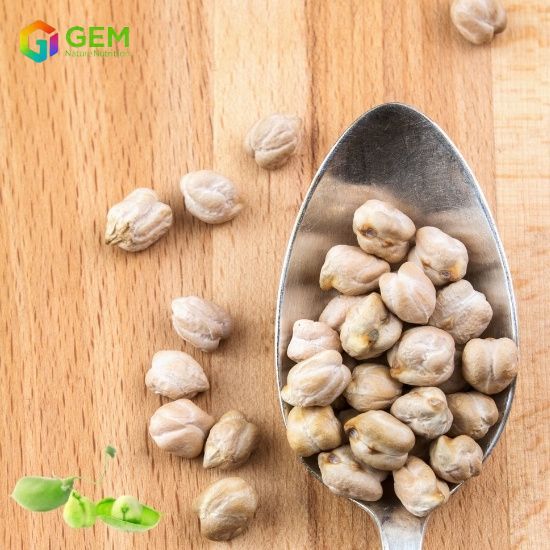
Chickpea protein
Chickpea protein bulk ingredient for B2B formulation sourcing. Request a specification sheet, batch COA, and documentation from GEM.
| 规格名称 | 规格值 |
|---|---|
| Appearance | Light yellow fine powder |
| Protein Content | 70%; 80% |
| Mesh | 100 mesh |
| Shelf Life | 24 months |
| Main Function | Muscle and tissue health support |
Chickpea Protein
Chickpea protein (Cicer arietinum) is an allergen-friendly plant isolate at 70% and 80% protein (dry basis). GEM offers Type A (high viscosity, emulsification) and Type B (low viscosity, fast dispersing) at 100 mesh for beverages, plant-based meats, and snack formulations.
Chickpea Protein Quick View
Specification: 70%, 80%; Type A & Type B
Mesh: 100 mesh
Certificate: ISO22000; ISO14001; ISO9001; FSSC22000; BRC; Kosher; Halal
Annual Production Capacity: 100+ tons
Shelf Life: 24 months
Features: All 9 essential amino acids; Soy-free; Gluten-free; Good solubility; Clean taste
Application: Sports nutrition; Beverages; Plant-based meats; Protein bars; Dairy alternatives; Sauces
Last updated: June 21, 2026
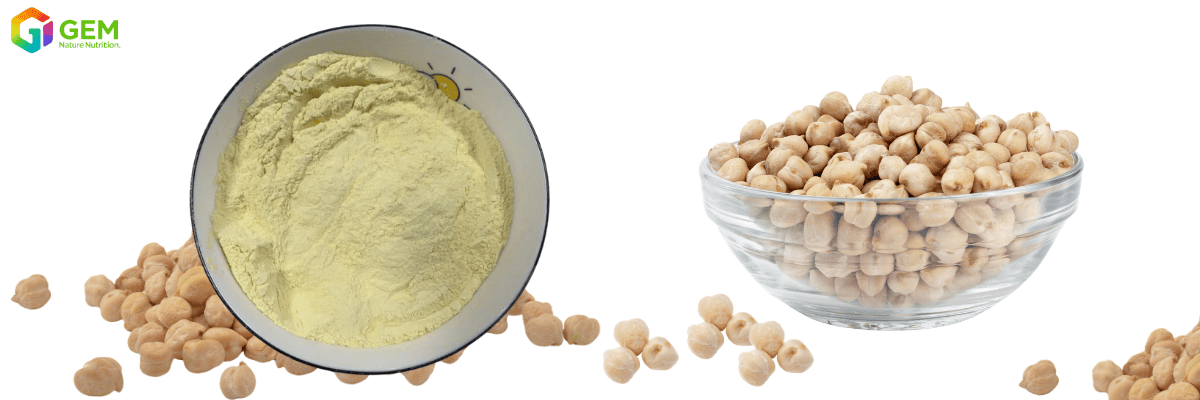
What is Chickpea Protein?
Are you seeking a versatile, allergen-friendly alternative to soy or whey? Chickpea Protein (Cicer arietinum Linn) is rapidly becoming the preferred choice for the next generation of plant-based nutrition. Sourced from clean, pollution-free crops, our chickpea protein is designed for high-performance food and supplement formulations.
Chickpeas are naturally packed with six essential nutrient groups, including high-quality plant proteins, complex carbohydrates, and crude fiber. Our advanced extraction technology ensures that we isolate the protein while preserving the bean's inherent nutritional integrity.
Superior Amino Acid Profile
Unlike many plant sources, chickpea protein contains all 9 essential amino acids required by the human body. It is particularly rich in lysine, an amino acid often lacking in other cereal-based proteins.
The Clean Alternative to Soy
For manufacturers looking to avoid "controversial" ingredients, chickpea protein offers a major advantage:
No Soy Isoflavones: It provides a high-protein punch without the phytoestrogens found in soybeans.
Hypoallergenic & Gluten-Free: suitable for those with lactose or gluten intolerances.
Chickpea Protein 80% Specification:
| Test Item | Specification | Test Method |
|---|---|---|
| Appearance | Light yellow powder | Q/YST 0012S-2020 |
| Protein(dry basis),g/100g | ≥80% | GB 5009.5-2016 |
| Moisture, g/100g | ≤10% | GB 5009.3-2016 |
| Ash(dry basis),g/100g | ≤8% | GB 5009.4-2016 |
| PH | 6.0-8.0 | PH Meter |
| Gluten | <20ppm | Elisa |
| Soy | <20ppm | Elisa |
| Lead,mg/kg | ≤1.0mg/kg | BS EN ISO 17294-2 2016 mod |
| Arsenic,mg/kg | ≤0.5mg/kg | BS EN ISO 17294-2 2016 mod |
| Mercury,mg/kg | ≤0.1mg/kg | BS EN ISO 17294-2 2016 mod |
| Ochratoxin | Negative | GB 5009.96-2016 |
| Aflatoxins | Negative | GB 5009.22-2016 |
| Total Plate Count | ≤10000CFU/g | GB 4789.2-2022 |
| Yeast & Molds | ≤100CFU/g | GB 4789.15-2016 |
| Coliforms | ≤30CFU/g | GB 4789.3-2016 |
| Salmonella | Negative | GB 4789.4-2016 |
| E. Coli | Negative | GB 4789.38-2012 |
| Staphylococcus aureus | Negative | GB4789.10-2016 |
Amino Acid Testing Data:
| Item | Results | Unit |
|---|---|---|
| Aspartic acid | 8.78 | g/100g |
| Threonine | 2.65 | g/100g |
| Serine | 4.04 | g/100g |
| Glutamic acid | 12.61 | g/100g |
| Glycine | 2.92 | g/100g |
| Alanine | 3.24 | g/100g |
| Valine | 3.58 | g/100g |
| Methionine | 1.56 | g/100g |
| Isoleucine | 3.65 | g/100g |
| Leucine | 6.53 | g/100g |
| Phenylalanine | 2.59 | g/100g |
| Lysine | 4.96 | g/100g |
| Histidine | 5.07 | g/100g |
| Arginine | 1.95 | g/100g |
| Proline | 6.91 | g/100g |
| Tryptophan | 3.1 | g/100g |
| Tyrosine | 1.51 | g/100g |
| Cystine | 0.65 | g/100g |
| Total 16 | 74.17 | g/100g |
| Total 18 | 76.3 | g/100g |
Nutrition Data:
| Nutritional information | Results | Unit |
|---|---|---|
| Energy | 1955 | kJ/100g |
| Dietary Fiber | 4.73 | g/100g |
| Total Carbohydrates | 3.04 | g/100g |
| Protein | 81.2 | g/100g |
| Fat | 7.6 | g/100g |
| Na(Sodium) | 10200 | mg/kg |
Chickpea Protein Production Process:
Raw material(chickpea) checking-Raw material storage-Selecting and removing impurities-Soaking-Smashing-Separation-rotein separation and purifying-Flashing sterilization-Sieving and drying-Packing-Metal detection-Finished products.
Why Our Chickpea Protein Stands Out: Versatility Meets Functionality?
While the standard market offering is often limited to 80% concentration, we provide a more strategic range of solutions designed for seamless formulation. Here is how our chickpea protein portfolio delivers superior value:
1. Tailored Protein Concentrations (70% & 80%)
We understand that a "one-size-fits-all" protein concentration doesn't work for every recipe.
80% Chickpea Protein: The industry standard for high-protein enrichment.
70% Chickpea Protein: Specifically developed for easier application. This version offers better integration in complex formulas where texture and cost-efficiency are as important as protein content.
2. Specialized Functional Types: Type A vs. Type B
We have engineered two distinct types of chickpea protein to solve specific manufacturing challenges.
| Feature | Type A | Type B |
|---|---|---|
| Key Characteristics | High viscosity, superior emulsification, and strong gelling properties. | Low viscosity and rapid, fast dispersibility. |
| Applications | Beverages, Pasta, Plant-based Meats, Dairy Alternatives, and Sauces. | Powdered Drink Mixes, Snacks, Energy Bars, and Crisps. |
Frequently Asked Questions
1. What is the difference between Type A and Type B chickpea protein?
Type A offers high viscosity, emulsification, and gelling — ideal for beverages, pasta, and plant-based meats. Type B disperses rapidly with low viscosity — suited to drink mixes, bars, and crisps.
2. Should I choose 70% or 80% chickpea protein?
80% is the industry standard for high-protein enrichment. 70% integrates more easily in complex formulas where texture and cost-efficiency matter.
3. Is chickpea protein soy-free?
Yes. Chickpea protein contains no soy isoflavones and is naturally gluten-free and hypoallergenic — a clean alternative to soy and whey.
4. Does chickpea protein contain all essential amino acids?
Yes. Chickpea protein provides all 9 essential amino acids, with notable lysine content often lacking in cereal proteins.
5. What applications suit chickpea protein best?
Plant-based meats, dairy alternatives, protein bars, sports nutrition, and low-GI wellness formulas benefit from its amino acid profile and functional types.
6. What B2B documentation is available?
Specification Sheet, COA, MSDS, plus Kosher, Halal, and ISO/FSSC certificates for qualified orders.