
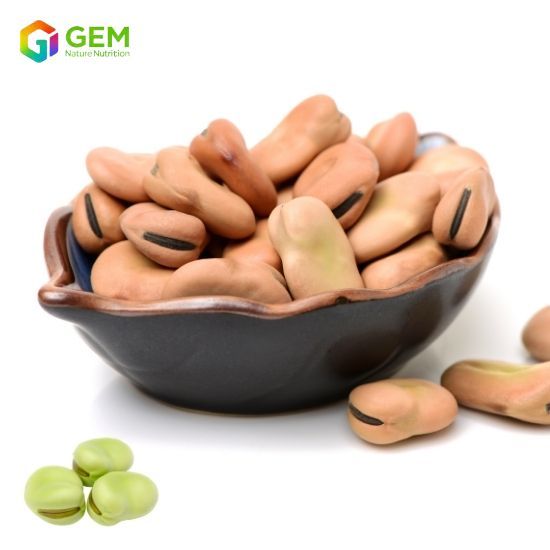
Favabean protein
Favabean protein bulk ingredient for B2B formulation sourcing. Specification: 90% protein; 100 mesh. Request a batch COA and documentation from GEM.
| 规格名称 | 规格值 |
|---|---|
| Appearance | Light yellow fine powder |
| Protein Content | 90% |
| Mesh | 100 mesh |
| Shelf Life | 24 months |
| Main Function | Skeletal development and protein supplement |
Favabean Protein
Favabean protein (broad bean, Vicia faba) is a high-purity plant isolate at ≥90% protein on dry basis. GEM supplies 100 mesh powder rich in arginine, glutamic acid, and BCAAs for sports nutrition, meat alternatives, and sustainable protein platforms.
Favabean Protein Quick View
Specification: 90%
Mesh: 100 mesh
Certificate: ISO22000; ISO14001; ISO9001; FSSC22000; BRC; Kosher; Halal
Annual Production Capacity: 100+ tons
Shelf Life: 24 months
Features: Non-GMO; Allergen free; High BCAAs; Good solubility; Clean taste
Application: Sports nutrition; Protein bars; Meat alternatives; Food & beverages; Dietary supplements
Last updated: June 21, 2026
What is Favabean Protein?
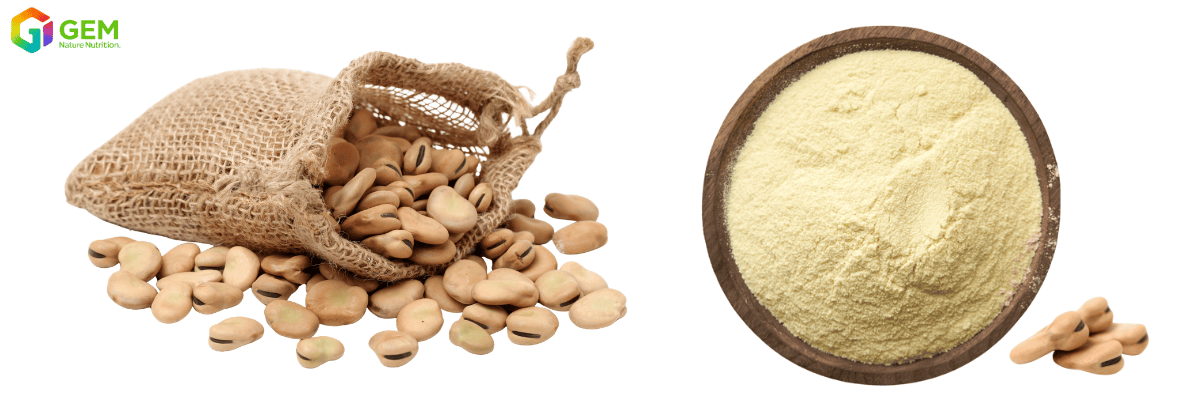
Fava Bean Protein (also known as Broad Bean protein) is rapidly becoming a preferred alternative to soy and pea protein in the global health market. Sourced from top-quality Vicia faba seeds, our extraction process concentrates the bean’s natural power into a high-purity protein isolate.
Exceptional Nutritional Profile
While raw fava beans contain approximately 25% protein, our advanced processing brings the protein content up to 90%. This isolate retains the vital nutrients of the whole bean while offering a concentrated source of:
Essential Amino Acids: Perfectly balanced to meet human physiological needs.
Key Concentrations: Exceptionally high in Arginine, Glutamic Acid, and Branched-Chain Amino Acids (BCAAs) for muscle recovery.
Vital Micronutrients: Naturally rich in Vitamin B1, B6, and essential minerals including Iron, Potassium, and Magnesium.
Favabean Protein 90% Specification:
| Test Item | Specification | Test Method |
|---|---|---|
| Appearance | Light yellow powder | Q/YST 0012S-2020 |
| Protein(dry basis),g/100g | ≥90% | GB 5009.5-2016 |
| Moisture, g/100g | ≤10% | GB 5009.3-2016 |
| Ash(dry basis),g/100g | ≤7% | GB 5009.4-2016 |
| PH | 6.0-8.0 | PH Meter |
| Gluten | <20ppm | Elisa |
| Soy | <20ppm | Elisa |
| Lead,mg/kg | ≤1.0mg/kg | BS EN ISO 17294-2 2016 mod |
| Arsenic,mg/kg | ≤0.5mg/kg | BS EN ISO 17294-2 2016 mod |
| Mercury,mg/kg | ≤0.1mg/kg | BS EN ISO 17294-2 2016 mod |
| Ochratoxin | Negative | GB 5009.96-2016 |
| Total Plate Count | ≤10000CFU/g | GB 4789.2-2022 |
| Yeast & Molds | ≤100CFU/g | GB 4789.15-2016 |
| Coliforms | ≤30CFU/g | GB 4789.3-2016 |
| Salmonella | Negative | GB 4789.4-2016 |
| E. Coli | Negative | GB 4789.38-2012 |
| Staphylococcus aureus | Negative | GB4789.10-2016 |
Amino Acid Testing Data
| Item | Results | Unit |
|---|---|---|
| Aspartic acid | 10.21 | g/100g |
| Threonine | 3.41 | g/100g |
| Serine | 4.9 | g/100g |
| Glutamic acid | 16.75 | g/100g |
| Glycine | 3.89 | g/100g |
| Alanine | 4.16 | g/100g |
| Valine | 4.67 | g/100g |
| Methionine | 0.96 | g/100g |
| Isoleucine | 4.6 | g/100g |
| Leucine | 8.74 | g/100g |
| Tyrosine | 3.83 | g/100g |
| Phenylalanine | 4.65 | g/100g |
| Lysine | 6.25 | g/100g |
| Histidine | 2.49 | g/100g |
| Arginine | 9.16 | g/100g |
| Proline | 4.29 | g/100g |
| Cystine | 1.12 | g/100g |
| Tryptophan | 0.85 | g/100g |
| Total 16 | 92.96 | g/100g |
| Total 18 | 94.94 | g/100g |
Nutrition Data for Favabean(Broad Bean) Protein 90%.
| Nutritional information | Results | Unit |
|---|---|---|
| Energy | 1491 | kJ/100g |
| Dietary Fiber | 0.396 | g/100g |
| Total Carbohydrates | 2.0 | g/100g |
| Protein | 92.5 | g/100g |
| Fat | < | g/100g |
| Moisture | 7.53 | g/100g |
| Na(Sodium) | 8900 | mg/kg |
| Remark: Amino acid and nutrition values are typical, not to be construed as specifications. |
Vicia faba protein Production Process:
- Favabean cleaning: put the raw material into a large container and add sufficient clean water. Stir well to remove impurities, dirt, and surface contaminants.
- Soaking: after cleaning, the favabeans are soaked in clean water for a period of typically 6-10 hours. This process softens the cell walls of the favabeans, facilitating the subsequent extraction process.
- Grinding: after soaking, grind the beans into a fine paste.
- Precipitation and separation: allow the suspension to stand and let the protein to precipitate out. Then separate the supernatant from the precipitate, which can be achieved through centrifugation or filtration.
- Second separation: to remove impurities and residues.
- Dewatering and drying: Dewater the washed protein precipitate. Subsequently, dry the protein precipitate at an appropriate temperature, then crude favabean protein powder is coming out.
- Sieving and Packaging: Grind the dried broad bean protein precipitate to achieve the desired particle size like 100mesh, and then package and seal it to maintain its freshness and quality.
- Finished products.
Why Choose Fava Bean Protein?
As the plant-based market evolves, Fava Bean protein stands out for its "Triple-Threat" advantage:
- Allergen-Free & Non-GMO: Unlike soy, fava beans are not among the major allergens, making them ideal for "Clean Label" product development.
- Low-Fat & High-Fiber: Supports metabolic regulation and digestive health, catering to weight-conscious consumers and fitness enthusiasts.
- Superior Clean Taste: It offers a more neutral flavor profile compared to pea or rice protein, requiring less masking in your final formulation.
Versatile Industrial Applications
Our Fava Bean protein is a nice functional ingredient fit for vegetarians, vegans, and athletes. Its excellent solubility and emulsification properties make it a perfect fit for:
- Dairy Alternatives (Milk, Yogurt, and Cheese)
- Performance Nutrition (Protein Powders and Energy Bars)
- Plant-Based Meats (Burgers and Sausages)
- Functional Snacks (Baked goods and crisps)
The Core Advantages of Fava Bean Protein for Human Health?
Fava bean protein is not just a sustainable plant-based alternative; it is a nutritional ingredients with specific physiological benefits. Here are the four primary advantages of incorporating fava bean protein into a daily diet:
For those focusing on body composition and weight control, fava bean protein offers a metabolic edge.
3. Reliable and Sustainable Energy Source
While carbohydrates are the body's primary fuel, protein serves as a critical secondary energy reserve.
Fitness Compatibility: It is ideal for low-carb or ketogenic formulations where protein-driven energy is essential.
4. Regulation of Essential Physiological Functions
Beyond muscle building, fava bean protein is a fundamental building block for the body’s internal systems:
Hormonal Balance: It participates in the synthesis of protein-based hormones that regulate metabolism, growth, and reproduction.
pH Homeostasis: Protein acts as a buffer, helping to maintain the delicate acid-base balance in blood and body fluids.
Frequently Asked Questions
1. Why choose fava bean protein over pea or soy?
Fava bean protein offers 90% concentration with high arginine and BCAA levels, without soy isoflavones — supporting sustainable, allergen-friendly formulations.
2. What is the typical protein content?
GEM favabean protein is standardized at ≥90% protein on dry basis via advanced isolation from Vicia faba seeds.
4. Does it contain common allergens?
Our favabean protein is Non-GMO and tested allergen free (gluten, soy) per specification — confirm full allergen statements for your label.
5. What mesh size is standard?
100 mesh is the standard grade. Contact GEM for custom particle size requirements.
6. What quality documents can B2B customers request?
Specification Sheet, COA, MSDS, and Kosher, Halal, ISO/FSSC certificates for qualified commercial orders.