
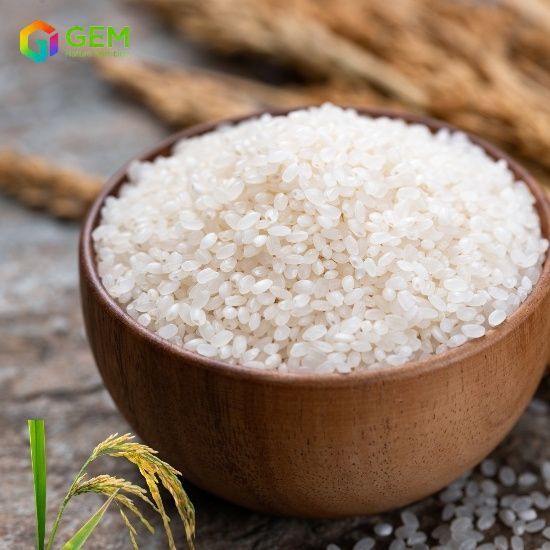
Rice protein powder
Rice protein powder bulk ingredient for B2B formulation sourcing. Request a specification sheet, batch COA, and documentation from GEM.
| 规格名称 | 规格值 |
|---|---|
| Appearance | White grey fine powder |
| Grade | Food and feed grade available |
| Protein Content | 80%; 85%; 90% (food); 50%; 65% (feed) |
| Mesh | 300 mesh; 600 mesh; 1000 mesh |
| Shelf Life | 24 months |
Rice Protein
Rice protein powder is extracted from Non-GMO grain rice sourced from Northeast China and Southeast Asia. GEM supplies food-grade 80%, 85%, and 90% and feed-grade 50% and 65% protein with 300, 600, and 1000 mesh options for hypoallergenic sports nutrition and food fortification.
Rice Protein Quick View
Specification: 80%, 85%, 90% (food grade); 50%, 65% (feed grade)
Mesh: 300 mesh; 600 mesh; 1000 mesh
Certificate: ISO22000; ISO14001; ISO9001; FSSC22000; BRC; Kosher; Halal
Annual Production Capacity: 1000+ tons
Shelf Life: 24 months
Features: Non-GMO; Non-ETO; Hypoallergenic; Easy digestibility; >90% biological utilization
Application: Sports nutrition; Dietary supplements; Protein bars; Infant nutrition; Bakery; Cosmetics
Last updated: June 21, 2026
What is Rice Protein?
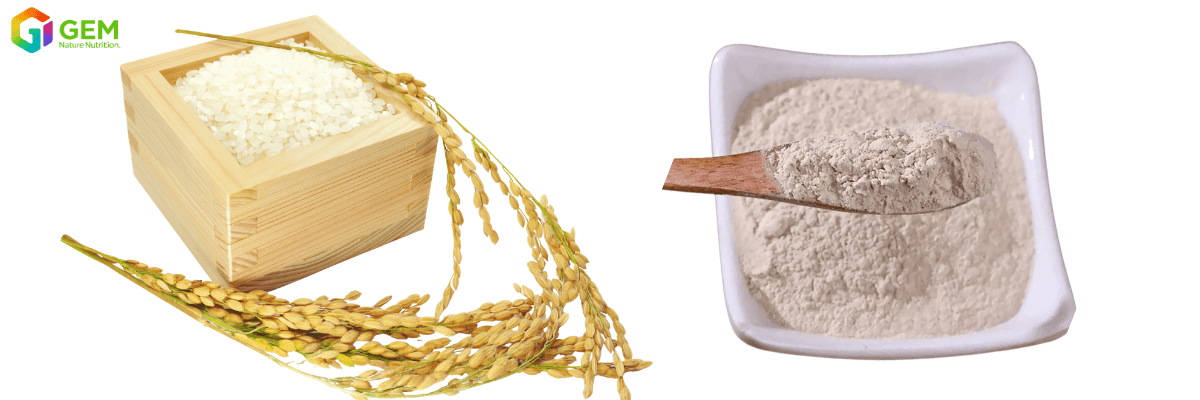
Non-GMO: Are you looking for a clean, hypoallergenic, and highly digestible plant-based protein? Rice protein is extracted from grain rice. Our premium Non-GMO rice is sourced from the fertile regions of Northeast China and Southeast Asia.
Easily Digestible: Rice protein powder is characterized by its low allergenicity, easy digestibility, and high nutritional value. It is widely used in food, health care products, and other fields. Perfect for sensitive digestive systems, from infants to the elderly.
Abundant nutrition: Rice protein is rich in amino acids, especially with a high content of lysine, it is an ideal ingredients for food manufacturing(like plant-based nutritional solution), health supplements and animal nutrition.beany" flavor, making them ideal for protein shakes, bars, and dairy alternatives.
GEM Rice Protein Product Grades: We offer scalable solutions tailored to different industry requirements:
| Product Grade | Protein Content | Primary Applications |
|---|---|---|
| Food grade | 80%, 85%, 90% | Sports nutrition, protein powders, and baked goods. |
| Feed grade | 50%, 65% | Livestock, aquaculture, and pet food. |
Rice Protein 80% Specification:
| Test Item | Specification | Test Method |
|---|---|---|
| Appearance | Off white powder | Visible |
| Taste&Odor | Characteristic | Organ |
| Particle size | 95% pass 300 mesh | Sieve Machine |
| Protein(dry basis),g/100g | ≥80% | GB 5009.5-2016 |
| Moisture, g/100g | ≤8% | GB 5009.3-2016 |
| Fat(dry basis),g/100g | ≤8% | GB 5009.6-2016 |
| Ash(dry basis),g/100g | ≤6% | GB 5009.4-2016 |
| Dietary fiber (dry basis),g/100g | ≤7% | GB 5009.88-2014 |
| Total carbohydrate,g/100g | ≤8% | GB 28050-2011 |
| PH | 5.5-7.0 | PH Meter |
| Bulk density (Non-vibration),g/cm3 | 0.30~0.40g/cm3 | GB/T 20316.2-2006 |
| Melamine,mg/kg | ≤0.1mg/kg | US FDA 4421 |
| Cyanuric acid,mg/kg | ≤0.5mg/kg | FDA LIB No.4421 modified |
| Ochratoxin A,ppb | ≤3ppb | DIN EN 14132-2009 |
| Aflatoxin B1,ppb | ≤2ppb | DIN EN 14123-2008 |
| Aflatoxin B1+B2+G1+G2,ppb | ≤4ppb | DIN EN 14123-2008 |
| Gluten | <20ppm | ESQ-TP-0207 r-BioPharm ELIS |
| Soy | <20ppm | ESQ-TP-0203 Neogen 8410 |
| GMO (Bt63), % | ≤0.01% | Real-time PCR |
| Lead,mg/kg | ≤0.5mg/kg | BS EN ISO 17294-2 2016 mod |
| Cadmium,mg/kg | ≤0.2mg/kg | BS EN ISO 17294-2 2016 mod |
| Arsenic,mg/kg | ≤0.5mg/kg | BS EN ISO 17294-2 2016 mod |
| Mercury,mg/kg | ≤0.05mg/kg | BS EN ISO 17294-2 2016 mod |
| Total Plate Count | ≤5000CFU/g | GB 4789.2-2022 |
| Yeast & Molds | ≤100CFU/g | GB 4789.15-2016 |
| Coliforms | ≤30CFU/g | GB 4789.3-2016 |
| Salmonella | Negative | GB 4789.4-2016 |
| E. Coli | Negative | GB 4789.38-2012 |
| Staphylococcus aureus | Negative | GB4789.10-2016 |
Amino Acid Testing Data in Rice Protein:
| Item | Results | Unit |
|---|---|---|
| Alanine | 4.86 | g/100g |
| Serine | 4.28 | g/100g |
| Leucine | 7.02 | g/100g |
| Cysteine+Cystine | 1.97 | g/100g |
| Aspartic acid | 7.72 | g/100g |
| Isoleucine | 3.53 | g/100g |
| Glycine | 3.76 | g/100g |
| Arginine | 7.78 | g/100g |
| Histidine | 1.99 | g/100g |
| Valine | 5.11 | g/100g |
| Oxyproline | <0.05 | g/100g |
| Proline | 3.89 | g/100g |
| Phe | 4.62 | g/100g |
| Methionine | 2.51 | g/100g |
| Glutamate | 14.2 | g/100g |
| Lysine | 3.03 | g/100g |
| Tyrosine | 5.2 | g/100g |
| Ornithine | <0.01 | g/100g |
| Hydrolyzed amino acid(18 kinds) | 83.66 | g/100g |
| Essential amino acid(9kinds) | 37.189 | g/100g |
Nutrition Testing Value for Rice Protein Powder
| Nutritional information | Results | Unit |
|---|---|---|
| Caloric content | 410 | kcal/100g |
| Total Fat | 6.93 | g/100g |
| Saturated Fat | 1.1 | g/100g |
| Trans Fat | 0.4 | g/100g |
| Dietary Fiber | 0.5 | g/100g |
| Total Carbohydrate | 2.01 | g/100g |
| Sugar | 0 | g/100g |
| Other carbohydrates | 0.3 | g/100g |
| Protein | 80 | g/100g |
| Ca(Calcium) | 1600 | mg/kg |
| P(Phosphorus) | 4710 | mg/kg |
| K(Potassium) | 128 | mg/kg |
| Na(Sodium) | 345 | mg/100g |
Remark: All values typical, not to be construed as specifications.
Test Methods: Amino Acids by AH (AOAC, Most Matrices), AOAC 982.30 mod., LC-UV/VIS Cystine & Methionine (AOAC, Most Matrices), AOAC 994.12 mod., LC-FLD.
Rice Protein Production Process:
Selected rice-Pass magnetic rod-Magnetic separator-Soaking-Pass magnetic rod-Smash fine powder-Mixedmaterials-High temperature liquefaction-First frame separation-Washing protein slag-Second centrifuge separation-Washing protein slag-Instantaneous sterilization-Adjust rice slag slurry-Pass magnetic rod-Third frame separation-Steam drying-Pass magnetic rod-Ball grinder-Pass air current sieve-Measurement packaging-Metal detection-Warehouse storage-Lable&packing.
How to Choose the Right Rice Protein Concentration (80%, 85%, or 90%)?
Selecting the correct protein concentration is essential for balancing product performance and cost-effectiveness. While the physical specifications (solubility, color, and mesh size) remain consistent across our grades, the protein content varies to meet specific formulation goals.
1. 80% Rice Protein: The Industry Standard
The 80% concentration is our most popular choice and the "go-to" for the majority of our global customers.
Best For: Standard food applications, protein bars, and general health supplements.
Why choose it? It offers the best balance between high nutritional value and cost-efficiency, making it ideal for high-volume manufacturing and competitive retail markets.
2. 85% Rice Protein: The Mid-Range Specialist
The 85% concentration serves as a bridge for brands looking to claim a slightly higher protein "punch" on their nutritional labels without the premium cost of an isolate.
Best For: Premium meal replacements and specialized "clean label" formulations.
3. 90% Rice Protein: The Pure Isolate
If your product targets professional athletes or medical-grade nutrition, the 90% concentration (Rice Protein Isolate) is the superior choice.
Best For: Professional sports nutrition, low-carb/keto formulations, and high-purity protein shakes.
Why choose it? It provides the highest protein-to-weight ratio, ensuring your customers get the most concentrated amino acid profile possible in every serving.
Frequently Asked Questions
1. Is rice protein a complete protein?
Rice protein contains all nine essential amino acids and shows >90% biological utilization. It is especially high in methionine and cysteine.
3. Is your rice protein Non-GMO?
Yes. GEM selects Non-GMO rice from Northeast China and Southeast Asia. Non-GMO testing reports are available upon request.
4. Why is rice protein used in infant formula?
Its low allergenicity and easy digestibility make it suitable for sensitive and hypoallergenic infant nutrition versus soy or dairy.
5. How do I choose between 80%, 85%, and 90%?
80% is the industry standard for cost-efficiency. 85% suits premium clean-label lines. 90% isolate targets professional sports and medical-grade nutrition.
6. What quality documents are available?
Specification Sheet, COA, MSDS, and certification copies (Kosher, Halal, ISO/FSSC) for qualified B2B partners.