
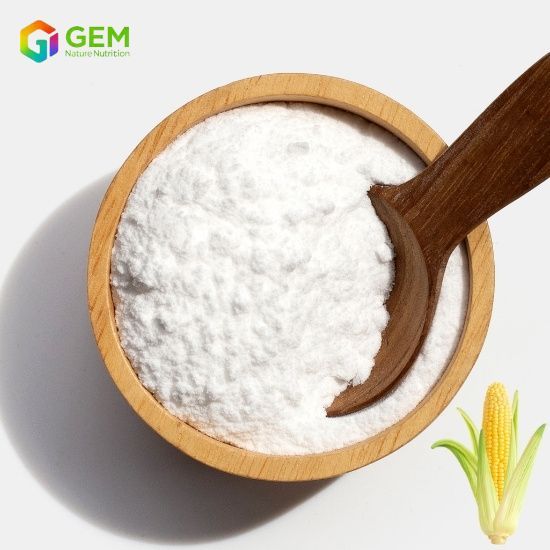
Myo-Inositol
Myo-Inositol bulk ingredient for B2B formulation sourcing. Specification: 97.0%–102% HPLC; Powder. Request a batch COA and documentation from GEM.
| 规格名称 | 规格值 |
|---|---|
| Appearance | White crystalline powder |
| Assay | 97.0%–102% HPLC |
| Forms | Powder |
| Molecular Formula | C₆H₁₂O₆ |
| CAS No. | 87-89-8 |
| Shelf Life | 48 months |
| Stock | Regular storage |
Myo-inositol
Myo-inositol is a naturally occurring cyclitol (CAS 87-89-8) found in plants and animal tissues, and GEM supplies high-purity Myo-inositol powder at 97.0%–102% assay (HPLC) for global B2B customers in the dietary supplement, functional food, pharmaceutical, cosmetic, and feed industries.
Myo-inositol has become one of the most widely specified ingredients in the women's wellness and metabolic support categories. As a B2B supplier, GEM offers consistent, batch-to-batch quality, full certificates, and the documentation that formulators and contract manufacturers need to move products through regulatory review with confidence. This page covers the chemistry, specification, applications, and sourcing of our myo inositol powder, along with practical answers to the questions buyers ask most often.
Whether you are building a standalone inositol supplement or a combination formula, understanding the material's purity, solubility, and stability will help you design better products. The information below is written for procurement managers, product developers, and quality teams who need accurate, supplier-grade detail rather than marketing copy.
Myo-Inositol Quick View
Specification: 97.0%–102% HPLC
Available Forms: Powder
CAS No.: 87-89-8
Molecular Formula: C₆H₁₂O₆
Molecular Weight: 180.16
Certificate: ISO22000; FSSC22000; ISO9001; GMP; Kosher; Halal
Annual Production Capacity: 500+ tons
Shelf Life: 48 months
Features: Water-soluble; Allergen free (soy, gluten); Pesticide free; ETO free; Extended shelf life
Application: Dietary supplements; Women's wellness formulas; Functional foods and beverages; Pharmaceutical ingredients; Cosmetics; Feed nutrition
Packing: 25 kg/drum, 2 layers PE bags inside
Last updated: June 21, 2026
What Is Myo-Inositol?
Myo-Inositol (also called inositol or cyclohexanehexol) is the most abundant naturally occurring stereoisomer of inositol. It appears as a white crystalline powder with high water solubility and a mildly sweet taste. In nature, inositol exists in several cis- and trans-isomeric forms; the biologically active form is cis-1,2,3,5-trans-4,6-cyclohexanehexol.
Myo-Inositol is widely distributed in animal and plant tissues and serves as a precursor for phosphatidylinositol and inositol phosphates — key secondary messengers in cellular signaling. It is commonly formulated in women's wellness, metabolic support, and mood-related supplement categories, often paired with D-Chiro-Inositol in market-standard ratios.
Structurally, inositol is a carbocyclic sugar: a six-membered cyclohexane ring bearing six hydroxyl groups. Although it is chemically related to simple sugars, it is not metabolized as a primary energy source in the same way as glucose. Instead, it functions as a structural and signaling molecule within cell membranes. This dual role — building block and messenger — explains why the ingredient appears across so many formulation categories, from chewable tablets to ready-to-drink beverages.
For buyers, the practical takeaway is straightforward. Myo-inositol is a versatile, well-characterized raw material with a long history of use in food and supplement applications. Selecting a supplier with verified assay, hygiene, and traceability controls is what separates a reliable production run from a costly reformulation.
Source & Chemistry
Myo-Inositol is one of nine possible stereoisomers of inositol, a family of cyclohexanehexol compounds that differ only in the spatial arrangement of their hydroxyl groups. Among these isomers, myo-inositol is by far the most abundant in living systems and the form most relevant to commercial ingredient supply.
Naturally Occurring Sources
In nature, inositol is present in a broad range of foods and biological tissues. Rich natural sources include animal liver, brewer's yeast, lima beans, beef brain and heart, cantaloupe, grapefruit, raisins, wheat germ, peanuts, cabbage, and whole-grain cereals. The molecule is also concentrated in phytic acid (inositol hexaphosphate), the principal storage form of phosphorus in many plant seeds and grains.
Plant-Derived Production
GEM's Myo-Inositol is a plant-derived ingredient. Commercial supply is typically produced from plant-source raw materials through controlled hydrolysis and crystallization steps that isolate the myo form and remove impurities. The result is a high-purity white crystalline powder that meets the 97.0%–102% HPLC assay range described in our specification.
Because the starting material is plant-based, the finished ingredient is well suited to vegan, vegetarian, and allergen-conscious product lines. Our material is manufactured to be allergen free (soy, gluten), pesticide free, and ETO free, supporting clean-label positioning for brands that need to document those attributes for their own customers.
Key Physicochemical Properties
- Molecular formula: C₆H₁₂O₆
- Molecular weight: 180.16 g/mol
- Appearance: White crystalline powder
- Melting point: 224 – 227 °C (USP method)
- Solubility: Freely water soluble
- Taste: Mildly sweet
- Stability: Stable under recommended dry storage; 48-month shelf life
These properties make myo inositol powder easy to handle in standard powder-processing lines, including blending, tableting, encapsulation, and stick-pack filling. Its water solubility also supports beverage and stick-pack applications where rapid dispersion is desirable.
Quality Specification
| Testing Item | Specification | Test Method |
|---|---|---|
| Characters | White crystalline powder | Visual |
| Assay | 97.0%–102% HPLC | HPLC |
| Melting Point | 224 – 227 °C | USP |
| Loss on Drying | ≤ 0.5 % | USP |
| Residue on Ignition | ≤ 0.1 % | USP |
| Total Heavy Metals | ≤ 5 mg/kg | ICP-MS |
| Arsenic (As) | ≤ 0.5 mg/kg | ICP-MS |
| Cadmium (Cd) | ≤ 0.5 mg/kg | ICP-MS |
| Lead (Pb) | ≤ 0.5 mg/kg | ICP-MS |
| Mercury (Hg) | ≤ 0.1 mg/kg | ICP-MS |
| Conductivity | ≤ 20 µs/cm | In-house |
| Chloride | ≤ 0.005 % | USP |
| Sulfate | ≤ 0.006 % | USP |
| Iron | ≤ 0.0005 % | USP |
| Individual Impurities | ≤ 0.3 % | HPLC |
| Total Impurities | ≤ 1.0 % | HPLC |
| Total Plate Count | ≤ 1000 cfu/g | USP |
| Molds and Yeasts | ≤ 100 cfu/g | USP |
| Salmonella | Absence | USP |
| E. Coli | Absence | USP |
| Staphylococcus aureus | Absence | USP |
Remark: Contact GEM to request Specification Sheet, COA, and MSDS for B2B orders.
The specification above reflects the full identity, purity, and microbiology profile that GEM controls on every commercial lot. Assay is confirmed by HPLC, while heavy metals are verified by ICP-MS — a sensitive technique that detects trace elemental contaminants at low concentrations. Microbiological limits follow USP-style absence/presence and count methods appropriate for food- and supplement-grade materials.
Buyers should note the strict limits on chloride, sulfate, and iron, which indicate a refined, low-residue material suitable for sensitive formulations. The low conductivity value (≤ 20 µs/cm) further signals minimal ionic contamination. Together, these parameters support reliable downstream processing and stable finished products.
Application Fields
| Application Field | Details |
|---|---|
| Dietary Supplements | Standalone inositol capsules and powders; women's wellness and metabolic support formulas; often combined with D-Chiro-Inositol |
| Pharmaceutical Industry | Intermediate for inositol tablets, inositol nicotinate, and triglyceride production |
| Functional Foods & Beverages | Fermentation nutrient; bioactive ingredient in fortified foods and beverages |
| Cosmetics & Nutricosmetics | Skin and hair wellness formulations |
| Feed Industry | Nutritional supplement for aquaculture, fur-bearing animals, and specialty feed |
Myo-Inositol's broad applicability is one of its strongest commercial advantages. A single certified SKU can support multiple product lines, reducing the number of supplier relationships and quality files a brand must maintain. In dietary supplements, the ingredient is most often delivered as a powder-filled capsule, a scoopable bulk powder, or a stick pack.
In functional foods and beverages, myo-inositol can act as a fermentation nutrient and a bioactive fortificant. Its mild sweetness means it contributes negligibly to flavor at typical use levels, which simplifies taste-masking work in finished goods. For cosmetics and nutricosmetics, the molecule's role in membrane structure makes it a logical fit for skin and hair wellness formulations.
Brands building adjacent wellness platforms may also consider pairing myo inositol powder with complementary GEM ingredients. For example, inulin provides prebiotic fiber for functional food systems, while pea protein powder supports plant-based nutrition lines that share the same clean-label audience.
Production & Quality
GEM's Myo-Inositol is manufactured under a controlled quality system backed by multiple certifications: ISO22000, FSSC22000, ISO9001, GMP, Kosher, and Halal. These certificates cover food-safety management, quality management, good manufacturing practice, and religious-diet compliance, giving buyers documentation for diverse target markets.
Manufacturing Controls
Production follows validated processes with in-process controls at each stage, from raw-material receipt through final crystallization and packaging. Finished lots are released only after the full specification panel — assay, impurities, heavy metals, and microbiology — is confirmed. The in-house conductivity test adds an extra check on ionic cleanliness that is not always present in generic specifications.
Capacity & Supply Security
With an annual production capacity exceeding 500 tons, GEM supports both trial orders and high-volume recurring supply. The 48-month shelf life allows brand owners and contract manufacturers to hold longer inventory cycles without fear of degradation, smoothing production planning and reducing stockout risk.
Packaging & Documentation
Standard packing is 25 kg per drum with two layers of PE bags inside for moisture protection during transit and storage. Upon request, GEM provides the Specification Sheet, Certificate of Analysis (COA), and Material Safety Data Sheet (MSDS) for each B2B order, along with Kosher, Halal, and ISO/FSSC certificates for qualified commercial accounts.
Buyers evaluating a new supplier should always request a current COA and compare it against their own incoming-quality specifications. GEM welcomes technical due diligence and can support formulation troubleshooting, ratio blending, and documentation review as part of the commercial relationship.
Frequently Asked Questions
2. What is a common Myo-Inositol to D-Chiro-Inositol ratio?
Market formulas frequently use a 40:1 Myo-Inositol to D-Chiro-Inositol ratio. Other ratios such as 3.6:1 and 10:1 are also available. GEM can supply pre-mixed blends upon request.
3. Which foods naturally contain inositol?
Animal liver, brewer's yeast, lima beans, beef brain and heart, cantaloupe, grapefruit, raisins, wheat germ, peanuts, cabbage, and whole-grain cereals contain varying levels of naturally occurring inositol.
4. What quality documents does GEM provide?
We provide Specification Sheet, COA (Certificate of Analysis), and MSDS upon request. Kosher, Halal, and ISO/FSSC certificates are available for qualified commercial orders.
6. Can Myo-Inositol be combined with IP6?
Yes. IP6 (Inositol Hexaphosphate) and Myo-Inositol serve different formulation roles — IP6 as a mineral-binding phytate for food fortification, Myo-Inositol as a free cyclitol for supplement signaling pathways.
7. What is a typical daily serving in finished products?
Industry formulations commonly use 2–4 g per day of Myo-Inositol, often in combination with D-Chiro-Inositol. Final dosage must comply with regulations in your target market.
8. Is Myo-Inositol suitable for vegan and allergen-free product lines?
Yes. GEM's material is plant-derived and manufactured to be allergen free (soy, gluten), pesticide free, and ETO free. These attributes support vegan, vegetarian, and clean-label formulations, though final product claims should be validated against your own recipe and facility controls.
9. What is the physical appearance and taste of the powder?
Myo-Inositol is a white crystalline powder with high water solubility and a mildly sweet taste. It disperses readily in water, which makes it suitable for beverage, stick-pack, and powder-blend applications.
10. What certificates and quality systems does GEM hold?
GEM's Myo-Inositol is supported by ISO22000, FSSC22000, ISO9001, GMP, Kosher, and Halal certificates. These cover food-safety management, quality management, good manufacturing practice, and religious-diet compliance for global B2B customers.
11. What packaging and shelf life does GEM offer?
Standard packing is 25 kg per drum with two layers of PE bags inside for moisture protection. The material carries a 48-month shelf life when stored in a cool, dry place away from direct sunlight, supporting long inventory cycles for brand owners and contract manufacturers.