
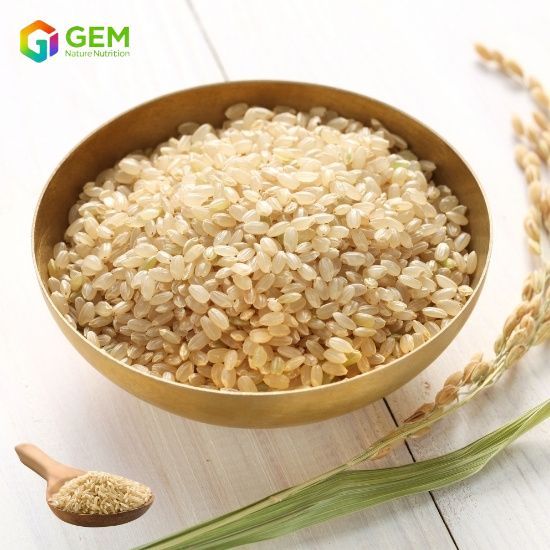
Brown Rice Protein
Brown Rice Protein bulk ingredient for B2B formulation sourcing. Request a specification sheet, batch COA, and documentation from GEM.
| 规格名称 | 规格值 |
|---|---|
| Appearance | White grey fine powder |
| Protein Content | 80%; 90% |
| Mesh | 300 mesh; 600 mesh; 1000 mesh |
| Shelf Life | 24 months |
| Main Function | Protein supplement |
Brown Rice Protein
Brown Rice Protein is a plant-based protein isolate produced from whole-grain brown rice (Oryza sativa) through natural wet fermentation and multi-stage enzymatic purification. For formulators moving away from dairy and soy, Brown Rice Protein offers a hypoallergenic, vegan-friendly protein source that is naturally free from lactose and gluten. GEM supplies Brown Rice Protein at 80% and 90% protein grades, in 300, 600, and 1000 mesh, with an annual capacity above 1000 tons and full ISO, FSSC, BRC, Kosher, and Halal documentation.
This guide explains what brown rice protein powder is, how its amino acid profile performs, how it compares with other plant proteins, how it is made, the specification grades available, where it is used, and the practical details B2B buyers need — from formulation guidance to private-label and ODM support. Whether you build sports nutrition, infant formula, bakery systems, or clean-label supplements, the sections below give you the technical depth to specify the right grade.
Brown Rice Protein Quick View
Specification: 80%, 90%
Mesh: 300 mesh; 600 mesh; 1000 mesh
Certificate: ISO22000; ISO14001; ISO9001; FSSC22000; BRC; Kosher; Halal
Annual Production Capacity: 1000+ tons
Shelf Life: 24 months
Features: Non-GMO; Non-ETO; Easy digestibility; Hypoallergenic; Vegan
Application: Sports nutrition; Dietary supplements; Protein bars; Baking; Smoothies; Cosmetics
Last updated: June 21, 2026
What is Brown Rice Protein?
From whole grain to functional protein
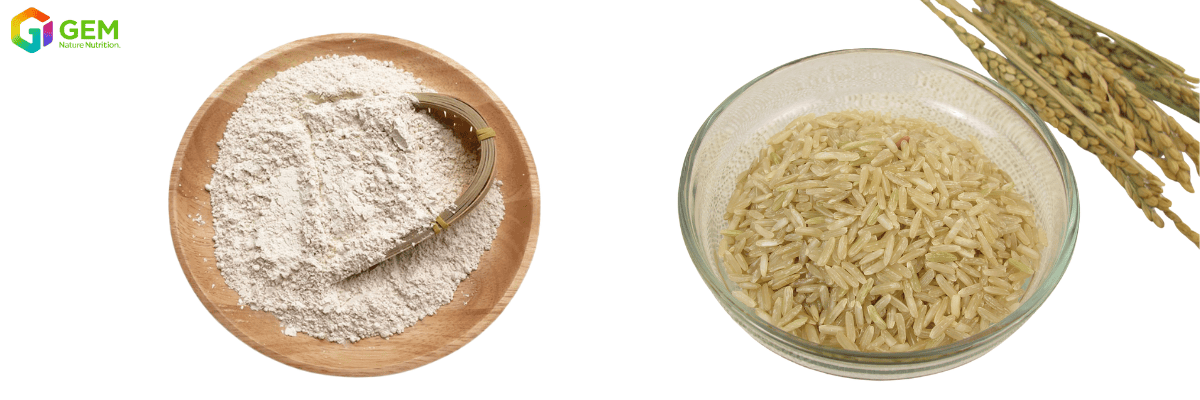
Brown rice refers to the whole grain obtained after the husks are removed from paddy rice, with little to no further processing. It consists of three main components: bran, germ, and endosperm. Compared to white rice, brown rice retains a much higher level of the original nutritional profile of the grain, including the bran-layer compounds ferulic acid and oryzanol that are lost when rice is refined into white starch.
Brown Rice Protein Powder is a high-quality protein extract derived from whole-grain brown rice. It is produced using a 100% natural "wet" manufacturing process that involves multi-stage fermentation, filtration, and specialized enzymatic treatments. This process effectively removes starch, fiber, and impurities while preserving a comprehensive nutrient profile that is easily absorbed by the body. Our brown rice protein offers natural support for muscle nutrition and optimal bioavailability. Specifically made from brown rice, it is hypoallergenic and naturally free from dairy and lactose.
Brown Rice Protein Amino Acid Profile
Protein quality is ultimately an amino acid story. The table below reports GEM's amino acid testing data for the 80% grade. The total measured amino acids reach 89.96 g/100g, with glutamic acid, arginine, and aspartic acid as the most abundant residues.
| Item | Results | Unit |
|---|---|---|
| Aspartic acid | 7.45 | g/100g |
| Threonine | 3.22 | g/100g |
| Serine | 4.38 | g/100g |
| Glutamic acid | 16.08 | g/100g |
| Glycine | 3.70 | g/100g |
| Alanine | 5.35 | g/100g |
| Cystine | 2.04 | g/100g |
| Valine | 5.92 | g/100g |
| Methionine | 2.35 | g/100g |
| Isoleucine | 3.93 | g/100g |
| Leucine | 7.35 | g/100g |
| Tyrosine | 5.04 | g/100g |
| Phenylalanine | 5.05 | g/100g |
| Lysine | 2.98 | g/100g |
| Histidine | 2.18 | g/100g |
| Tryptophan | 1.08 | g/100g |
| Arginine | 7.57 | g/100g |
| Proline | 4.29 | g/100g |
| Total amino | 89.96 | g/100g |
Reading the profile
- Branched-chain amino acids (BCAAs). Leucine (7.35), isoleucine (3.93), and valine (5.92) together total roughly 17.2 g/100g. Leucine is the primary trigger for muscle protein synthesis, which is why rice protein is studied for sports nutrition use.
- Glutamic acid and arginine. At 16.08 and 7.57 g/100g respectively, these residues dominate the profile. Arginine is a precursor for nitric oxide, and glutamine (closely related metabolically to glutamic acid) is associated with intestinal mucosal support.
- Lysine as the limiting amino acid. Lysine reads 2.98 g/100g — the lowest of the essential amino acids. This is the classic limitation of cereal proteins, and it is exactly why brown rice protein is frequently blended with a lysine-rich partner such as pea protein to build a more balanced essential amino acid spectrum.
Brown Rice Protein Nutrition Data
The nutrition panel below reflects typical composition for the 80% powder. It confirms a high protein load (81 g/100g), low fat (3.5 g/100g), and minimal sugar, supporting lean and clean-label positioning.
| Nutritional information | Results | Unit |
|---|---|---|
| Caloric content | 1736 | kJ/100g |
| Total Fat | 3.5 | g/100g |
| Saturated Fat | 1.93 | g/100g |
| Trans Fat | ND | g/100g |
| Dietary Fiber | 5.1 | g/100g |
| Total Carbohydrate | 8.8 | g/100g |
| Sugar | ND | g/100g |
| Other carbohydrates | 1.4 | g/100g |
| Protein | 81 | g/100g |
| Ca(Calcium) | 134 | mg/kg |
| P(Phosphorus) | 6210 | mg/kg |
| Fe(Iron) | 187 | mg/kg |
| Na(Sodium) | 608 | mg/100g |
Remark: All values typical, not to be construed as specifications.
Product Specification
The table below defines GEM's standard Brown Rice Protein 80% specification. Every lot is verified against these limits before release.
| Test Item | Specification | Test Method |
|---|---|---|
| Appearance | Off white powder | Visible |
| Taste&Odor | Characteristic | Organ |
| Particle size | 95% pass 300 mesh | Sieve Machine |
| Protein(dry basis),g/100g | ≥80% | GB 5009.5-2016 |
| Moisture, g/100g | ≤8% | GB 5009.3-2016 |
| Fat(dry basis),g/100g | ≤8% | GB 5009.6-2016 |
| Ash(dry basis),g/100g | ≤6% | GB 5009.4-2016 |
| Dietary fiber (dry basis),g/100g | ≤7% | GB 5009.88-2014 |
| Total carbohydrate,g/100g | ≤8% | GB 28050-2011 |
| PH | 5.5-7.0 | PH Meter |
| Melamine,mg/kg | ≤0.1mg/kg | US FDA 4421 |
| Cyanuric acid,mg/kg | ≤0.5mg/kg | FDA LIB No.4421 modified |
| Ochratoxin A,ppb | ≤3ppb | DIN EN 14132-2009 |
| Aflatoxin B1,ppb | ≤2ppb | DIN EN 14123-2008 |
| Aflatoxin B1+B2+G1+G2,ppb | ≤4ppb | DIN EN 14123-2008 |
| Gluten | <20ppm | ESQ-TP-0207 r-BioPharm ELIS |
| Soy | <20ppm | ESQ-TP-0203 Neogen 8410 |
| GMO (Bt63), % | ≤0.01% | Real-time PCR |
| Lead,mg/kg | ≤0.5mg/kg | BS EN ISO 17294-2 2016 mod |
| Cadmium,mg/kg | ≤0.2mg/kg | BS EN ISO 17294-2 2016 mod |
| Arsenic,mg/kg | ≤0.5mg/kg | BS EN ISO 17294-2 2016 mod |
| Mercury,mg/kg | ≤0.05mg/kg | BS EN ISO 17294-2 2016 mod |
| Total Plate Count | ≤5000CFU/g | GB 4789.2-2022 |
| Yeast & Molds | ≤100CFU/g | GB 4789.15-2016 |
| Coliforms | ≤30CFU/g | GB 4789.3-2016 |
| Salmonella | Negative | GB 4789.4-2016 |
| E. Coli | Negative | GB 4789.38-2012 |
| Staphylococcus aureus | Negative | GB4789.10-2016 |
Gluten and soy are both held below 20 ppm, confirming the hypoallergenic positioning. Heavy metals are controlled to tight international limits (lead ≤0.5, cadmium ≤0.2, arsenic ≤0.5, mercury ≤0.05 mg/kg), and mycotoxins (ochratoxin A, aflatoxins) are capped well within food-safety thresholds. The Non-GMO status is verified by real-time PCR for the Bt63 event at ≤0.01%.
How Brown Rice Protein Compares to Other Plant Proteins
No single plant protein is perfect on its own. The practical question for a formulator is which protein fits the target product's allergen, taste, and amino acid needs. The table below contrasts brown rice protein with common alternatives in GEM's portfolio.
| Attribute | Brown Rice Protein | Pea Protein | Soy Protein | Hemp Protein | Pumpkin Seed Protein |
|---|---|---|---|---|---|
| Primary allergen risk | Very low (gluten <20 ppm, soy <20 ppm) | Low (legume) | Higher (common allergen) | Low (nut) | Low (seed) |
| Limiting amino acid | Lysine | Methionine / cysteine | Methionine / cysteine | Lysine (mild) | Lysine |
| Notable strength | Hypoallergenic, mild taste, easy blend | High lysine, BCAA | Complete profile, cost | Fiber + fatty acids | Zinc, magnesium |
| Typical use fit | Infant, sensitive, clean-label | Sports, meat alt. | Mainstream supplements | Bars, wellness | Snacks, nutrition |
Brown rice protein's edge is tolerance and neutrality. It is the protein of choice when the end user cannot risk gluten, dairy, or soy. Its main weakness — low lysine — is solved by blending with a lysine-rich source. The classic combination is rice plus pea: rice supplies abundant methionine and cystine while pea supplies lysine, producing a complementary essential amino acid profile that rivals single-source animal proteins for balance. You can read more about the pea partner in our Pea Protein Powder profile.
For brands that want a rice-only story, GEM also offers Rice Protein as a related grade. If your matrix benefits from seed-based nutrition, Hemp Protein Powder and Pumpkin Seed Protein are strong companions for bars and wellness blends.
Brown Rice Protein Production Process
Brown rice protein is not mechanically milled flour; it is an isolated, purified protein fraction recovered from the grain through a controlled wet process. The route below combines natural fermentation with enzymatic hydrolysis and physical separation to strip away starch, fat, and fiber while protecting the protein.
Process sequence: Raw Material Selecting; Breaking brown rice into liquid; Mixing; Screening; Liquid glucose; Saccharification; Decolorization; Ion-exchange; Four-effect evaporation; Packing(malt syrup); Crude protein; Desanding; Size mixing; Reaction; Hydrocyclone Separation; Sterilization; Plate-frame; Drying; Metal Detecting; Packing; Finished Product.
Specification Grades: 80% vs 90% and Mesh Selection
GEM supplies two protein concentrations and three mesh finenesses, letting you match the ingredient to both the label claim and the mouthfeel of the finished product.
80% vs 90% protein
- 80% grade (the standard). Balances cost and nutrition for most applications. It is the workhorse specification for protein bars, baked goods, and general supplements where some natural carbohydrate and fiber are acceptable.
- 90% grade (isolate). Reaches a higher protein-to-weight ratio through additional purification. It suits premium sports nutrition, high-purity protein claims, and clear-label "isolate" positioning where every gram of protein counts.
Mesh: 300, 600, and 1000
Mesh defines particle fineness and directly affects dispersion, mouthfeel, and dissolution:
- 300 mesh — coarser, economical, good for bakery and bar systems where a little texture is acceptable.
- 600 mesh — mid-range smoothness, the versatile default for most beverage and powder blends.
- 1000 mesh — finest, smoothest mouthfeel, preferred for ready-to-drink shakes and premium formulations where grittiness must be minimized.
Share your target dissolution rate and mouthfeel with GEM so the right grade and mesh can be selected for your line.
Key Applications of Brown Rice Protein
Brown rice protein's neutral taste, pale color, and hypoallergenic status make it unusually flexible across categories. The list below maps the ingredient to its most common B2B uses.
Sports Nutrition & Dietary Supplements
With a strong BCAA load (leucine 7.35 g/100g) and easy digestibility, brown rice protein is formulated into post-workout powders, recovery shakes, and vegan protein blends. It is frequently paired with pea protein so the combined profile supplies both methionine and lysine. Brands use it as a dairy-free whey alternative in plant-based performance products.
Infant & Early-Life Nutrition
Because it is naturally free from gluten, dairy, and soy and is held to strict microbial and heavy-metal limits, brown rice protein is studied for and used in sensitive and hypoallergenic formulations. Any claim for infant or early-life products must comply with the buyer's local regulatory framework, and GEM supplies the certificates needed to support such submissions.
Bakery, Protein Bars & Smoothies
In baking and extruded bars, brown rice protein contributes protein without the strong "beany" flavor of some legumes. Its 300–600 mesh grades disperse well in doughs and batters, while 1000 mesh suits smoothie mixes where a silky finish is required. The low sugar and low trans-fat profile (sugar ND, trans fat ND) supports clean-label bakery claims.
Cosmetics & Personal Care
Beyond food, brown rice protein is used in cosmetic systems where a plant-derived, allergen-low protein film can support conditioning and film-forming claims. Its mild, non-irritating profile fits sensitive-skin positioning.
Private Label & ODM / B2B Buying Guidance
Procuring brown rice protein at scale is straightforward when you know what to request. GEM's annual production capacity exceeds 1000 tons, and we support both standard bulk supply and customized private-label / ODM programs.
Samples and documentation. Before committing to volume, request a sample, the full Specification Sheet, COA (Certificate of Analysis), and MSDS. These let your QC team verify protein content, microbial limits, and heavy metals against your incoming specification. Kosher, Halal, and ISO/FSSC/BRC certificates are available for qualified commercial orders.
Grade and mesh selection. Tell us your target application, protein claim (80% or 90%), desired mesh (300 / 600 / 1000), and budget. We propose a grade with samples, you pilot and refine, and we lock the spec, certificates, and packing for recurring production. For blended systems, GEM can also support Chickpea Protein and other plant proteins from one qualified supplier, reducing paperwork and quality risk across your ingredient list.
Quality assurance for recurring supply. Because the enzymatic process is standardized, GEM holds a fixed analytical and sensory profile for your brown rice protein across seasons and batches. For private-label and contract manufacturers, this consistency protects your finished-product taste and performance from one production cycle to the next.
Logistics. GEM supports international B2B shipping with the documentation required for food-ingredient import in major markets. Discuss Incoterms, port of destination, and any specific certificate requirements when you request a quotation. Bulk packing options are detailed on the Specification Sheet supplied with each order.
Frequently Asked Questions
1. How is brown rice protein different from white rice protein?
Brown rice protein is extracted from whole-grain brown rice (bran, germ, endosperm), retaining more of the grain's natural nutrient profile — including bran-layer antioxidants such as ferulic acid and oryzanol — compared to refined white rice sources.
2. Which concentration should I choose — 80% or 90%?
80% balances cost and nutrition for most applications such as bars and bakery. 90% (isolate) suits premium sports nutrition and high-purity protein claims where a higher protein-to-weight ratio is needed.
3. Is brown rice protein hypoallergenic?
Yes. It is naturally free from dairy, lactose, gluten, and soy — a common choice for infant, allergen-free, and sensitive-digestion product lines. Gluten and soy are each held below 20 ppm in specification.
4. What mesh sizes are available?
Standard options are 300 mesh, 600 mesh, and 1000 mesh. Share your dissolution and mouthfeel targets so GEM can recommend the right grade for your application.
6. What B2B documents does GEM provide?
GEM provides a Specification Sheet, COA, and MSDS, plus Kosher, Halal, and ISO/FSSC/BRC certificates for qualified commercial orders.
7. Can brown rice protein replace whey in sports formulas?
Brown rice protein is widely used as a vegan, hypoallergenic alternative to whey in sports nutrition, especially when blended with a lysine-rich partner such as pea protein to balance the essential amino acid profile. Confirm claim language with your regulatory team.
9. How should I store brown rice protein?
Store in a cool, dry place, sealed from moisture, within the 24-month shelf life. Refer to the Specification Sheet supplied with your order for detailed storage conditions.
10. What is the annual capacity and lead time?
GEM's annual production capacity exceeds 1000 tons. Lead times depend on grade, mesh, and order size; contact GEM with your target spec and volume for a current quote and lead time.
11. Can GEM support custom blends and ODM?
Yes. GEM supports private-label and ODM programs including custom blends, grade selection, and recurring-spec locking. Multi-ingredient programs can be sourced from one qualified supplier to reduce quality risk.
12. Is brown rice protein suitable for infant formula?
It is naturally free from gluten, dairy, and soy and is held to strict microbial and heavy-metal limits, so it is studied for and used in sensitive and hypoallergenic formulations. Any infant or early-life claim must comply with the buyer's local regulatory framework.