
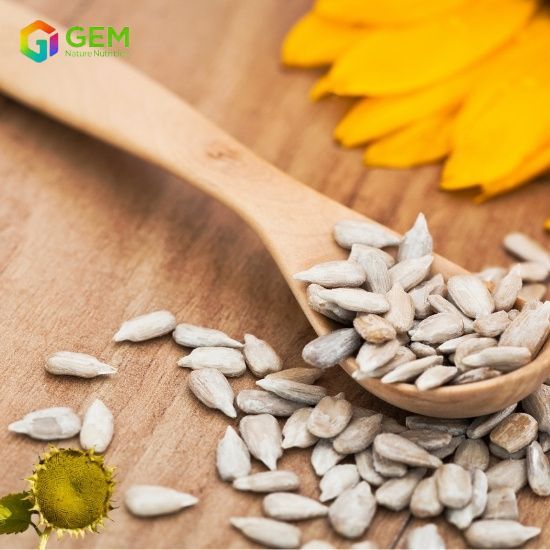
Sunflower Seed Protein
Sunflower Seed Protein bulk ingredient for B2B formulation sourcing. Request a specification sheet, batch COA, and documentation from GEM.
| 规格名称 | 规格值 |
|---|---|
| Appearance | Grey white powder |
| Protein Content | 50%; 65% |
| Mesh | 300 mesh |
| Shelf Life | 24 months |
| Main Function | Energy and protein supplement |
Sunflower Seed Protein
Sunflower seed protein is a clean-label, plant-based protein ingredient made from the defatted cake left after pressing oil from Helianthus annuus seeds. GEM supplies food-grade sunflower seed protein at 50% and 65% protein (dry basis), sourced from Non-GMO seeds and processed with phenolic-compound removal for a neutral, slightly nutty taste. As formulators diversify away from soy and look for allergen-friendly alternatives, sunflower protein has moved from animal feed into human nutrition, sports products, and bakery systems. This guide explains what the ingredient is, how it is produced, its amino acid strengths, where it fits in finished products, and what B2B buyers should know before placing an order.
Sunflower is one of the world's largest oilseed crops, and the protein-rich meal remaining after oil extraction has historically been underused. Modern isolation technology now upgrades that by-product into a human-grade powder with a useful functional and nutritional profile. For brands building "free-from" positioning — non-GMO, non-soy, non-dairy, gluten-free — helianthus protein offers a differentiated story that consumers can understand at a glance.
Sunflower Seed Protein Quick View
Specification: 50%; 65%
Certificate: ISO22000; ISO9001; FSSC22000; BRC; Kosher; Halal
Annual Production Capacity: 100+ tons
Shelf Life: 24 months
Features: Non-GMO; Non-ETO; Easy digestibility; Allergen friendly; Slight nut flavor
Application: Sports nutrition; Shakes; Protein bars; Baking; Cosmetics
Last updated: June 21, 2026
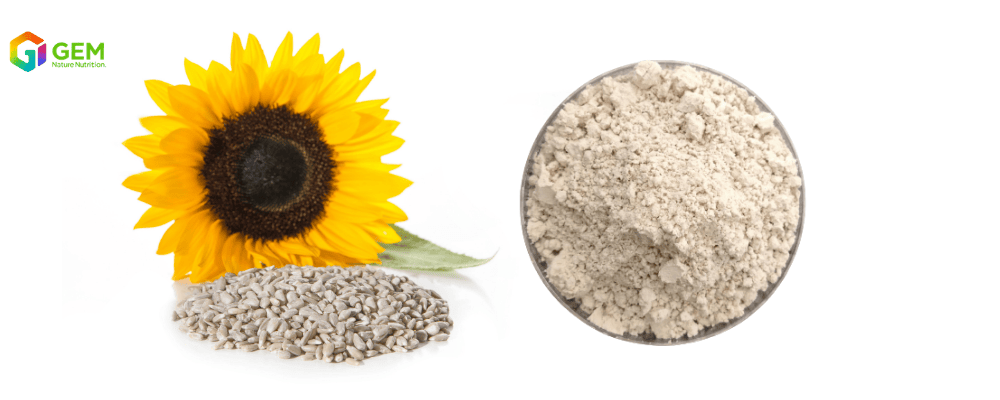
What Is Sunflower Seed Protein?
Origin. Sunflower seed protein powder is a high-quality, plant-based protein derived from the nutrient-dense seeds of the Helianthus annuus plant. While sunflower seeds are best known for their oil, the "protein cake" remaining after oil extraction is an exceptionally rich source of amino acids — often richer, gram for gram, than the seed appears to promise.
A specialized extraction process. Converting defatted sunflower seed cake into a premium protein powder requires removing phenolic compounds (notably chlorogenic acids), which can otherwise affect taste and color. By controlling that step, GEM produces a clean-label ingredient that is:
- Non-GMO: Sourced from natural, non-genetically-modified seeds with full traceability back to the farm.
- Upcycled: We turn a traditional animal-feed ingredient into human-grade nutrition, ensuring full utilization of the crop and reducing waste in the oilseed value chain.
- Clean & pure: Production is tuned to balance high protein yield with a neutral flavor, so the powder performs in sensitive formulations without heavy masking.
In short, sunflower seed protein is a concentrated, food-grade protein isolate/concentrate made by upgrading a by-product of edible oil production. It is not a novel synthetic material; it is a familiar crop, processed to a higher standard than feed-grade meal has historically received.
How Is Sunflower Seed Protein Produced?
The journey from a whole sunflower seed to a pale, free-flowing protein powder follows a well-established oilseed pathway, with a few critical control points that determine the final protein content, color, and taste.
Dehulling and Cleaning
Sunflower seeds used for oil contain roughly 20–30% hulls by weight. Hulls are high in fiber and dark pigments, so they are normally removed before oil extraction to protect equipment and improve meal quality. After cleaning, seeds are dried to about 5% moisture, which makes the kernel separate cleanly from the hull during cracking and winnowing. A well-run dehulling step leaves only 8–12% hulls on the kernel.
Protein Extraction and Phenolic Removal
The defatted cake is slurried and separated to concentrate the protein fraction. The decisive quality step is phenolic removal: chlorogenic acids bound to plant proteins are responsible for the greenish tone and bitter, astringent notes found in crude sunflower meal. By stripping these compounds, the process delivers the grey-white powder and mild, slightly nutty flavor described in the specification. The purified slurry is then sterilized, dried, milled, and sieved into a consistent powder.
Why Upcycling Matters
Sunflower meal is the fourth-largest oilseed meal traded globally after soybean, rapeseed, and cottonseed meal, with world output around 21.8 million tons in 2019 (IndexMundi, via Feedipedia). Capturing the protein value from that stream — rather than sending it to low-value feed — is both an economic and a sustainability advantage for food manufacturers building responsible sourcing narratives.
Sunflower Protein Amino Acid Profile
Sunflower seed protein delivers a well-balanced amino acid composition built around a few standout features. Typical sunflower protein is rich in glutamic acid (≈22–25 g/100 g protein), arginine (≈8–10 g/100 g protein), and leucine (≈6–7 g/100 g protein), and it carries a respectable load of the other essential amino acids. Published PDCAAS values for sunflower protein commonly fall in the 0.8–0.9 range, indicating a high-quality, highly usable protein.
The Methionine Advantage
The headline differentiator is methionine. Sunflower seed meal is consistently reported as higher in methionine than soybean meal (Senkoylu & Dale, 1999), and sunflower protein generally offers more methionine than pea protein as well. Methionine is the first limiting sulfur amino acid in many plant proteins, so a methionine-rich ingredient helps lift the overall amino acid score of a blended formula — especially when paired with lysine-rich partners.
The Lysine Limitation — and How Blending Solves It
Sunflower protein is comparatively lower in lysine than soy or dairy proteins. On its own, that caps its protein quality score. In real-world product development, however, single proteins are rarely used alone. Blending sunflower with pumpkin seed protein (lysine-supportive) or rice protein smooths out the lysine gap and produces a more complete essential amino acid spectrum at a competitive cost. For formulators, the methionine/lysine trade-off is a feature to design around, not a defect.
GEM supplies batch-specific amino acid testing data on the Certificate of Analysis. Contact our technical team for the full profile of the 50% or 65% grade you are evaluating.
Sunflower Seed Protein vs. Soy and Pea
Plant protein buyers usually shortlist soy, pea, and newer seed proteins. Sunflower earns its place on three fronts.
Non-GMO assurance. GEM's material is Non-GMO and traceable to Chinese growing regions with low pollution risk. For EU and clean-label markets, that simplifies compliance and storytelling.
Distinct sensory character. A slight nut flavor can be an asset in bars, snacks, and baked goods, adding warmth that neutral pea protein cannot. In shakes, the mild note is easy to mask with cocoa, vanilla, or fruit systems.
When spec'd alongside pea protein powder, sunflower lets a brand claim a diversified, soy-free protein blend rather than a single-source formula — a stronger retail story as the category matures.
Product Specification — Sunflower Protein 50% Grade
| Test Item | Specification | Test Method |
|---|---|---|
| Appearance | Grey white powder | Organ |
| Protein(dry basis),g/100g | ≥50% | GB 5009.5-2016 |
| Moisture, g/100g | ≤8% | GB 5009.3-2016 |
| Ash(dry basis),g/100g | ≤5% | GB 5009.4-2016 |
| PH | 5.5-7.0 | PH Meter |
| Fat | ≤8% | GB 5009.6-2016 |
| Lead,mg/kg | ≤1.0mg/kg | BS EN ISO 17294-2 2016 mod |
| Arsenic,mg/kg | ≤1.0mg/kg | BS EN ISO 17294-2 2016 mod |
| Mercury,mg/kg | ≤0.5mg/kg | BS EN ISO 17294-2 2016 mod |
| Cadmium,mg/kg | ≤1.0mg/kg | BS EN ISO 17294-2 2016 mod |
| Total Plate Count | ≤10000CFU/g | GB 4789.2-2022 |
| Yeast & Molds | ≤100CFU/g | GB 4789.15-2016 |
| Coliforms | ≤30CFU/g | GB 4789.3-2016 |
| Salmonella | Negative | GB 4789.4-2016 |
| E. Coli | Negative | GB 4789.38-2012 |
| Staphylococcus aureus | Negative | GB4789.10-2016 |
GEM Production Process
Sunflower seed meal/cake-Raw material reception-Feeding-Pass magnetic rod-Mixed materials-Zymolysis-First contrifuge separation-Washing protein slag-Instantaneous sterilization-Adjust rice slag slurry-Iron removal-Second frame filtration-Steam drying- Pass magnetic rod-Ball grinder-Pass air current sieve-Measurement packaging-Metal detection-Warehouse storage-Package-Finished products.
The Main Feature of Sunflower Seed Protein
- NON-GMO and allergen free sunflower seed based product;
- High protein content with rich nutrition;
- Very easy to digest by human body;
- Sunflower seed protein can be used in different recipes including protein bars, shakes and smoothies, baked stuff. Its slight nut flavor can add your food with a very special smell.
- It's kind of a new protein compared with soy protein and pea protein which make your products more competitive.
What's the Difference of GEM's Sunflower Seed Protein?
- Raw material control: we selected Non-GMO and Non-ETO sunflower seed with a strict inspection of raw material including heavy metal, pesticides residue, we only accept the material that all quality meets all of our standard. The raw sunflower seed is from Inner Mongolia and provinces in the Northeast of China, these places are with free-pollution and fertile land, plenty of sunshine, all these advantages make sunflower seeds grow very plump and huge.
- Fastidious production control: from raw material storage to finished products, there is more than 20 types of processes during sunflower protein production, we have set standard operation rules to guide our worker following SOP correctly.
- High protein content: some factory can only offer 50% protein, but we can extract it up to 65% which is much higher content than usual. Fully utilizing sunflower seed meal.
- Double check: we test raw material and final products which make every products from us are with good quality and high standard.
- EP and USP standard are all satisfied: GEM sunflower seed protein is not only meeting USP standard, but also meeting with EP standard, which make Europe customers with no worries about the quality when selling in the EU market.
Application Fields & Concrete Use Cases
Sunflower seed protein's mild flavor, light color, and functional behavior make it remarkably versatile. Below are the fields where it earns its place, with concrete ways manufacturers deploy it.
Bakery and Baked Goods
In bread, muffins, cookies, and crackers, sunflower protein contributes nutritional fortification (protein per serving) without the beany notes that sometimes accompany pea or soy. Its water-absorption and binding behavior supports dough structure, and the slight nut flavor complements whole-grain and seed-forward recipes. Typical inclusion runs from a few percent up to roughly a quarter of flour weight, depending on the target protein claim.
Beverages, Shakes, and Smoothies
Powdered shakes and ready-to-mix beverages use sunflower protein as a soy-free, dairy-free protein source. Because the phenolic removal step delivers a cleaner taste, it disperses into cocoa, vanilla, and fruit systems with less masking required. Formulators often blend it with pea protein powder or rice protein to round out the amino acid profile and improve mouthfeel.
Meat Analogs and Plant-Based Meat
Sunflower protein contributes binding and structure in plant-based burgers, sausages, and analogs. While it is not a direct 1:1 replacement for textured soy, it works well in blends where it adds protein density and a pleasant bite. Combined with high-moisture extrusion or gelling systems, it supports juicy, cohesive textures.
Sports Nutrition and Protein Bars
Bars, bites, and pressed snacks use sunflower protein for clean labeling and allergen-friendly claims. Its slight nut character pairs naturally with dates, oats, and chocolate coatings. In protein bars it helps deliver a "plant protein" callout without soy, an increasingly common retail requirement.
Cosmetics and Personal Care
Beyond food, sunflower-derived protein finds use in cosmetic and personal-care systems where a plant-based film-forming and conditioning agent is valued. The same Non-GMO, clean-processed material that feeds a bar can support a brand's "naturally derived" personal-care claims.
Formulation Tips for Sunflower Seed Protein
Blending for Amino Acid Balance
Because lysine is the limiting amino acid, pair sunflower with a lysine-rich partner. Effective, widely used combinations include:
- Sunflower + pumpkin seed protein — pumpkin contributes complementary amino acids and a similar seed-protein identity.
- Sunflower + pea protein — pea is lysine-strong and widely available; the blend reads as a familiar "plant protein" stack.
- Sunflower + rice protein — rice is lysine-supportive and very mild, helping keep the overall flavor neutral.
- Sunflower + flaxseed protein — flaxseed brings a complementary amino acid contribution and a mild, seed-forward character that fits free-from labels.
A common starting point is a 20:80 sunflower-to-pea ratio for a cost-effective, near-complete protein, adjusted to taste and label claims.
Managing Flavor and Color
The natural slight nut flavor is an asset in baked and snack formats and easy to mask in shakes with cocoa, vanilla, or fruit. Keep finished pH in a friendly range (the powder itself sits at pH 5.5–7.0), and avoid over-processing at high temperature, which can dull the clean tone achieved during phenolic removal.
Solubility and Dispersion
Sunflower protein disperses well in cold and warm systems with standard agitation. Pre-slurrying the powder in a small amount of liquid before adding to the full batch reduces dusting and clumping. In beverages, lecithin or gum systems can further improve stability if a fully suspended drink is required.
Market & Regulatory Context
The plant-protein category is expanding fast, and sunflower is one of the beneficiaries of that diversification beyond soy and pea.
Market scale. The broader plant-based protein market was valued at about USD 23.89 billion in 2025 and is projected to reach USD 34.97 billion by 2030, growing at a 7.9% CAGR (MarketsandMarkets, 2025). The sunflower-protein segment specifically is forecast to rise from roughly USD 101.29 million in 2026 to USD 223 million by 2035, a 9.1% CAGR (industry research consensus), with sunflower accounting for about 8% of the global plant-based protein ingredient mix.
Why buyers choose it. Industry surveys note that roughly 54% of food manufacturers prefer sunflower protein for its allergen-free positioning versus soy, and a large share of product developers prioritize non-GMO certification (often cited near 44–66% depending on region). Regionally, Europe leads sunflower-protein adoption (~36% share), followed by North America (~28%) and Asia-Pacific (~24%).
Regulatory fit. GEM's sunflower protein is produced to EP and USP reference standards, carries Kosher and Halal certification, and is backed by ISO22000, ISO9001, FSSC22000, and BRC food-safety systems. For EU-bound goods, the Non-ETO, Non-GMO posture aligns with strict clean-label expectations. Buyers building blended systems can coordinate pea protein powder and rice protein under a single supplier relationship, which simplifies documentation and quality control across the range.
B2B Buying & MOQ Guidance
Procuring sunflower seed protein from GEM is straightforward, but a few steps protect your formulation timeline.
Choose your grade. Decide between 50% (the standard, cost-efficient concentrate) and 65% (higher protein, additional extraction). The 65% grade suits premium labels and protein-dense formulations where every gram of protein counts.
Request documentation early. For qualified commercial orders we provide a Specification Sheet, COA, and MSDS, plus Kosher, Halal, ISO, and BRC certificates. Sharing your target application up front lets our team flag any additional testing you may need for your market.
Sampling and validation. We recommend a bench trial with a signed sample before committing to production volume. This confirms flavor, dispersion, and compatibility in your specific matrix — especially important for beverage and meat-analog systems.
Volume, lead time, and packing. GEM's annual capacity for this item is 100+ tons, supporting both pilot and steady commercial runs. Standard food-grade export packing is used; exact packing, palletizing, and labeling details are confirmed on your quoted specification sheet. Discuss minimum order quantity and lead time with our sales team, as both scale with grade and certification requirements.
Blend planning. If you intend to combine sunflower with pumpkin seed protein, hemp protein powder, or flaxseed protein, tell us early so we can coordinate volumes and documentation across the range.
Frequently Asked Questions
1. Why choose sunflower seed protein over soy or pea?
Sunflower seed protein is Non-GMO, allergen-friendly, and offers a distinct nutty note — helping differentiate crowded plant-protein product lines. It is not a Big-8 allergen, unlike soy, and carries more methionine than either soy or pea.
2. What protein grades are available?
GEM supplies 50% and 65% protein on dry basis. 65% requires additional extraction versus standard 50% grades and suits premium, protein-dense labels.
3. Is sunflower seed protein easy to digest?
Yes. It is highly digestible with a smooth texture suitable for shakes, bars, and baked goods, and the upcycled, phenolic-reduced process supports a clean sensory profile.
4. Does GEM meet EP and USP standards?
GEM sunflower seed protein satisfies both EP and USP standards, supporting EU market requirements and giving European customers confidence in quality.
5. Where is raw material sourced?
Non-GMO sunflower seeds from Inner Mongolia and Northeast China — free-pollution regions with strict raw material inspection for heavy metals and pesticide residues.
6. What B2B documents are provided?
Specification Sheet, COA, MSDS, plus Kosher, Halal, ISO, and BRC certificates for qualified orders. Amino acid and microbiological test data are included on the COA.
7. Is sunflower protein allergen-friendly compared with soy?
Yes. Soy is a mandatory "Big 8" label allergen in the U.S., and concentrated pea protein can also trigger reactions in sensitive individuals. Sunflower seed protein is not among the Big-8 allergens, making it a strong fit for free-from positioning.
8. What is the methionine advantage of sunflower protein?
Sunflower protein is higher in methionine than soybean meal and generally higher than pea protein. Methionine is the first limiting sulfur amino acid in many plant proteins, so this helps lift the amino acid score of blended formulas.
9. How do you overcome the lysine limitation in formulations?
Lysine is sunflower's limiting amino acid, but it is easily addressed by blending with lysine-rich partners such as pumpkin, pea, or rice protein. A 20:80 sunflower-to-pea blend is a common, cost-effective starting point.
10. Can sunflower seed protein be used in beverages and shakes?
Yes. The phenolic-removed, mildly flavored powder disperses well in cold and warm systems and works in cocoa, vanilla, and fruit shakes — often blended with pea or rice protein for a balanced amino acid profile.
11. Is sunflower seed protein suitable for meat analog applications?
It contributes binding and structure in plant-based burgers and sausages and works best in blends rather than as a standalone soy replacement. Combined with extrusion or gelling systems, it supports cohesive, juicy textures.
12. What is the minimum order quantity and lead time for B2B orders?
MOQ and lead time scale with grade (50% vs 65%) and certification needs. GEM's annual capacity is 100+ tons, supporting pilot through commercial volumes. Contact our sales team with your application and target market for a confirmed quote and timeline.
Further Reading
- Pea Protein Powder — a lysine-strong blending partner and the most common soy-free protein stack.
- Pumpkin Seed Protein — a complementary seed protein for amino acid balancing.
- Rice Protein — a mild, lysine-supportive base for clean-label blends.
- Hemp Protein Powder — a nutrient-dense seed protein for protein-forward formulations.
- Flaxseed Protein — a complementary plant protein for diversified, soy-free blends.