
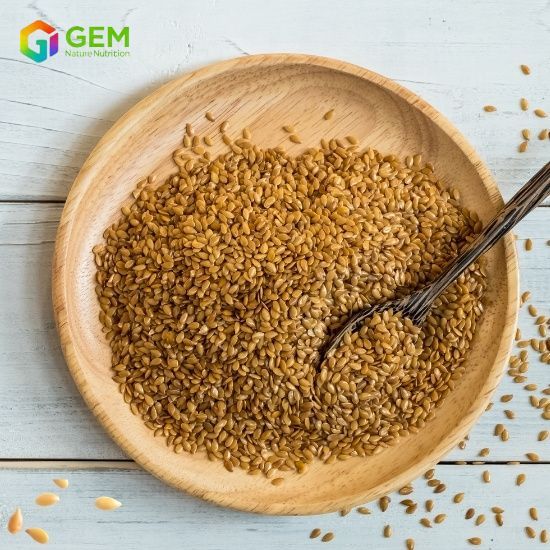
Flaxseed protein
Flaxseed protein bulk ingredient for B2B formulation sourcing. Request a specification sheet, batch COA, and documentation from GEM.
| 规格名称 | 规格值 |
|---|---|
| Appearance | Light yellow powder |
| Plant Used | Flax seeds (dehulled) |
| Protein Content | 50%; 60% |
| Mesh | 80 mesh |
| Shelf Life | 24 months |
Flaxseed Protein
Flaxseed protein is extracted from dehulled Non-GMO flax seeds (Linum usitatissimum) to minimize bitterness and maximize digestibility. GEM offers two standardized grades — 50% and 60% protein — milled to 80 mesh, naturally rich in omega fatty acids, dietary fiber, and lignans for sports nutrition, functional foods, and clean-label supplement systems.
Flax — also called linseed — has been cultivated for thousands of years, first valued for its oil-rich seeds and its strong textile fiber. Today the same seed has become one of the most interesting raw materials for plant-based formulation, because it delivers protein, soluble fiber, alpha-linolenic acid (ALA, the parent omega-3 fatty acid), and a unique class of polyphenols called lignans, all in a single vegan, non-GMO ingredient. For product developers who want to move beyond soy and pea, flaxseed protein is a natural next step: it adds nutritional density and a clean "whole-food" story that resonates with modern shoppers.
This page is written for B2B buyers, formulators, and procurement teams. It explains what the ingredient is, exactly how GEM produces it, the certified specification you can expect, the amino acid and nutrition data behind every batch, and the practical details that matter for purchasing — applications, formulation tips, regulatory context, private-label and ODM options, and how to place an order.
Flaxseed Protein Quick View
Specification: 50%; 60%
Other Name: Flax hearts protein
Mesh: 80 mesh
Certificate: BRC; HACCP; IFS; Kosher; Halal
Annual Production Capacity: 100+ tons
Shelf Life: 24 months
Features: Non-GMO; Non-ETO; Omega fatty acids; High fiber; Vegan
Application: Sports nutrition; Energy bars; Baking; Powder drinks; Dietary supplements
Packing: 10 kg/bag
Last updated: June 21, 2026
What is Flaxseed Protein?
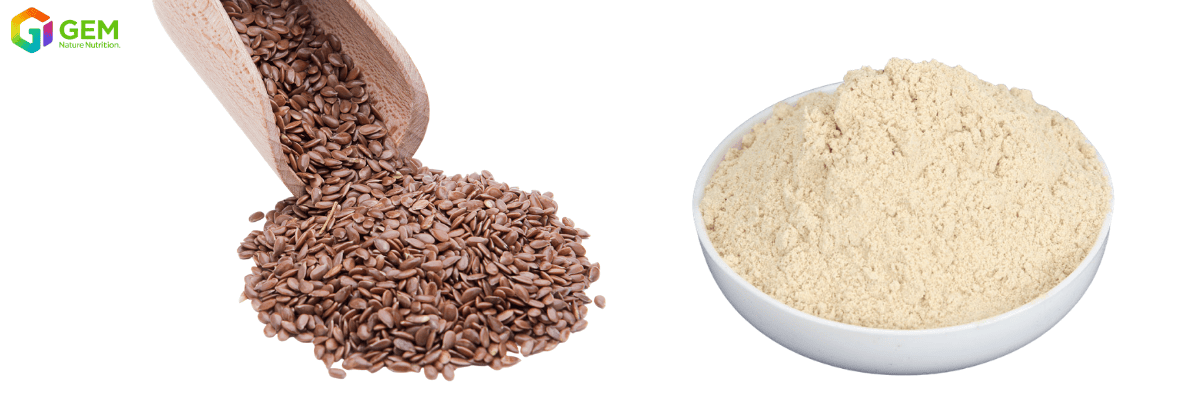
Flaxseed (Linum usitatissimum) is a powerhouse of nutrition, traditionally prized for its seeds and high-quality oils. GEM utilizes dehulled flaxseeds as the raw material to ensure a cleaner taste and superior digestibility. By removing the hulls, we minimize bitterness and maximize protein purity. Flaxseed protein has emerged as a premier member of the plant-based protein family due to its exceptional nutritional profile.
Unlike isolated soy or pea protein, which are refined down to a near-pure protein fraction, flax seed protein is typically supplied as a concentrate that keeps much of the seed's native matrix intact. That is good news for formulators: the retained fiber, oil, and lignans are exactly what give flax its functional and marketing appeal. The trade-off is a lower protein number on the spec sheet — which is why GEM standardizes two grades, 50% and 60%, rather than chasing an 80%+ isolate that would strip away the qualities that make flax valuable in the first place.
1. 60% Flaxseed Protein
60% Flaxseed protein: Optimized for nutritional supplements and protein blends.
The 60% grade is the higher-protein option in GEM's range. With more protein per gram, it is the grade most often chosen for powdered drink mixes, protein shakes, and blend systems where the developer wants to print a stronger "protein per serving" claim while still keeping flax's fiber and ALA on the label. Because it is milled to 80 mesh, it disperses smoothly in liquids and blends without gritty sediment. The nutrition sheet (below) confirms 62.0 g/100g measured protein alongside 20.5 g/100g dietary fiber and 0.52 g/100g omega-3 fatty acids — a balance that few other plant proteins can match in a single ingredient.
2. 50% Flaxseed Protein
50% Flaxseed protein: Ideal for meat alternatives, bakery products, and dairy-free applications.
The 50% grade retains more of the original seed material — more fiber, more natural oil, more lignans — which makes it a strong fit for whole-food positioning. In bakery and extruded snacks it contributes moisture retention and a pleasant nutty note; in meat analogs it helps with binding and structure. If your brand story leans on "minimal processing" and "whole seed nutrition," the 50% grade is usually the better hero ingredient. For most blends, developers pair flax with a higher-protein base such as pea protein powder or rice protein, using flax to add the "good fats" and fiber that those bases alone cannot provide.
When you compare flax against other plant proteins, the picture is clear: pea and soy lead on pure protein percentage, but flax leads on the combination of protein plus omega-3 and lignans. A balanced blend frequently combines flax with a legume or cereal base to round out the amino acid profile while preserving flax's signature nutrition.
Production Process for Flaxseed Protein
Flaxseed is an oilseed, which means the first job of any processor is to remove most of the oil before concentrating the protein. GEM's route is built around mechanical and physical steps rather than chemical solvents, which keeps the ingredient clean-label and aligns with the Non-GMO, Non-ETO positioning.
The journey starts with dehulled flaxseed. Dehulling is important: the seed coat carries most of the bitter, astringent compounds and a high share of the indigestible hull fiber. Removing it early gives a milder flavor and a more digestible protein fraction. From there the seed is defatted, first by cold pressing to squeeze out the bulk of the oil, then by a second physical extraction pass that recovers more of the remaining fat without harsh solvents. What remains is the "flax hearts" cake or meal — the protein- and fiber-rich solid left after oil removal.
Product Specification for Flaxseed Protein Powder 60%:
| Test Item | Specification | Test Method |
|---|---|---|
| Appearance/Colour | Light yellow | Q/LQP 0005S |
| Odour | Flex special smell | Q/LQP 0005S |
| Flavour | Felx special smell | Q/LQP 0005S |
| Particle size(mesh) | ≥95% pass 80 mesh | GB/T 5507-2008 |
| Protein (on dry basis) | ≥60% | GB 5009.5-2016 (I) |
| Moisture | ≤8% | GB 5009.3-2016 (I) |
| Lead | ≤1.0ppm | GB/T 5009.12-2017 |
| Arsenic | ≤0.5ppm | GB/T 5009.268-2016 |
| Mercury | ≤0.5ppm | GB/T 5009.268-2016 |
| Cadmium | ≤1.0ppm | GB/T 5009.268-2016 |
| Total Plate Count | ≤100000cfu/g | ISO4833-1:2013 |
| Yeast & Molds | <500cfu/g | ISO21527-2:2008 |
| Coliforms | <100cfu/g | ISO4832:2006 |
| E. Coli | <10cfu/g | ISO16649-2:2001 |
| Salmonella | Not Detected/25g | ISO6579-1:2017 |
| Pesticides | ≤0.05mg/kg | BS EN 15662:2018 |
| Aflatoxin B1 | ≤2.0ppb | DIN EN 14123:2008-03 |
| Aflatoxin B1+B2+G1+G2 | ≤4.0ppb | DIN EN 14123:2008-03 |
| Ochratoxin A | ≤3.0ppb | DIN EN 14132-2009 |
The 50% grade is produced on the same process line and is verified to the same test-method family, with protein (on dry basis) set at ≥50%. Request the dedicated 50% specification sheet and COA for your batch.
Amino Acids Data for 60% Flaxseeds Protein
| Item | Results | Unit |
|---|---|---|
| Alanine | 2.62 | g/100g |
| Arginine | 5.29 | g/100g |
| Aspartic acid | 5.39 | g/100g |
| Cys(CYSO3H) | 1.02 | g/100g |
| Glutamic acid | 11.50 | g/100g |
| Glycine | 3.07 | g/100g |
| Histidine | 1.07 | g/100g |
| Isoleucine | 2.33 | g/100g |
| Leucine | 3.33 | g/100g |
| Lysine | 2.06 | g/100g |
| MetSON | 1.17 | g/100g |
| Phenylalanine | 2.69 | g/100g |
| Proline | 2.40 | g/100g |
| Serine | 2.59 | g/100g |
| Threonine | 2.02 | g/100g |
| Tryptophan | 0.88 | g/100g |
| Tyrosine | 1.20 | g/100g |
| Valine | 2.75 | g/100g |
Nutrition Sheet for Flax Seed Protein 60%:
| Nutritional information | Results | Unit |
|---|---|---|
| Energy | 1351 | kj/100g |
| Total Fat | 3.6 | g/100g |
| Saturated fatty acids | 0.91 | g/100g |
| Poly-unsaturated acids | 0.97 | g/100g |
| Dietary Fiber | 20.5 | g/100g |
| Total Carbohydrates | 24.2 | g/100g |
| Starch | 11.2 | g/100g |
| Sugars | 3.45 | g/100g |
| Protein | 62.0 | g/100g |
| Ash | 7.97 | g/100g |
| Omega-3 fatty acids | 0.52 | g/100g |
| Omega-6 fatty acids | 0.45 | g/100g |
| Omega-9 fatty acids | 1.61 | g/100g |
| Ca(Calcium) | 264 | mg/100g |
| P(Phosphorus) | 1840 | mg/100g |
| Mg(Magnesium) | 977 | mg/100g |
| K(Potassium) | 1630 | mg/100g |
| Fe(Iron) | 16.4 | mg/100g |
| Vitamin E | 1.64 | mg/100g |
Amino Acid Profile & What It Means for Formulators
What flaxseed protein does not do is lead on lysine or methionine — both are present but modest, which is the normal pattern for oilseed proteins. In practice that is not a problem; it is simply a reason to blend. Pairing flax with a legume or cereal protein balances the limiting amino acids and lifts the overall protein quality of the finished product. Pea protein powder and rice protein are the two most common higher-protein bases used alongside flax: pea contributes arginine and lysine density, while rice protein is valued for its hypoallergenic, easy-dispersing character in beverage systems. For a high-fiber, omega-forward blend, hemp protein powder is another natural partner, since hemp and flax share a "whole seed" positioning and complementary nutrition.
For labeling purposes, remember that the amino acid values above describe the 60% grade. The 50% grade carries the same relative pattern but at a lower protein concentration per gram, because more of each 100 g is fiber and native oil. If your nutrition team needs a full amino acid panel for the 50% grade or a blended system, GEM can supply supporting data on request.
The Lignan and ALA Advantage
Two compounds set flax apart from almost every other plant protein: alpha-linolenic acid (ALA) and lignans. ALA is an essential omega-3 fatty acid; the body uses it to make the longer-chain EPA and DHA, albeit at a limited conversion rate. The 60% flax protein nutrition sheet shows 0.52 g/100g of omega-3 fatty acids, supported by 0.45 g/100g omega-6 and 1.61 g/100g omega-9. That native oil is exactly why formulators choose flax when they want to add "omega-3 from a plant source" to a label without adding fish oil.
The third pillar is dietary fiber: 20.5 g/100g in the 60% grade. That fiber supports the "high fiber" claim and contributes to the ingredient's binding and moisture-retention behavior in food systems.
Application Fields & Concrete Use Cases
Sports nutrition and powder drinks. Flaxseed protein's mild, slightly nutty flavor blends well in vanilla, cocoa, and berry systems. At 80 mesh it suspends and reconstitutes cleanly in shaker bottles. Use the 60% grade to maximize protein per scoop, and lean on the retained ALA and fiber to differentiate a "complete plant protein" story.
Energy and protein bars. The natural oil and fiber in flax improve shelf stability and texture in baked and extruded bars, reducing the hard, stale mouthfeel that pure isolates can cause. The 50% grade is especially useful here because its higher fiber and oil content act as a softness retainer across a product's shelf life.
Bakery. Flaxseed protein can replace a portion of wheat or alternative flour in breads, muffins, and crackers, adding protein and fiber while contributing a pleasant grain note. It also supports egg-reduction strategies in vegan baking when used alongside other binders.
Meat analogs. In plant-based burgers, sausages, and nuggets, the 50% flaxseed protein grade contributes binding, moisture, and a fibrous mouthfeel. It is rarely the sole protein — most developers combine it with a textured pea or soy base and use flax for function and nutrition.
Dietary supplements. Capsules, tablets, and stick packs use the 60% grade for a clean protein-and-fiber delivery. Because the ingredient is vegan, Non-GMO, and available Kosher and Halal, it fits clean-label supplement lines aimed at global markets.
If you are screening a portfolio of seed proteins, sunflower seed protein offers an allergen-friendly alternative that can be rotated with flax depending on the flavor and nutrition target of each SKU, while rice protein provides a neutral-tasting, hypoallergenic base for beverage blends.
Formulation Tips for Flaxseed Protein
- Watch the water. Flax fiber is hydrophilic and will thicken a batter or beverage quickly. Pre-hydrate or account for water uptake in your recipe to avoid a gummy texture.
- Protect the oil. The natural omega-3 is prone to oxidation. Store the finished powder cool and dark, add a modest level of mixed tocopherols (vitamin E) if your product sits on warm shelves, and avoid prolonged high-heat steps.
- Build protein quality through blending. Combine flax with a lysine-rich protein (pea, rice, or soy) to raise the overall amino acid score rather than relying on flax alone.
- Manage flavor. The flax note is mild after dehulling but present. It pairs best with cocoa, cinnamon, vanilla, and nut flavors and can be masked in savory systems with herbs and spices.
- Mind the particle size. 80 mesh is fine enough for drinks and bars; if you need faster dispersion in cold liquids, consider a small trial with a slightly coarser or agglomerated grade.
Market & Regulatory Context
Plant-based protein demand has expanded well beyond vegan consumers; mainstream food and supplement brands now use plant proteins to support "clean label," "sustainability," and "functional nutrition" claims. Flax occupies a distinctive niche because it is one of the few protein sources that also brings a meaningful omega-3 and lignan story. In European and Commonwealth markets you will often see the same ingredient labeled linseed protein, since "linseed" is the traditional name for the flax seed used to make it. For buyers, that means flax can command a differentiated position rather than competing purely on price per gram of protein.
Private Label & ODM Guidance
Flaxseed protein is rarely the only ingredient in a finished product, and GEM supports brand owners who want more than a single raw material. Our private-label and ODM services cover custom blends, agglomeration for improved flow and cold-liquid dispersion, grade selection between 50% and 60%, and tailored flax-to-base ratios matched to your sensory and nutrition targets.
For multi-ingredient programs, sourcing from a single qualified supplier reduces paperwork, lead time, and quality risk. Beyond flaxseed protein, GEM's plant-protein and botanical portfolio spans pea protein powder, rice protein, sunflower seed protein, and hemp protein powder, as well as soy isoflavones for women's-health formulations — enabling combined ODM projects from one manufacturer with a unified certificate set.
Typical ODM engagement steps: (1) share your target application, protein claim, and budget; (2) GEM proposes a grade or blend with samples; (3) you pilot and refine; (4) we lock the spec, certificates, and packing for recurring production. Certificates available include BRC, HACCP, IFS, Kosher, and Halal for qualified commercial orders.
B2B Buying & MOQ Guidance
GEM supplies flaxseed protein in 10 kg bags, with an annual production capacity of 100+ tons, so both pilot batches and steady commercial volumes are supported. For first-time formulators we recommend starting with a sample or trial quantity to validate taste, dispersion, and compatibility in your base matrix before committing to a full pallet. Because the ingredient is mildly oil-bearing, we suggest planning inventory turnover within the 24-month shelf life and storing stock in a cool, dry warehouse to protect the omega fatty acids.
When requesting a quote, tell us your target grade (50% or 60%), estimated annual volume, destination market, and any certificate requirements (for example, Halal for Middle East shipments or a specific document set for EU import). Sharing your intended application — bar, beverage, or supplement — also helps us recommend the right grade and flag any formulation cautions early. Qualified commercial orders can receive the full BRC/HACCP/IFS/Kosher/Halal documentation set alongside the standard specification, COA, and MSDS.
Frequently Asked Questions
1. Why use dehulled flaxseed for protein extraction?
Dehulling reduces bitterness and improves protein purity and digestibility versus whole-hull flax sources. It also removes most of the indigestible hull fiber, giving a milder flavor and a more digestible protein fraction.
2. Should I choose 50% or 60% flaxseed protein?
60% suits nutritional supplements and protein blends where a stronger "protein per serving" claim matters. 50% retains more fiber and omegas for whole-food positioning in bakery, bars, and meat analogs.
3. Does flaxseed protein contain omega fatty acids?
Yes. Flaxseed protein naturally contains omega-3 and omega-6 fatty acids alongside plant protein and fiber. The 60% grade nutrition sheet shows 0.52 g/100g omega-3, 0.45 g/100g omega-6, and 1.61 g/100g omega-9.
4. How should flaxseed protein be stored?
Store sealed in a dark, dry place below 25°C (recommended <15°C) to protect omega fatty acids from oxidation. Cool, dry warehouse storage within the 24-month shelf life is recommended for commercial stock.
5. Is flaxseed protein Non-GMO?
GEM flaxseed protein is sourced from Non-GMO, Non-ETO flax seeds. Confirm Non-GMO and Non-ETO documentation for your market when requesting a quote.
6. What B2B documents are available?
Specification Sheet, COA, MSDS, plus BRC, HACCP, IFS, Kosher, and Halal certificates for qualified orders. The 50% grade has its own specification sheet and COA on request.
7. Can flaxseed protein be used in beverages?
Yes. The 80 mesh grade reconstitutes well in shakes and powder drinks. Pre-blend it with other powders and account for its water-holding fiber so the drink does not over-thicken.
8. How does flaxseed protein compare to pea or soy protein?
Flax is lower in absolute protein percentage but adds ALA omega-3, lignans, and fiber that pea and soy lack. It is usually blended with a higher-protein base such as pea protein powder or rice protein rather than used as a sole protein source.
9. Is flaxseed protein suitable for Kosher and Halal markets?
Yes. It is produced under Kosher and Halal certification. Request the current certificate for your specific shipment and destination market.
10. What is the difference between flaxseed, linseed, and flax seed protein?
"Linseed" and "flaxseed" refer to the same seed (Linum usitatissimum). "Flax seed protein" is the concentrated protein ingredient made from that seed after defatting and milling.
11. Does the powder contain gluten?
Flax is naturally gluten-free. Verify with the COA and your own allergen-control requirements, especially if you need reassurance about shared-line handling.
12. What is the minimum order quantity and typical lead time?
Flaxseed protein is supplied in 10 kg bags. Contact GEM with your target grade, volume, and destination market for MOQ and lead time on qualified orders.
Further Reading
- Pea Protein Powder — the most common higher-protein base to blend with flax for a balanced amino acid profile.
- Rice Protein — a neutral-tasting, hypoallergenic base ideal for beverage blends alongside flax.
- Hemp Protein Powder — another whole-seed protein that brings fiber and omegas to plant-based systems.
- Sunflower Seed Protein — an allergen-friendly seed protein alternative to rotate with flax.
- Soy Isoflavones — a botanical frequently paired with flax lignans in women's-health formulations.