
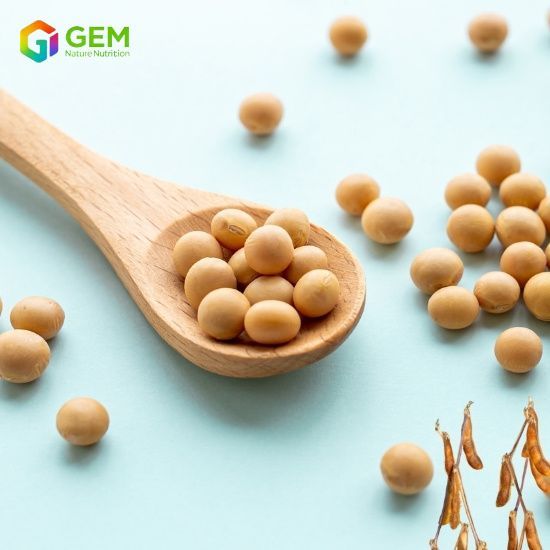
Soy Isoflavones
Soy Isoflavones bulk ingredient for B2B formulation sourcing. Request a specification sheet, batch COA, and documentation from GEM.
| 规格名称 | 规格值 |
|---|---|
| Active Ingredients | Soy Isoflavones |
| Grade | Food&feed are all available |
| CAS No. | 574-12-9 |
| Shelf Life | 24 months |
| Solvents | Water and ethanol |
Soy Isoflavones
Soy Isoflavones are standardized botanical extracts derived from soybeans, supplied in bulk by GEM for global B2B formulators.
Soy Isoflavones are plant-derived compounds with structural similarity to estrogen and are used in dietary-supplement, food, and functional-nutrition formulations. GEM supplies bulk Soy Isoflavones powder in a range of standardized assay levels. Confirm current certificates, capacity, and availability with the applicable product documentation and quotation.
Last updated: June 21, 2026
Soybean Extract (Soy Isoflavones) Details
Specification:
- 5%~95% HPLC From germs
- 5%~90% HPLC From cakes
- 5%~80% HPLC Aglycon
- 5%~10% HPLC Water-soluble
- 1%-5% HPLC Soy isoflavones (Feed additive)
Active Ingredients: Soy Isoflavones (Genistin; Genistein; Daidzin; Daidzein; Glycitin; Glycitein)
Mesh: 80 mesh
Certificate: ISO22000; ISO9001; HACCP; Kosher; Halal
Annual Production Capacity: More than 100 tons
Features: Non-GMO; ETO free; Non-Radiation; USP & EP Standard; Allergen (soy, gluten) free; Rich isoflavones; Phytoestrogen.
Application: Pharmaceutical and medicine; Dietary supplement; Basic nutritional ingredients; Food additives and Cosmetics; Feed and pet industry, etc.
What Are Soy Isoflavones?
Soy Isoflavones are a class of secondary metabolites found in the hypocotyl of the soybean (Glycine max). They are structurally similar to 17β-estradiol and are commonly described as phytoestrogens. This compositional characteristic does not establish a hormone-related outcome in people.
From a manufacturing perspective, Soy Isoflavones are valued for consistent standardization and broad compatibility. The powder blends cleanly into hard-shell capsules, compressed tablets, stick packs, functional gummies, and dry-mix beverage systems, with its 80-mesh size supporting even dispersion in most solid-dose and powder formats.
The Complex Chemical Profile: The 12 Forms of Isoflavones
Soybean extract is not a single compound, but a sophisticated mixture of polyphenols. In their natural state, they exist in 12 distinct chemical forms, categorized into three primary aglycone groups:
Genistin Group: Genistein, Genistin, Acetylgenistin, Malonylgenistin
Daidzin Group: Daidzein, Daidzin, Acetyldaidzin, Malonyldaidzin
Glycitin Group: Glycitein, Glycitin, Acetylglycitin, Malonylglycitin
Bioavailability Note: Each of these three groups exists in four specific molecular states: Free form (Aglycones), Glucoside, Acetyl glucoside, and Malonyl glucoside.
The three aglycones—genistein, daidzein, and glycitein—are the biologically active cores released during digestion. In the intact soybean, the bulk of the isoflavones are stored as bound glucosides (the malonyl and acetyl ester forms), which are then converted toward free aglycones through heat processing and the activity of gut microbiota. This is why the way a Soy Isoflavones powder is standardized makes a practical difference: a figure expressed as "total isoflavones" counts every form, while a figure expressed as "aglycone" counts only the free cores, so a finished product's label claim and its starting-material specification should be matched deliberately.
Because genistein, daidzein, and glycitein sit at the center of this 12-form matrix, they are the three markers most often cited when describing an extract's profile. The relationship among genistein daidzein and glycitein—their relative ratios and their glucoside-versus-aglycone balance—determines both the analytical fingerprint of a lot and its behavior in the finished application.
Source & Botany
Soy Isoflavones are sourced from the soybean plant, Glycine max (L.) Merr., an annual legume in the Fabaceae family cultivated across East Asia for thousands of years and now grown on every inhabited continent. As a nitrogen-fixing crop, the soybean forms symbiotic root nodules that capture atmospheric nitrogen, making it both a sustainable rotation crop and a leading plant-protein source.
The isoflavone content is not evenly spread through the plant. It concentrates in the soybean seed, highest in the hypocotyl—the embryonic axis linking the two cotyledons—with smaller amounts in the seed coat and cotyledon tissue. Industrial extraction therefore most often begins with soybean germ (the embryo-rich fraction separated from defatted soy meal) or with soy cake by-products, because these fractions deliver the strongest isoflavone yield per unit of raw material.
This botanical reality explains the specification ranges GEM offers. Extracts "From germs" reach 5%–95% HPLC total isoflavones, while material "From cakes" spans 5%–90%, and dedicated aglycone-grade product is available at 5%–80%. Each sourcing route yields a slightly different distribution of the 12 molecular forms, which is why GEM collaborates with customers to align the starting material with the target finished-product specification. Non-GMO sourcing is standard across the line.
Soy Isoflavones Specification
| Test Item | Specification |
|---|---|
| Total isoflavones | ≥ 40.0 by HPLC |
| Daidzin | 23.76% |
| Glycitin | 11.65% |
| Genistin | 4.57% |
| Daidzein | 0.48% |
| Glycitein | 0.11% |
| Genistein | 0.08% |
| Appearance | Light yellow powder |
| Odor | Characteristic |
| Bulk Density | 45-62g/100ml |
| Moisture | ≤ 5% |
| Ash | ≤ 5% |
| Total Heavy Metals | ≤ 10 μg/g |
| Arsenic (As) | ≤ 1.0 μg/g |
| Lead (Pb) | ≤ 2.0 μg/g |
| Mercury (Hg) | ≤ 0.1 μg/g |
| Total Plate Count | ≤ 1,000 cfu/g |
| Molds and Yeasts | ≤ 100 cfu/g |
| Salmonella | Absence/10g |
| E. Coli | Absence/10g |
Remark: Any special quality request could be checked with our sales team.
The table above describes a representative lot standardized to a total isoflavone content of 40% or higher by HPLC. Note the glucoside-dominant profile: daidzin (23.76%) and glycitin (11.65%) are the most abundant measured forms, while the free aglycones daidzein (0.48%), glycitein (0.11%), and genistein (0.08%) appear in smaller quantities in this particular grade. This pattern is typical of a germ- or cake-derived extract that has not been pushed toward full aglycone conversion. Microbiological and heavy-metal limits confirm the material is suitable for dietary supplement and food use, with Salmonella and E. Coli required absent per 10 g.
For brands targeting a specific marker ratio, GEM can discuss custom standardization. Because the supply window runs from 5% up to 95% total isoflavones depending on the source fraction, the same botanical starting point supports very different finished-product positions—from gentle food fortification to concentrated women's-health capsules.
Formulation and Claim Boundaries
Soy isoflavones are commonly considered in botanical and women’s-wellness formulation concepts. This ingredient page does not establish that a finished product changes hormone levels, relieves menopausal symptoms, improves bone density, or reduces fracture risk. Any finished-product claim or suitability statement requires appropriate substantiation and market-specific regulatory review.
Application Fields
Soy Isoflavones powder serves a broad cross-section of the nutrition and wellness industry. The table below maps the major application fields drawn from GEM's standard specification to typical finished-product formats.
| Application Field | Typical Use |
|---|---|
| Pharmaceutical and medicine | Active or adjunct botanical ingredient in registered and traditional medicine systems |
| Dietary supplement | Capsules, tablets, and softgels for women's health, bone, and hormonal balance |
| Basic nutritional ingredients | Bulk nutrient component blended into multivitamin and wellness formulations |
| Food additives and Cosmetics | Fortification of functional foods, beverages, and skin-care systems |
| Feed and pet industry | Lower-assay grades (1%–5% HPLC) for animal nutrition applications |
In the dietary supplement channel, Soy Isoflavones powder is most often paired with complementary women's-wellness actives. Brands frequently combine it with Red Clover Extract, another well-known botanical phytoestrogen source, to broaden the isoflavone and flavonoid spectrum. For hormonal-balance positioning, Myo-Inositol and D-Chiro-Inositol are common co-ingredients, while Inulin adds a gentle prebiotic fiber that supports clean-label blends.
In food and beverage applications, the powder's water-soluble and low-assay grades integrate into soy drinks, nutrition bars, and fortified dairy alternatives. Formulators building plant-based systems often combine Soy Isoflavones with Pea Protein Powder, Brown Rice Protein, or Rice Protein to deliver both protein and functional phytonutrient content in one matrix.
Production & Quality
GEM's Soy Isoflavones are produced through a controlled solvent-extraction and purification route, summarized by the following process flow:
Soybean meal(germs)→Extract→Extracting solution→Concentrate→Ethanol recycle→Concentrate liquid→Drying→Crushing&Mixing→Detecting→Packing→Final product.
Each step is designed to preserve isoflavone integrity while meeting food- and supplement-grade purity. Extraction pulls the polyphenols from the soybean germ or cake, concentration and ethanol recycling remove solvent and enrich the active fraction, and the drying and crushing stages produce the uniform 80-mesh light yellow powder described in the specification. Crushing and mixing ensure batch-to-batch consistency of assay and particle size before the material moves to final detecting and packing.
Quality assurance runs across the whole chain. The line is manufactured to USP and EP standards and carries ISO22000, ISO9001, HACCP, Kosher, and Halal certifications. Material is Non-GMO, ETO free, and Non-Radiation, with an allergen statement covering soy and gluten. Heavy-metal, microbial, moisture, and ash limits are verified against the specification table, and the foot-of-table remark stands: any special quality request could be checked with our sales team. With an annual capacity of more than 100 tons, GEM supports both steady contract supply and seasonal volume peaks.
Frequently Asked Questions
What are Soy Isoflavones made from?
Soy Isoflavones are extracted from the soybean (Glycine max), with the highest isoflavone concentration found in the hypocotyl of the seed. GEM sources material from soybean germ and soy cake fractions, which offer the best yield of the active polyphenols.
What is the difference between aglycone and glucoside isoflavones?
In the raw soybean, most isoflavones exist as bound glucosides (malonyl and acetyl esters). Aglycones are the free active cores—genistein, daidzein, and glycitein—released during processing and digestion. GEM offers both total-isoflavone grades and dedicated aglycone grades (5%–80% HPLC) depending on the target application.
What does "genistein daidzein glycitein" refer to?
These are the three aglycone cores at the center of the soybean isoflavone matrix. Every one of the 12 natural forms ultimately derives from one of these three molecules, so they are the markers most often used to describe an extract's profile.
Is GEM's Soy Isoflavones powder Non-GMO?
Yes. The entire line is produced from Non-GMO soybean material and is also ETO free and Non-Radiation, supporting clean-label and non-GMO positioning.
What certifications does the product carry?
GEM's Soy Isoflavones are certified to ISO22000, ISO9001, HACCP, Kosher, and Halal standards, and are manufactured to USP and EP specifications.
What mesh size and appearance should I expect?
The standard powder is 80 mesh with a light yellow appearance and a characteristic odor. Bulk density falls in the 45–62 g/100 ml range, which supports even blending in capsules, tablets, and dry-mix systems.
What assay levels are available?
Standardized ranges include 5%–95% HPLC from germs, 5%–90% HPLC from cakes, 5%–80% HPLC aglycon, 5%–10% HPLC water-soluble, and 1%–5% HPLC feed-grade material. A representative supplement grade is standardized to ≥40% total isoflavones by HPLC.
Can Soy Isoflavones be used in food products?
Yes. Beyond dietary supplements, the ingredient is suitable for food additives, cosmetics, and basic nutritional formulations. Lower-assay water-soluble grades are well suited to beverages and functional foods.
What is the annual supply capacity?
GEM's annual production capacity for Soy Isoflavones exceeds 100 tons, supporting both pilot development and high-volume recurring supply agreements.
How should the powder be stored and handled?
Like most botanical extracts, Soy Isoflavones powder should be kept in a cool, dry place away from direct light and moisture, in sealed original packaging, to preserve assay and shelf stability. Specific storage guidance can be confirmed with the sales team.
Do you offer custom specifications?
Yes. The specification table notes that any special quality request could be checked with our sales team, including custom assay, aglycone ratio, or documentation packages for specific markets.
Further Reading
- Red Clover Extract — a complementary botanical phytoestrogen for women's-health formulas
- Inulin — a functional prebiotic fiber for clean-label blends
- Myo-Inositol — a women's-wellness co-ingredient often paired with isoflavones
- D-Chiro-Inositol — an inositol form used in hormonal-balance positioning
- Pea Protein Powder — plant protein for functional food systems
- Magical Red Clover Extract (News)
The content above is provided for product and ingredient information only and does not constitute medical advice. Formulators are responsible for confirming regulatory status and label claims in their target markets.