
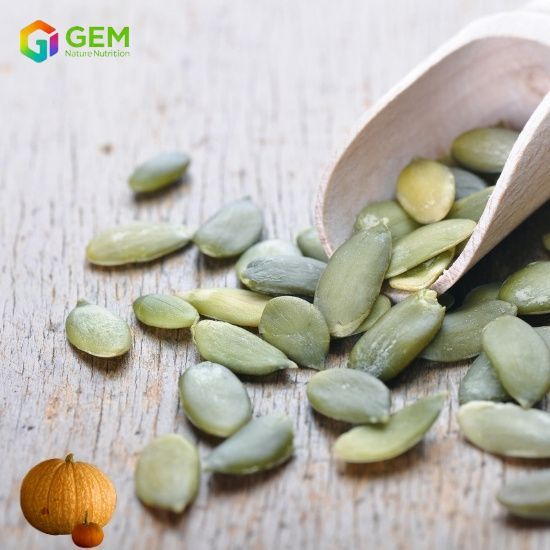
Watermelon seed protein
Watermelon seed protein bulk ingredient for B2B formulation sourcing. Request a specification sheet, batch COA, and documentation from GEM.
| 规格名称 | 规格值 |
|---|---|
| Appearance | Light yellow fine powder |
| Plant Used | Watermelon seeds (Citrullus lanatus) |
| Protein Content | 50%; 65% |
| Mesh | 300 mesh |
| Shelf Life | 24 months |
Watermelon Seed Protein
Watermelon Seed Protein is an emerging plant protein extracted from Citrullus lanatus (watermelon) seeds — a sustainable, upcycled source that is naturally rich in arginine and essential minerals. GEM supplies this ingredient at 50% and 65% protein (dry basis) milled to 300 mesh for sports nutrition, protein bars, shakes, bakery fortification, and allergen-friendly plant-protein formulations.
Unlike commodity proteins that compete mostly on price, watermelon seed protein competes on positioning. It is naturally vegan, gluten-free, and non-GMO, and it carries one of the higher arginine concentrations found among plant proteins. For formulators building sports nutrition or active-wellness positioning, that amino acid profile is the headline. It also answers two demands that keep growing in the B2B ingredients market: supply-chain transparency and demonstrable sustainability.
GEM's watermelon seed protein belongs to the same family of "seed proteins" as pumpkin seed protein and sunflower seed protein. All three begin with an oilseed, remove the fat fraction, and recover the protein cake. The differences sit in flavor, color, amino acid emphasis, and certification scope — but the underlying sustainability logic is shared: every ton of seed protein represents crop material that would otherwise have become animal feed or discarded.
This guide walks through what watermelon seed protein is, why formulators choose it, how it is produced, the specification grades GEM offers, its amino acid and functional profile, and the practical details that matter for B2B buying — from applications and formulation tips to private-label, regulatory, and documentation support.
Watermelon Seed Protein Quick View
Specification: 50%; 65%
Mesh: 300 mesh
Certificate: ISO22000; ISO14001; ISO9001; FSSC22000; BRC; Kosher; Halal
Annual Production Capacity: 100+ tons
Shelf Life: 24 months
Features: Non-GMO; Hypoallergenic; High arginine; Vegan; Sustainable seed upcycling
Application: Sports nutrition; Protein bars; Shakes; Baking; Dietary supplements
Packing: 25 kg/drum, 2 layers PE bags inside; 25 kg/bag options available on request
Last updated: June 21, 2026

What is Watermelon Seed Protein?
Watermelon Seed Protein is extracted from Citrullus lanatus seeds — an upcycled by-product of seed oil processing. The powder is naturally rich in arginine, B vitamins, and minerals including magnesium, iron, and zinc. GEM supplies 50% and 65% protein grades with a mild seed flavor profile suitable for sports nutrition, protein bars, and allergen-friendly plant-protein lines.
The Seed Behind the Powder
Watermelon seeds are remarkably nutrient-dense. On a dry basis, a single seed is roughly 30–35% oil and 25–30% protein, which is why seeds have been roasted as a snack and pressed for oil across Africa, the Middle East, and Asia for centuries. What is new is the industrial capability to isolate the protein fraction at consistent food-grade purity and sell it as a standalone ingredient rather than lose it after oil pressing.
The appeal for product developers is twofold. First, the sensory profile is forgiving: a light color and gentle seed note mean formulators need fewer masking agents and less added flavor versus stronger-tasting legume proteins. Second, the origin story is genuinely sustainable rather than marketed as such — the raw material is a recovered co-product, not a crop grown from scratch for extraction. That nuance matters to buyers who audit supply chains and to marketers who must defend "upcycled" claims to regulators.
How It Compares to the Big Three Plant Proteins
Soy, pea, and rice dominate the plant-protein shelf, but each carries constraints: soy raises allergen and GMO scrutiny, pea can read "beany," and rice is lysine-limited. Watermelon seed protein is not a wholesale replacement for these — it is a complementary differentiator. For brands already using pea protein powder or rice protein, watermelon seed protein works as a second or third source that adds an arginine-forward amino acid emphasis and a cleaner sensory canvas. Blending the three can reduce reliance on any single crop, soften the "beany" notes some consumers dislike in pea-only systems, and round out the essential amino acid picture.
For a quick orientation, the table below contrasts watermelon seed protein with its closest seed-protein relatives in GEM's portfolio.
| Attribute | Watermelon Seed Protein | Pumpkin Seed Protein | Sunflower Seed Protein | Hemp Protein Powder |
|---|---|---|---|---|
| Protein grade (dry basis) | 50% / 65% | Up to 75% | 50% / 60% | 50% / 65% |
| Lead amino acid | Arginine | Arginine | Arginine / Glutamic | Arginine / Glutamic |
| Typical color | Light yellow | Green | Pale yellow | Light green-beige |
| Flavor note | Mild, neutral seed | Nutty | Mild, neutral | Grassy / nutty |
| Key positioning | Upcycled, clean-label | High arginine, green | Upcycled, neutral | Fiber + complete protein |
The takeaway: watermelon seed protein is the lightest-colored, mildest-tasting option in the seed-protein set, which is precisely why it is favored for unflavored, vanilla, and fruit systems where a darker or stronger note would fight the brand's sensory target.
How Watermelon Seed Protein is Produced
Understanding the production flow helps formulators predict how the ingredient will behave in their own systems. The manufacturing route follows the typical seed-protein model: separate the oil, then recover and purify the protein.
Raw material reception and cleaning. Watermelon seeds are received as defatted meal or cake from oil processing. GEM screens incoming material for moisture, foreign matter, and heavy-metal and pesticide residues before it enters the line.
Magnetic separation and feeding. Metal inclusions are removed with magnetic rods, and the meal is metered into the process at a controlled rate to keep downstream steps stable.
Centrifuge separation. The slurry is spun to separate the protein-rich liquid phase from insoluble solids. The protein stream is then washed to remove soluble non-protein matter.
Sterilization and frame filtration. The protein liquor is briefly sterilized, then passed through frame filters to remove fine particulate before drying.
Drying, sieving, and metal detection. The concentrated protein is dried into a fine powder, sieved to the target 300 mesh, and passed through a final metal detector. Conforming material is packed as finished product.
The takeaway for buyers: because the protein is recovered from defatted meal, the finished powder is naturally low in fat (specified at ≤10%) and concentrated in protein rather than oil. That makes it shelf-stable and easy to handle versus full-fat seed flours.
Product Specification
The table below defines GEM's standard food-grade Watermelon Seed Protein specification at the 50% protein grade. Values are confirmed by the listed methods on each batch. A 65% protein grade is also available for applications that need a higher protein-to-weight ratio per serving.
| Test Item | Specification | Test Method |
|---|---|---|
| Appearance | Light yellow powder | Organ |
| Protein(dry basis),g/100g | ≥50% | GB 5009.5-2016 |
| Moisture, g/100g | ≤8% | GB 5009.3-2016 |
| Ash(dry basis),g/100g | ≤7% | GB 5009.4-2016 |
| PH | 6.0-8.0 | PH Meter |
| Fat | ≤10% | GB 5009.6-2016 |
| Lead,mg/kg | ≤0.5mg/kg | BS EN ISO 17294-2 2016 mod |
| Arsenic,mg/kg | ≤0.5mg/kg | BS EN ISO 17294-2 2016 mod |
| Mercury,mg/kg | ≤0.1mg/kg | BS EN ISO 17294-2 2016 mod |
| Cadmium,mg/kg | ≤0.5mg/kg | BS EN ISO 17294-2 2016 mod |
| Total Plate Count | ≤10000CFU/g | GB 4789.2-2022 |
| Yeast & Molds | ≤100CFU/g | GB 4789.15-2016 |
| Coliforms | ≤30CFU/g | GB 4789.3-2016 |
| Salmonella | Negative | GB 4789.4-2016 |
| E. Coli | Negative | GB 4789.38-2012 |
| Staphylococcus aureus | Negative | GB4789.10-2016 |
The 50% grade is the workhorse specification for whole-food and fiber-friendly blends, where absolute protein density matters less than a balanced, minimally refined profile. GEM also supplies a 65% grade for applications that need a higher protein-to-weight ratio per serving. Formulators choosing between the two should weigh label claims, serving size, and cost-in-use: a 65% powder lets you hit a "high protein" claim with less powder, which can matter in compact formats like bars and sticks.
For buyers who blend across the portfolio, rice protein and hemp protein powder are useful companions: rice is lysine-limited but methionine-favorable, and hemp brings a naturally broader essential profile, so a three-way seed-and-grain blend can approach a more complete amino acid picture than watermelon seed protein alone.
Amino Acid Profile of Watermelon Seed Protein
Seed proteins share a recognizable amino acid signature, and watermelon seed protein fits the pattern. It delivers a balanced spread of essential and non-essential amino acids, with arginine, glutamic acid, and aspartic acid among the most prominent. Arginine is the standout: it is a conditionally essential amino acid that serves as the direct precursor to nitric oxide, the signaling molecule involved in vascular tone.
To put the arginine emphasis in context, GEM's pumpkin seed protein — a close relative in the seed-protein family — records roughly 7 g of arginine per 100 g of protein on its amino acid panel. Watermelon seed protein sits in the same high-arginine tier, which is why both ingredients are popular in sports and active-lifestyle formulations where nitric-oxide support is a selling point.
A few practical notes for formulators:
- Arginine-led, not leucine-led. Unlike dairy whey, which is rich in leucine (the primary trigger for muscle protein synthesis), seed proteins lead with arginine and glutamic acid. That is fine for general and recovery positioning, but brands making direct "muscle-building" claims should plan blends or supporting actives accordingly.
- Balanced essentials. Watermelon seed protein contributes the essential amino acids needed for everyday protein turnover, though — like most plant proteins — it is typically blended to round out the full essential profile.
- Mild processing preserves structure. Because the protein is recovered rather than chemically stripped, the native amino acid structure is largely retained, supporting digestibility.
We recommend requesting the full amino acid certificate of analysis with each batch so your nutrition team can model the final product's protein quality (PDCAAS or DIAAS) against your label claims.
Functional Properties for Formulators
Beyond amino acid composition, what makes watermelon seed protein useful on the bench is how it behaves in a mix. The properties below are what product developers report most often when integrating the powder.
Water-holding and binding. Like most seed proteins, watermelon seed protein absorbs water and contributes viscosity. In bars and baked systems this helps bind syrups and date matrices; in beverages it can thicken, so liquid levels should be adjusted during scale-up. Pre-hydration or a small amount of lecithin or gum improves dispersion in ready-to-drink (RTD) systems.
Color stability. The light-yellow powder keeps finished products pale, which suits vanilla, citrus, and unflavored formats. If a brighter white is required, pair with a whiter base protein or use flavor covers. This is a meaningful advantage over greener seed proteins in light-colored SKUs.
Mild flavor carry. The gentle seed note works with fruit, cocoa, and nut flavors. It is neutral enough that formulators often need less flavor masker than with pea or soy — which can lower formulation cost and shorten the flavor-development cycle.
Low residual fat. Because it is the defatted fraction, the powder carries ≤10% fat by spec and resists rancidity far better than full-fat seed flours. That protects the finished product's fat declaration and shelf life.
Solubility and dispersion at 300 mesh. The standardized 300 mesh particle size disperses smoothly into binding syrups and beverage bases without grittiness, an important trait for bars and sticks where texture is judged directly by the consumer.
The Arginine and Healthy-Fat Story
Two narratives make watermelon seed protein easy to market, and both are grounded in the seed's natural composition.
The healthy-fat backstory. Watermelon seeds in their whole form are prized for their oil, which is dominated by linoleic acid, an essential polyunsaturated fatty acid. In our process, that oil is pressed out first; the protein powder is the defatted fraction, so it is concentrated in protein with low residual fat (≤10% by spec). The healthy-fat story is therefore two-sided: the seed is inherently rich in beneficial lipids, and our upcycling captures both value streams — the oil for food use and the protein for nutrition. For the protein buyer, the practical benefit is a low-fat, high-protein powder that will not turn rancid quickly and will not muddy the fat declaration of the finished product.
This combination — arginine-forward amino acids plus a defatted, stable powder — is exactly what makes watermelon seed protein attractive to brands that want a "better-for-you" halo without compromising shelf life or flavor.
Upcycled and Sustainable Sourcing
Sustainability is no longer a bonus in the ingredients market; for many buyers it is a procurement requirement. Watermelon seed protein scores well on the metrics that matter.
A recovered co-product. The raw material is the protein-rich cake left after oil extraction — material that, in a linear supply chain, would be fed to animals or discarded. By upcycling it into human-grade nutrition, GEM supports a circular food system and reduces pressure to grow new crops purely for protein extraction.
Lower embedded footprint. Because the seed is already grown and harvested for its fruit and oil, the marginal land, water, and fertilizer cost of the protein fraction is small. That is a stronger sustainability claim than simply calling an ingredient "plant-based."
Alignment with certifications. GEM's watermelon seed protein carries ISO14001 (environmental management) alongside food-safety certificates, signaling that environmental performance is managed, not accidental. For brands pursuing third-party "upcycled" or carbon-label claims, a defensible co-product story like this is a genuine asset.
The model mirrors what GEM applies to sunflower seed protein: take a traditional feed-grade cake, apply rigorous food-safety and purification controls, and deliver a clean, traceable human-grade ingredient. It is a repeatable blueprint that de-risks supply while improving sustainability reporting.
Application Fields
| Application Field | Details |
|---|---|
| Sports Nutrition | Protein shakes and recovery formulas; pairs with Pea Protein Powder in multi-source blends |
| Protein Bars & Snacks | Mild seed flavor for bars, crisps, and energy snacks |
| Dietary Supplements | Allergen-friendly plant protein for soy-free and dairy-free capsules |
| Bakery & Functional Foods | Fortification of baked goods and meal replacements |
| Plant Dairy & RTD | Stable, mild base for beverage and alternative-dairy systems |
Beyond the table, here are concrete use cases our customers pursue:
- Ready-to-mix (RTM) shakes and powders. The light color and neutral taste let watermelon seed protein sit at 15–40% of a blend without dominating flavor. It pairs naturally with cocoa, vanilla, or fruit systems.
- Protein and energy bars. At 300 mesh the powder disperses smoothly into binding syrups and date-based matrices, contributing protein without grittiness. The 65% grade is especially useful where bar weight is constrained.
- Capsules and tablets. For soy-free and dairy-free supplement lines, watermelon seed protein offers a vegan protein base that sidesteps the top allergens. It is typically used as a bulk or co-active rather than a standalone high-dose protein in pills.
- Bakery fortification. Breads, muffins, and crackers can be fortified with a few percent inclusion to support "added plant protein" claims while keeping crumb texture intact.
- Meal replacements and RTD beverages. Its stability and mild profile make it a candidate for shelf-stable and refrigerated drink systems, often blended with other plant proteins for a complete essential-amino-acid picture.
- Plant dairy and alternative-milk bases. The neutral flavor and pale color suit oat-, almond-, and seed-based drink systems where a strong legume note would be unwelcome.
Formulation Tips for Watermelon Seed Protein
Getting the most from watermelon seed protein is mostly about where it sits in your blend and how you manage moisture and flavor.
Start at 20–30% of total protein. In a multi-source system, watermelon seed protein performs best as a supporting actor. Blend it with a leucine-richer protein (pea, rice, soy, or dairy, depending on your label) to balance the essential amino acid profile while keeping the arginine advantage.
Mind the water-holding capacity. Like most seed proteins, it absorbs water and can thicken batters and beverages. Pre-hydrate or adjust liquid levels in bars and shakes to avoid a dry or chalky mouthfeel. Small amounts of lecithin or gum can improve dispersion in RTD systems.
Use its color to your advantage. The light-yellow powder keeps finished products pale, which suits vanilla, citrus, and unflavored formats. If you need a brighter white, pair with a whiter base or use flavor covers.
Flavor pairing. Watermelon seed protein's gentle note works with fruit, cocoa, and nut flavors. It is neutral enough that you often need less flavor masker than with pea or soy, which can lower formulation cost.
Market and Regulatory Context
The plant protein market continues to broaden beyond the "big three" of soy, pea, and whey. Buyers are actively seeking novel, recognizable, and sustainably sourced proteins to refresh tired SKUs — and seed proteins are a clear beneficiary. Watermelon seed protein fits several durable trends at once: clean label, free-from, vegan, and upcycled.
Regulatory positioning. As a plant-derived, non-GMO ingredient, watermelon seed protein aligns with clean-label and free-from expectations in major markets including North America, the European Union, and Asia-Pacific. It is not one of the "big nine" prioritized food allergens in the same way soy, dairy, peanut, or tree nut are, which supports hypoallergenic product claims — though every brand should still validate allergens through its own testing and labeling review.
Certifications that open doors. GEM supplies watermelon seed protein with ISO22000, ISO14001, ISO9001, FSSC22000, BRC, Kosher, and Halal certifications. BRC and FSSC22000 satisfy many private-label and retailer food-safety audits; Kosher and Halal extend market reach; ISO14001 documents the environmental management behind the upcycling claim. For EU-bound shipments, the combination of FSSC22000 and ISO standards supports due-diligence expectations under food-safety legislation.
Private Label & ODM Guidance
Watermelon seed protein is rarely the only ingredient in a finished product, and GEM supports brand owners who want more than a raw material. Our private-label and ODM services cover custom blends with other GEM seed and plant proteins, bespoke particle-size adjustments where the line allows, and documentation packages matched to your audit and market needs.
The value of sourcing from a single supplier is concrete: fewer purchase orders, consolidated certificates, and one quality system across your protein blend. Beyond watermelon seed protein, GEM's plant-protein portfolio spans pea protein powder, rice protein, pumpkin seed protein, sunflower seed protein, and hemp protein powder — enabling combined ODM projects from one qualified manufacturer.
Typical ODM engagement steps: (1) share your target application, protein claim, and budget; (2) GEM proposes a grade or blend with samples; (3) you pilot and refine; (4) we lock the spec, certificates, and packing for recurring production. Certificates available include ISO22000, ISO14001, ISO9001, FSSC22000, BRC, Kosher, and Halal.
B2B Buying and MOQ Guidance
Procuring bulk plant protein is as much about documentation and consistency as it is about price. Here is what B2B buyers should plan for when sourcing watermelon seed protein from GEM.
Documentation first. For qualified commercial orders, GEM provides a Specification Sheet, Certificate of Analysis (COA), and Material Safety Data Sheet (MSDS), plus Kosher, Halal, and the relevant ISO/FSSC/BRC certificates. Request these during sampling so your quality team can complete the supplier audit before you commit.
Sample before scale. A typical path is: request a 100–500 g lab sample → validate sensory, solubility, and amino acid data → run a pilot batch → place a commercial order. This de-risks formulation changes and protects production schedules.
Packaging and shelf life. Standard packing is drum or bag formats suited to bulk handling (commonly 25 kg/drum with 2 layers PE bags inside), and the product carries a 24-month shelf life under recommended storage. Confirm pack size and liner specifications with your account manager, especially if you need modified-atmosphere or retail-ready formats.
Capacity and lead time. GEM's annual production capacity for this ingredient is 100+ tons, which supports steady contract supply for mid-size and emerging brands. Lead times vary with grade (50% vs 65%) and order volume, so build lead-time assumptions into your forecast and confirm current windows at quotation.
Customization. Mesh is standardized at 300 mesh, and protein concentration is offered at 50% and 65%. If your process needs a different particle size or a bespoke blend with other GEM seed proteins, raise it during the inquiry — many adjustments are possible within the existing production line.
Total cost of use. Look beyond per-kilo price. Lower flavor-masking needs, a clean sensory profile, and a defensible sustainability story can reduce overall formulation and marketing cost, improving margin versus a cheaper but harder-to-formulate protein.
Frequently Asked Questions
1. What is unique about watermelon seed protein?
Watermelon seeds provide high arginine and minerals (magnesium, iron, zinc) — offering differentiation from mainstream pea and soy proteins. The ingredient is also recovered from a seed-oil co-product, giving it a genuine upcycled sustainability story rather than a marketed one.
2. What protein grades does GEM offer?
50% and 65% protein on dry basis at 300 mesh, aligned with GEM seed-protein portfolio specifications. The 50% grade suits whole-food and fiber-friendly blends; the 65% grade maximizes protein density for high-protein claims.
3. Is watermelon seed protein allergen-friendly?
It is a vegan, gluten-free seed protein suitable for soy- and dairy-free product lines — confirm full allergen panels for your label. Because it is not among the most common prioritized allergens, it supports hypoallergenic positioning, but every brand should validate through its own testing.
4. What applications suit this ingredient?
Sports nutrition, protein bars, shakes, baking, and plant-dairy where a mild seed flavor and sustainable story add value. It also works in dietary supplements and meal-replacement systems, often blended with other plant proteins.
5. How is the raw material utilized?
GEM processes defatted watermelon seed meal from oil extraction — upcycling crop by-products into human-grade nutrition. This recovers protein that would otherwise become animal feed or waste, lowering the embedded footprint of the ingredient.
6. What B2B documents are available?
Specification Sheet, COA, MSDS, plus Kosher, Halal, and ISO/FSSC certificates for qualified commercial orders. BRC certification is also available to support retailer and private-label audits.
7. How does watermelon seed protein compare to pumpkin seed protein?
Both are pumpkin seed protein-style seed proteins recovered from defatted meal, and both are arginine-rich. Pumpkin seed protein reaches up to 75% and carries a greener color and nuttier note, while watermelon seed protein is lighter in color with a milder flavor and is offered at 50% and 65%. The choice often comes down to sensory target and protein-density needs.
8. What does the amino acid profile look like?
Watermelon seed protein delivers a balanced spread of essential and non-essential amino acids led by arginine, with glutamic acid and aspartic acid also prominent. It is arginine-forward rather than leucine-led, so brands typically blend it with a leucine-richer protein for muscle-synthesis positioning. Request the batch COA for exact figures.
9. Is watermelon seed protein suitable for clean-label products?
Yes. It is non-GMO, vegan, gluten-free, and derived from a recovered co-product, which supports clean-label and upcycled claims. Combined with ISO14001 environmental certification, it gives brands defensible sustainability language for packaging and marketing.
10. Can it be blended with other plant proteins?
Absolutely. It pairs well with pea protein powder and rice protein in multi-source shakes and with other seed proteins for a "seed-protein portfolio." Blending also balances the essential amino acid profile and softens single-source flavor notes.
12. Can GEM customize mesh size or protein concentration?
Protein is supplied at 50% and 65% with a standard 300 mesh particle size. Different mesh sizes or bespoke blends with other GEM seed proteins may be possible within the existing line — discuss requirements during the inquiry so the technical team can confirm feasibility.
Further Reading
- Pumpkin Seed Protein — a close relative in the seed-protein family with up to 75% protein and a nutty note.
- Sunflower Seed Protein — another upcycled seed cake with a comparable sustainability model.
- Pea Protein Powder — the established base protein for multi-source blends with watermelon seed protein.
- Rice Protein — a methionine-favorable grain protein that complements the seed-protein amino acid profile.
- Hemp Protein Powder — a fiber-rich, broadly essential seed protein for complete-blend positioning.