
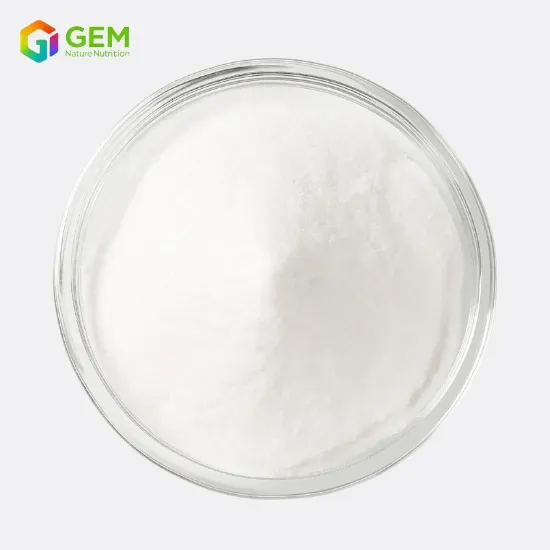
L-Arginine
L-Arginine bulk ingredient for B2B formulation sourcing. Request a specification sheet, batch COA, and documentation from GEM.
| 规格名称 | 规格值 |
|---|---|
| Assay | 98.5–101.5% HPLC |
| CAS No. | 74-79-3 |
| Appearance | White crystals or crystalline powder |
| Shelf Life | 24 months |
| Packing | 25 kg/drum |
L-Arginine
As a bulk ingredient, L-Arginine is valued for its versatility across finished-product categories, from encapsulated dietary supplements and ready-to-mix powders to fortified foods and functional beverages. Buyers sourcing a reliable arginine bulk powder typically prioritize consistent assay, low heavy-metal content, and traceable documentation—qualities that define GEM's supply program for international manufacturers.
L-Arginine Details
Specification: 98%HPLC.
Molecular formula: C6H14N4O2
Packing: 25kg/drum Last updated: June 21, 2026
The quick-view summary above captures the core identity of the material GEM offers. The product is supplied as a fine, free-flowing L-Arginine supplement-grade raw material suitable for downstream formulation, with full certificate documentation available on request for qualified B2B buyers.
What Is L-Arginine?
L-Arginine is found in high concentrations in protamines and histones, and it is a fundamental building block of various proteins, making its presence in nature quite extensive. Within human physiology, it serves not only as a structural component of proteins but also as a metabolic intermediate that participates in several critical pathways. This dual role—building block and signaling precursor—explains why it is one of the most studied amino acids in both nutritional science and pharmaceutical development.
Source & Chemistry
Natural Dietary Sources
L-Arginine can be found in any protein-containing food, such as meat, poultry, dairy products, and fish. Foods particularly rich in arginine include almonds, walnuts, dried sunflower seeds, dark chocolate, chickpeas, melon, peanuts, raw lentils, hazelnuts, Brazil nuts, red meat (in moderation), cashews, salmon, pistachios, soybeans, and pecans.
Plant proteins are especially noteworthy for formulators, because they deliver arginine alongside other complementary amino acids and fiber. Buyers working with plant-based systems may also explore our pea protein powder and rice protein ranges, which contribute naturally occurring arginine to protein-blend formulations.
Chemical Identity and Biosynthesis
Chemically, L-Arginine is the L-enantiomer of 2-amino-5-guanidinopentanoic acid, a basic, positively charged amino acid at physiological pH. Its guanidino group is the structural feature responsible for many of its unique biochemical roles, including its function as the sole endogenous precursor of nitric oxide.
In the human body, arginine is synthesized primarily through the intestinal-renal axis: the kidney converts circulating citrulline—much of which is produced by the small intestine—into arginine. This is why L-Citrulline DL-Malate is frequently paired with arginine in nitric-oxide-support products; citrulline serves as an indirect arginine precursor that can raise plasma arginine levels effectively.
L-Arginine Specification:
| Testing Item | Specification |
|---|---|
| Description | White crystals or crystalline powder |
| State of Solution | Clear and colorless |
| IR Spectrum | Match with the standard |
| Assay | 98.5%-101.5% |
| Optical Rotation | +26.3°~+27.7° |
| Loss on Drying | ≤ 0.5 % |
| Residue on Ignition | ≤ 0.3 % |
| Chloride | ≤ 0.05 % |
| Sulfate | ≤ 0.03 % |
| Iron | ≤ 30 ppm |
| Heavy Metals | ≤ 15 ppm |
The table above is the definitive identity and purity profile for GEM's material. Several test items deserve a brief note for technical buyers: Optical Rotation (+26.3° to +27.7°) confirms the correct L-chirality, distinguishing the bioactive enantiomer from its D-form; IR Spectrum matching the standard verifies chemical identity; and tight limits on Heavy Metals, Iron, Chloride, and Sulfate reflect the pharmaceutical-grade quality expected by regulated manufacturers.
Application Fields
The three application areas above reflect the breadth of L-Arginine's commercial use. In the nutritional and food sector, it functions both as a macro-nutrient contributor and as a sensory agent, thanks to its mild, slightly sweet taste that complements savory and beverage systems. In the medical and research arena, its defined purity (see specification table) makes it suitable for pharmaceutical and analytical applications. Across all fields, its physiological roles—growth support, metabolism, and vascular signaling—drive demand.
Production & Quality
How Commercial L-Arginine Is Made
Commercial L-Arginine is predominantly produced by microbial fermentation using engineered strains such as Corynebacterium glutamicum or Escherichia coli, followed by separation, crystallization, and purification to achieve pharmaceutical-grade material. Fermentation-based production is favored because it yields the naturally occurring L-enantiomer directly, avoiding the need for costly resolution steps required by some chemical synthesis routes.
Quality Control at GEM
GEM sources and supplies L-Arginine under a documented quality system. Every lot is verified against the published specification, with identity confirmed by IR spectroscopy and optical rotation, purity established by HPLC assay (98.5%–101.5%), and contaminants controlled to the limits shown in the table. Standard 25kg drum packing supports stable storage and efficient handling for bulk buyers, while certificate documentation—including Certificate of Analysis—is available to qualifying B2B customers.
Buyers evaluating an arginine manufacturer or supplier should request full documentation and confirm that assay, heavy metals, and microbiological limits meet their target market's regulatory framework. GEM supports this due diligence with transparent specifications and responsive technical service.
Frequently Asked Questions
What is L-Arginine used for?
L-Arginine is used as a nutritional supplement ingredient, a food additive and flavoring agent, a pharmaceutical raw material, and a reagent in biochemical research. It is best known in consumer products for nitric-oxide-support and sports-nutrition applications.
Is L-Arginine essential or non-essential?
For healthy adults it is non-essential, because the body can synthesize it—though at a relatively slow rate. It is essential for infants and conditionally essential during periods of rapid growth, recovery, or metabolic stress.
What is the difference between L-Arginine and L-Arginine HCl?
Both provide the L-Arginine active moiety, but the hydrochloride salt (L-Arginine Hydrochloride) carries added chloride for improved stability and solubility characteristics. Formulators choose between them based on dose, taste, and compatibility with the finished product.
What does the specification "98%HPLC" mean?
It indicates the material is standardized and assayed by high-performance liquid chromatography. The detailed specification table further defines assay at 98.5%–101.5%, confirming high purity for pharmaceutical and food-grade use.
How is L-Arginine related to nitric oxide?
L-Arginine is the direct substrate for nitric oxide synthase, the enzyme family that produces nitric oxide in the body. This makes it the principal "nitric oxide amino acid" used in circulation and performance supplements.
Which foods are rich in L-Arginine?
Arginine appears in all protein foods—meat, poultry, dairy, and fish—and is especially concentrated in nuts and seeds such as almonds, walnuts, and sunflower seeds, as well as legumes like chickpeas, lentils, and soybeans, plus dark chocolate and certain fruits such as melon.
How should L-Arginine bulk powder be stored and packed?
GEM supplies the material in 25kg drums. It should be kept in a cool, dry place, protected from moisture and direct light, in its original sealed container until use, consistent with good manufacturing practice for amino-acid raw materials.
Can L-Arginine be combined with other amino acids?
Yes. It is commonly formulated alongside L-Citrulline DL-Malate and L-Ornithine L-Aspartate, which share the same metabolic cycle, as well as branched-chain amino acids such as L-Leucine in recovery blends.
Is GEM's L-Arginine suitable for pharmaceutical use?
GEM supplies pharmaceutical-grade bulk powder meeting the specification shown above. Buyers should confirm the relevant pharmacopeia or regulatory requirements for their intended market and request the corresponding certificates.
Do plant proteins contain L-Arginine?
Yes. Plant proteins such as pea and rice protein naturally contain arginine and can contribute to overall intake in plant-based formulations. Explore pea protein powder for a protein source rich in this amino acid.
Further Reading
- L-Arginine Hydrochloride — the HCl salt form for formulators needing alternative solubility.
- L-Citrulline DL-Malate — a complementary nitric-oxide-cycle ingredient.
- L-Ornithine L-Aspartate — a urea-cycle-related amino-acid combination.
- L-Leucine — a branched-chain amino acid for recovery blends.
- Pea Protein Powder — an arginine-containing plant protein for blend formulation.
Supplier note: The information on this page describes the specifications and typical applications of GEM's L-Arginine bulk ingredient for qualified B2B purchasers. It is not intended as medical advice, and product specifications are subject to the certificates issued with each lot. Buyers are responsible for confirming suitability and regulatory compliance for their intended use and market.