
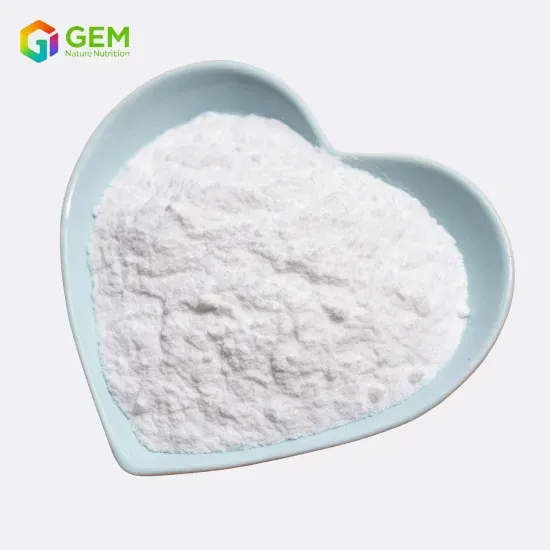
L-Ornithine L-Aspartate
L-Ornithine L-Aspartate bulk ingredient for B2B formulation sourcing. Request a specification sheet, batch COA, and documentation from GEM.
| 规格名称 | 规格值 |
|---|---|
| Assay | 98.0–101.0% HPLC |
| CAS No. | 3230-94-2 |
| Appearance | White crystalline powder |
| Shelf Life | 24 months |
| Packing | 25 kg/drum |
L-Ornithine L-Aspartate
L-Ornithine L-Aspartate (LOLA) is a compound amino acid ingredient used in liver wellness and metabolic support supplement formulations. GEM supplies bulk L-Ornithine L-Aspartate material for pharmaceutical and nutraceutical B2B customers, offering consistent 98–101% HPLC assay, full certificate packages, and export-ready 25 kg drum packaging.
Buyers choose GEM for reliable batch-to-batch uniformity, transparent documentation, and responsive B2B service. Whether you manufacture capsules, powders, sachets, or enteral nutrition blends, this OA powder integrates cleanly into amino acid-focused product lines. Below you will find the standard specification, the underlying chemistry, typical applications, and the quality framework that supports every shipment.
L-Ornithine L-Aspartate Details
Specification: 98%HPLC
Packing: 25kg/drum Last updated: June 21, 2026
Storage: Stored in closed containers in a cool, dry, well-ventilated area.
Appearance: White crystals or crystalline powder Assay: 98.0%–101.0% (HPLC) Certificate: COA, MSDS, ISO/FSSC documentation
The quick-view summary above reflects the standard commercial specification for L-Ornithine L-Aspartate as supplied by GEM. For full release testing, see the complete specification table in the next section. Every lot ships against a Certificate of Analysis that reports the individual test results listed below, so customers can validate the material before it enters production.
What Is L-Ornithine L-Aspartate?
At a glance, LOLA is best understood as a two-in-one amino acid delivery system. Instead of sourcing ornithine and aspartate separately, a formulator receives both building blocks pre-combined as a stable, crystalline salt. That simplicity is part of why ornithine aspartate has become a familiar raw material in nutraceutical and pharmaceutical supply chains.
The compound is sometimes referred to in the trade as "OA powder," a shorthand that appears frequently in procurement and formulation discussions. Regardless of the name used, the functional identity is the same: a salt of two physiologically relevant amino acids that participate in the body's natural nitrogen-handling chemistry.
Key characteristics of the material include:
- A white crystalline or powdered appearance suitable for capsules, sachets, and powder blends.
- A defined optical rotation range that confirms the L,L isomeric form.
- A neutral-to-slightly-acidic pH in solution, supporting flexible formulation design.
- Compatibility with other amino acids such as L-Arginine, branched-chain amino acids, and glutamine.
Because it is a compound rather than a single amino acid, LOLA is typically positioned for products where both ornithine and aspartate are desired together. This makes it a practical choice for manufacturers building liver wellness, metabolic support, and recovery-oriented product lines.
Source & Chemistry
To understand L-Ornithine L-Aspartate, it helps to look at its two constituents and the way they are joined.
L-Ornithine
L-Ornithine is a non-proteinogenic amino acid with the molecular formula C5H12N2O2. Unlike the standard amino acids incorporated into proteins during translation, ornithine circulates as a free intermediate. Its most famous role is in the urea cycle (also called the ornithine cycle), where it acts as the central carbon-nitrogen carrier that is regenerated with every turn of the pathway. In simple terms, ornithine is the molecule that "holds the loop open" as ammonia is converted into urea.
L-Aspartate
L-Aspartate is the L-form of aspartic acid, a proteinogenic, acidic amino acid with the molecular formula C4H7NO4. In addition to its structural role in proteins, aspartate participates directly in the urea cycle by donating a second nitrogen atom. This occurs at the argininosuccinate synthetase step, where aspartate condenses with citrulline to form argininosuccinate. Without aspartate's nitrogen contribution, the cycle could not package the full load of waste nitrogen for excretion.
The Salt Formation
L-Ornithine L-Aspartate is the crystalline salt produced when one molecule of L-ornithine and one molecule of L-aspartic acid are combined. The two amino acids are linked by an ionic interaction between the basic amino group of ornithine and the acidic carboxyl group of aspartate. The result is a single, stable compound that supplies both urea-cycle substrates in one ingredient.
Commercial Sourcing
In commercial manufacture, L-ornithine and L-aspartic acid are generally produced through controlled microbial fermentation or enzymatic synthesis from carbohydrate feedstocks, followed by purification and salt formation. The resulting OA powder is then standardized to the assay and purity limits shown in the specification table. Buyers evaluating supply should confirm lot-specific documentation, because the exact process and certifications can vary between manufacturers.
For formulators who need ornithine in a different salt form, L-Ornithine Monohydrochloride is a closely related alternative worth comparing during ingredient selection.
L-Ornithine L-Aspartate Specification:
| Testing Item | Specification |
|---|---|
| Appearance | White crystals or crystalline powder |
| IR Spectrum | Positive reaction |
| Light transmittance(%) | ≥98.0 |
| Assay | 98.0%~101.0% |
| Optical rotation | +27.0°~+30.0° |
| PH | 5.0-6.5 |
| Loss on drying(%) | ≤ 7.0% |
| Residue on ignition(%) | ≤ 0.2% |
| Chloride(%) | ≤ 0.03% |
| Sulfate(%) | ≤ 0.02% |
| Ammonium(%) | ≤ 0.02% |
| Heavy Metals | ≤ 10ppm |
| Iron(Fe) | ≤ 30ppm |
| Arsenic(As) | ≤ 2ppm |
| Orther amino acid | Not detected |
The specification above defines the release criteria for GEM's standard L-Ornithine L-Aspartate. A few points are worth highlighting for formulators and quality teams:
- Assay (98.0%–101.0%) confirms the material is both pure and accurately labeled, with tight limits that leave little room for off-spec product.
- Optical rotation (+27.0° to +30.0°) verifies the correct L,L stereochemistry, which matters for an ingredient whose value depends on natural amino acid configuration.
- Loss on drying (≤ 7.0%) and residue on ignition (≤ 0.2%) control moisture and inorganic residue, supporting stable shelf life and clean processing.
- Heavy metals (≤ 10 ppm), iron (≤ 30 ppm), and arsenic (≤ 2 ppm) reflect the contaminant controls expected of a pharmaceutical- and nutraceutical-grade raw material.
- "Other amino acid: not detected" confirms the absence of interfering amino acid impurities, an important point when the ingredient is blended into precise formulations.
Full numerical results for every lot are provided on the accompanying Certificate of Analysis.
Application Fields
Liver wellness supplements remain the largest consumer-facing category. Here LOLA is typically delivered in capsules or powdered sticks, sometimes combined with botanicals or additional amino acids for a broader metabolic-support story.
Sports recovery is the fastest-growing adjacent use. Post-exercise powders and tablets frequently pair ornithine aspartate with L-Arginine and branched-chain amino acids, reflecting shared interest in ammonia and recovery metabolism. For customers exploring the broader recovery stack, L-Citrulline DL-Malate is a logical companion ingredient.
Pharmaceutical raw material applications require the strictest documentation. GEM supports qualified manufacturing partners with the certificates and traceability needed for API-intermediate use.
Production & Quality
GEM's approach to L-Ornithine L-Aspartate supply emphasizes consistency, documentation, and safe handling. The points below describe the quality framework that backs every order.
Documentation Package
Each shipment is supported by a full set of documents so customers can clear customs, validate quality, and satisfy their own auditors:
- Certificate of Analysis (COA) reporting every test item from the specification table.
- Material Safety Data Sheet (MSDS) for safe handling and transport.
- ISO and FSSC 22000 documentation covering quality and food-safety management systems.
In-House and Third-Party Testing
Release testing covers identity (IR spectrum, optical rotation), purity (assay, light transmittance), moisture and ash (loss on drying, residue on ignition), and contaminants (heavy metals, iron, arsenic, chloride, sulfate, ammonium). The "other amino acid: not detected" criterion is verified to confirm freedom from interfering impurities.
Packaging and Handling
Standard packaging is a 25 kg drum, suitable for bulk B2B orders and export logistics. Custom packaging can be arranged for qualified commercial customers. Material should be stored in closed containers in a cool, dry, well-ventilated area, away from direct sunlight and sources of moisture, to preserve the low loss-on-drying value defined in the specification.
Frequently Asked Questions
2. What purity does GEM supply?
98–101% HPLC assay with full COA, MSDS, and ISO/FSSC documentation for B2B orders. The exact release limits are listed in the specification table above.
3. How should LOLA be stored?
Store in sealed containers in a cool, dry, well-ventilated area away from direct sunlight. Proper sealing helps maintain the loss-on-drying value and protects the powder from moisture pickup.
4. What packaging is available?
Standard 25 kg/drum; custom packaging available for qualified commercial orders. Drum packaging supports both domestic and export shipments.
5. Can LOLA be combined with other amino acids?
Yes — it is frequently blended with L-ornithine HCl, BCAAs, and glutamine in sports and wellness formulas. It also pairs well with arginine and citrulline in recovery stacks.
6. What is the difference between L-Ornithine L-Aspartate and L-Ornithine HCl?
L-Ornithine L-Aspartate is the salt of ornithine plus aspartic acid, delivering two urea-cycle amino acids in one molecule. L-Ornithine Monohydrochloride is the hydrochloride salt of ornithine alone. The right choice depends on whether your formula needs aspartate as well as ornithine.
7. How does L-Ornithine L-Aspartate relate to the urea cycle?
Ornithine is the central recycled intermediate of the urea cycle, while aspartate donates a second nitrogen through the argininosuccinate step. Supplying both together supports the substrate availability of these natural ammonia-handling pathways.
8. Is L-Ornithine L-Aspartate suitable for vegan or vegetarian formulations?
Amino acids used in this type of material are typically produced by fermentation or enzymatic synthesis rather than from animal tissue, which generally makes them suitable for vegan and vegetarian products. Formulators should still confirm the lot-specific certificate and any required statements with GEM before labeling.
9. What documents ship with each order?
Every order is accompanied by a COA, an MSDS, and ISO/FSSC documentation. Additional certificates or specifications can be requested for qualified commercial accounts.
Yes. The ingredient appears in hospital and enteral nutrition formulas that use amino acid blends, provided the finished product meets the applicable regulatory and quality requirements in the target market.
11. What does "OA powder" mean?
"OA powder" is a common trade shorthand for ornithine aspartate powder — the same material described here as L-Ornithine L-Aspartate. You may see both terms used interchangeably in procurement discussions.
12. How do I request a quote or sample?
Contact the GEM sales team with your target volume, desired packaging, and destination market. Samples and full documentation can be arranged for qualified B2B customers evaluating the ingredient.
Further Reading
Explore related amino acids, plant proteins, and botanical ingredients that pair well with L-Ornithine L-Aspartate in formulation and sourcing:
- L-Ornithine Monohydrochloride — the hydrochloride salt form of ornithine for comparison.
- L-Arginine — a closely related amino acid used in recovery and wellness stacks.
- L-Citrulline DL-Malate — a popular companion ingredient in sports recovery formulas.
- Milk Thistle Extract — a botanical commonly paired with liver-support amino acids.
- Pea Protein Powder — a plant protein option for blended nutritional products.
- Brown Rice Protein — another plant protein for multi-ingredient formulations.