
L-Citrulline-DL-Malate
L-Citrulline-DL-Malate bulk ingredient for B2B formulation sourcing. Request a specification sheet, batch COA, and documentation from GEM.
| 规格名称 | 规格值 |
|---|---|
| Assay | ≥ 99.0% HPLC |
| Ratio | 1:1; 2:1 |
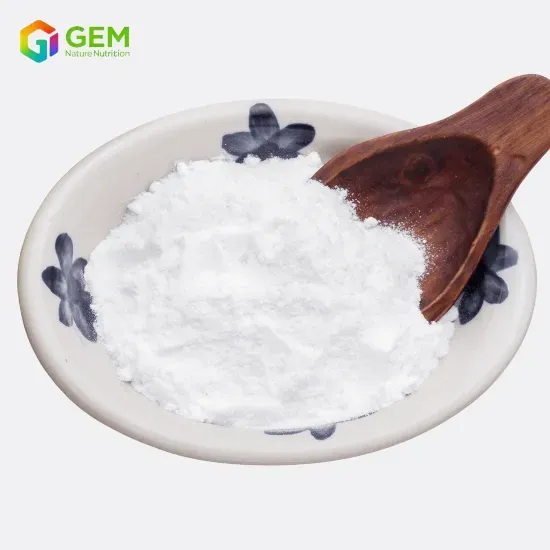
| Appearance | White powder |
| Shelf Life | 24 months |
| Packing | 25 kg/drum |
L-Citrulline DL-Malate
L-Citrulline DL-Malate is a compound of L-citrulline and malic acid, commonly used in pre-workout and sports nutrition formulas to support nitric oxide production and exercise performance. GEM supplies bulk powder for B2B formulators.
As a versatile sports nutrition ingredient, citrulline malate powder is valued for combining two complementary compounds in a single, standardized raw material. This makes it easier for manufacturers to build consistent pre-workout and endurance products without sourcing and weighing separate ingredients. GEM offers both the 1:1 and 2:1 grades so formulators can match the citrulline-to-malate ratio to their label claims.
This page is the complete technical reference for GEM's bulk L-Citrulline DL-Malate. It covers what the ingredient is, its source and chemistry, full specification tables for both ratios, the underlying mechanism, typical application fields, production and quality controls, and the questions procurement and R&D teams ask most often. Where the source document lists exact values, those values are reproduced verbatim.
L-Citrulline DL-Malate Quick View
Product Name: L-Citrulline DL-Malate (also written as L-Citrulline-DL-Malate)
Specification: L-Citrulline DL-Malate (1:1); L-Citrulline DL-Malate (2:1)
Appearance: White powder
Packing: 25 kg/drum
Last updated: June 21, 2026
Storage: Stored in closed containers in a cool, dry, well-ventilated area.
What Is L-Citrulline DL-Malate?
L-Citrulline DL-Malate is a stoichiometric compound formed by pairing L-citrulline with DL-malic acid. It is not a simple physical mixture; the two components are combined in defined molar ratios to produce a stable, water-soluble salt. GEM supplies the two most widely specified grades on the market: the 1:1 ratio and the 2:1 ratio.
L-citrulline is a naturally occurring amino acid first isolated from watermelon (Citrullus lanatus, formerly classified as Citrullus vulgaris). It plays a central role in the urea cycle and in the citrulline–nitric oxide pathway. Malic acid, by contrast, is the same organic acid that gives apples their tart flavor, and it is an intermediate of the tricarboxylic acid (TCA) cycle that powers cellular energy production.
When delivered together as citrulline malate powder, the two ingredients are intended to act along complementary physiological routes. The citrulline fraction supports the body's endogenous production of nitric oxide, while the malate fraction participates in energy metabolism. This dual-action profile is what makes the compound a popular sports nutrition ingredient across pre-workout, endurance, and recovery categories.
For brands building amino acid stacks, L-Citrulline DL-Malate is frequently combined with other performance amino acids such as L-Arginine, L-Arginine Hydrochloride, and L-Leucine. The combination lets a single blend address multiple pathways with standardized, assay-verified raw materials.
Source & Chemistry
The L-Citrulline Component
L-citrulline has the molecular formula C6H13N3O3 and a molecular weight of approximately 175.19 g/mol. It is a neutral, water-soluble amino acid that the human body can synthesize, so it is classified as non-essential. Endogenously, it is produced in the intestinal mucosa and kidneys from L-arginine during the nitric oxide synthase reaction, then recycled back to L-arginine through the citrulline–NO cycle catalyzed by argininosuccinate synthetase and argininosuccinate lyase.
Dietary and supplemental L-citrulline is often favored over oral L-arginine because it is handled differently during digestion and metabolism. Many formulators choose citrulline malate when the goal is sustained nitric oxide support, while keeping straight arginine as a complementary option. The two ingredients sit on the same biochemical pathway, which is why GEM lists both within the amino acid product range.
The DL-Malate Component
Malic acid has the molecular formula C4H6O5 and a molecular weight of approximately 134.09 g/mol. In the "DL" form used in this product, the material contains both the L- and D-isomers of malic acid. Malate is a natural intermediate of the TCA (Krebs) cycle, the central energy-producing pathway in mitochondria.
Within citrulline malate, the malate moiety is valued for its role in cellular energy metabolism rather than for any direct nitric oxide effect. Suppliers and formulators commonly describe the combination as pairing a vasodilatory amino acid with a metabolic acid carrier, which is why the salt is attractive for endurance and recovery applications.
The 1:1 and 2:1 Ratios Explained
The ratio in the product name refers to the molar relationship between L-citrulline and malic acid:
- 1:1 grade — one mole of L-citrulline paired with one mole of DL-malic acid. The specification lists L-citrulline content at 54.5–58.5% and DL-malate at 41.5–45.5%.
- 2:1 grade — two moles of L-citrulline paired with one mole of DL-malic acid. The specification lists L-citrulline content at 62.5–74.5% and DL-malate at 25.5–37.5%.
Both grades carry a minimum assay of ≥ 99.0%, confirming that the combined active material is highly pure. The choice between grades typically comes down to the target citrulline dose per serving and the label claim a brand wishes to make. Because the 2:1 grade contains proportionally more citrulline, less powder is needed to deliver the same citrulline equivalent.
L-Citrulline DL-Malate Specification
GEM supplies L-Citrulline DL-Malate in both the 1:1 and 2:1 specifications. Each lot is released against the full identity, assay, impurity, and microbiological profile shown below. The tables preserve the exact testing items and acceptance limits used for incoming and outgoing quality control, reproduced verbatim from the source specification.
L-Citrulline DL-Malate (1:1) Specification
| Testing Item | Specification |
|---|---|
| Appearance | White powder |
| Identification | Match with standard retention time |
| Assay | ≥ 99.0% |
| L-Citrulline | 54.5-58.5 |
| DL-Malate | 41.5-45.5 |
| Optical rotation | +13.0°~+15.0° |
| Solubility | Clear |
| Moisture(%) | ≤ 0.5% |
| Residue on ignition(%) | ≤ 0.1% |
| Chloride(%) | ≤ 0.02% |
| Sulfate(%) | ≤ 0.02% |
| Ammonium(%) | ≤ 0.02% |
| Heavy Metals | ≤ 10ppm |
| Iron(Fe) | ≤ 30ppm |
| Arsenic(As) | ≤ 1ppm |
| Total plate count | ≤ 1000cfu/g |
| Yeast and Moulds | ≤ 100cfu/g |
| E-Coli | Absence |
L-Citrulline DL-Malate (2:1) Specification
| Testing Item | Specification |
|---|---|
| Appearance | White powder |
| Identification | Match with standard retention time |
| Assay | ≥ 99.0% |
| L-Citrulline | 62.5-74.5 |
| DL-Malate | 25.5-37.5 |
| Optical rotation | +16.5°~+18.5° |
| Solubility | Clear |
| Moisture(%) | ≤ 0.5% |
| Residue on ignition(%) | ≤ 0.1% |
| Chloride(%) | ≤ 0.02% |
| Sulfate(%) | ≤ 0.02% |
| Ammonium(%) | ≤ 0.02% |
| Heavy Metals | ≤ 10ppm |
| Iron(Fe) | ≤ 30ppm |
| Arsenic(As) | ≤ 1ppm |
| Total plate count | ≤ 1000cfu/g |
| Yeast and Moulds | ≤ 100cfu/g |
| E-Coli | Absence |
Application Fields
L-Citrulline DL-Malate is a flexible sports nutrition ingredient used across multiple finished-product formats. The table below summarizes the most common application fields and how the raw material is typically employed.
| Application Field | How L-Citrulline DL-Malate Is Used |
|---|---|
| Pre-workout formulas | As a core nitric-oxide-supporting amino acid ingredient |
| Endurance & recovery products | Paired with other amino acids and energizing compounds |
| Functional beverages & mixes | Dissolves clear; suitable for drink powders and ready-to-drink formats |
| Capsule & tablet supplements | Standardized bulk powder for consistent encapsulation and tableting |
| Amino acid blends | Combined with L-Arginine, L-Leucine, and ornithine derivatives |
| Sports nutrition products | Used where a citrulline-plus-malate raw material is preferred over separate inputs |
For energy-focused formulations, citrulline malate is also frequently paired with D-Ribose, a pentose sugar involved in ATP regeneration, and with plant-based proteins such as Pea Protein Powder for complete recovery shakes.
Production & Quality
How the Salt Is Produced
L-Citrulline DL-Malate is produced by combining purified L-citrulline with DL-malic acid in the defined molar ratio, then refining the resulting salt into a uniform white powder. The 1:1 and 2:1 grades are differentiated by the molar proportion of the two components, which is reflected in the citrulline and malate ranges on each certificate of analysis.
Quality Control at Release
Every lot is tested against the full specification before release. Identity is confirmed by chromatographic retention time matching the standard, and the assay must meet or exceed 99.0%. Impurity controls cover moisture, residue on ignition, chloride, sulfate, ammonium, heavy metals (≤ 10 ppm), iron (≤ 30 ppm), and arsenic (≤ 1 ppm). Microbiological limits include total plate count (≤ 1000 cfu/g), yeast and moulds (≤ 100 cfu/g), and absence of E. coli.
Packaging, Storage & Handling
The standard packing is 25 kg/drum. Material should be stored in closed containers in a cool, dry, well-ventilated area to protect quality and shelf life. Specific shelf-life and retest dating are stated on the individual certificate of analysis supplied with each shipment.
GEM supplies this material as a raw ingredient for further manufacturing. Finished-product claims, labeling, and regulatory compliance remain the responsibility of the brand owner and must meet the requirements of the target market.
Frequently Asked Questions
What is the difference between 1:1 and 2:1 citrulline malate?
The numbers describe the molar ratio of L-citrulline to DL-malic acid. The 1:1 grade contains 54.5–58.5% L-citrulline and 41.5–45.5% DL-malate, while the 2:1 grade contains 62.5–74.5% L-citrulline and 25.5–37.5% DL-malate. The 2:1 grade therefore delivers proportionally more citrulline per gram of powder, which matters when a formulation targets a specific citrulline equivalent.
Is L-Citrulline DL-Malate the same as L-citrulline?
No. L-citrulline is a single amino acid, whereas L-Citrulline DL-Malate is a salt that combines L-citrulline with malic acid. The malate changes the ratio, the solubility profile, and the metabolic role of the finished raw material. Both grades still list L-citrulline as the primary active component on the specification.
What does "DL-Malate" mean?
"DL" indicates a racemic mixture containing both the L- and D-isomers of malic acid. In this product the malate is supplied as the DL form, which is the standard commercial grade used in citrulline malate raw materials.
How is citrulline malate powder typically dosed in a formula?
Finished-product dosing is set by the brand's formulation and the regulations of the target market, not by the raw material supplier. Because the citrulline content differs between grades, formulators calculate the citrulline equivalent from the assay ranges in the specification tables. GEM's technical team can help convert a target citrulline dose into the correct powder weight for either grade.
Is this ingredient suitable for vegan or vegetarian products?
L-citrulline and malic acid are typically produced by fermentation or synthetic routes rather than from animal sources, so the material is generally compatible with vegan and vegetarian formulations. Specific certifications and the absence of animal-derived processing aids should be confirmed against the batch certificate of analysis and GEM's documentation.
What is the recommended storage and shelf life?
Storage guidance is to keep the material in closed containers in a cool, dry, well-ventilated area. The exact shelf life and retest date appear on the certificate of analysis for each lot. Proper sealing after opening helps maintain the low moisture specification (≤ 0.5%).
Does L-Citrulline DL-Malate contain common allergens?
The ingredient itself is not among the major recognized food allergens, but allergen status also depends on the production facility and any shared lines. Brands should request GEM's allergen statement and certificate of analysis to confirm suitability for their allergen-control program.
How does citrulline malate compare to L-arginine?
Both sit on the nitric oxide pathway, but they are handled differently in the body. L-citrulline is converted to L-arginine endogenously and then to nitric oxide, whereas supplemental L-arginine supplies the substrate directly. Many formulas include both for a layered approach. See L-Arginine and L-Arginine Hydrochloride for the straight-arginine options.
Is the product tested for heavy metals and microbiology?
Yes. The specification includes heavy metals at ≤ 10 ppm, arsenic at ≤ 1 ppm, iron at ≤ 30 ppm, total plate count at ≤ 1000 cfu/g, yeast and moulds at ≤ 100 cfu/g, and absence of E. coli. These limits apply to both the 1:1 and 2:1 grades.
What packaging is available?
The standard packing is 25 kg/drum. Alternative pack sizes or customized packing may be available on request for qualified B2B customers; contact GEM's sales team to discuss volume and packaging requirements.
Can citrulline malate be used in beverages?
Yes. The specification lists solubility as "Clear," indicating the powder dissolves to a clear solution, which suits powdered drink mixes and ready-to-drink beverage applications. As with any formula, pilot testing is recommended to confirm taste, stability, and compatibility with other ingredients.
What are the CAS or regulatory identifiers?
Specific regulatory identifiers, including any CAS references, are provided on the certificate of analysis and supporting regulatory documentation for each shipment. Because identifier formatting can vary by grade and by region, request the latest COA from GEM rather than relying on a single published number.
Further Reading
- L-Arginine — complementary nitric oxide pathway amino acid
- L-Arginine Hydrochloride — stable arginine salt for blends
- L-Ornithine L-Aspartate — urea-cycle amino acid combination
- L-Leucine — branched-chain amino acid for sports nutrition
- D-Ribose — energy-metabolism ingredient for recovery formulas
- Pea Protein Powder — plant protein for recovery shakes