
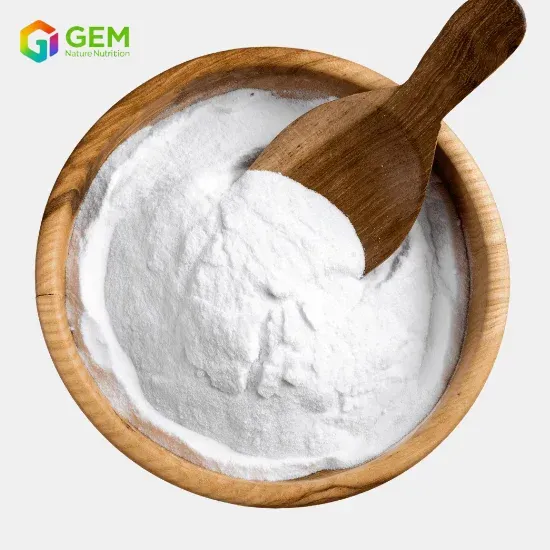
L-Arginine Hydrochloride
L-Arginine Hydrochloride bulk ingredient for B2B formulation sourcing. Request a specification sheet, batch COA, and documentation from GEM.
| 规格名称 | 规格值 |
|---|---|
| Assay | 99–101% HPLC |
| CAS No. | 1119-34-2 |
| Appearance | White crystals or crystalline powder |
| Shelf Life | 24 months |
| Packing | 25 kg/drum |
L-Arginine Hydrochloride
L-Arginine Hydrochloride is the hydrochloride (HCl) salt form of the amino acid L-arginine, supplied by GEM as a high-purity bulk arginine HCl powder engineered for supplement, pharmaceutical, and nutritional formulations that demand superior water solubility. GEM supplies bulk arginine HCl powder meeting standard quality specifications for global B2B markets, backed by consistent 25 kg drum packaging and reliable batch-to-batch quality.
L-Arginine Hydrochloride Quick View:
Product Name: L-Arginine Hydrochloride (L-Arginine HCl) Specification: 99% HPLC CAS No: 1119-34-2 Packing: 25 kg/drum Appearance: White crystals or crystalline powder Solubility: Easily soluble in water; hygroscopic Last updated: June 21, 2026
What Is L-Arginine Hydrochloride?
L-Arginine hydrochloride (L-Arginine HCl) is a specific chemical form of L-arginine in which the amino acid is bonded with a hydrochloride salt. Arginine is one of the 20 standard proteinogenic amino acids and is classified as a conditionally essential, or semi-essential, amino acid: the human body can synthesize it, yet in periods of rapid growth, intense physical training, injury, or illness, dietary or supplementary intake becomes important to meet demand.
Both common L-arginine (the free-base form) and L-Arginine HCl deliver the same arginine molecule to the body. The decisive difference lies in the counter-ion attached to the molecule. The HCl version is created specifically for better performance as a health supplement ingredient, where solubility, taste, and handling stability are decisive formulation factors that influence both manufacturing and the end-consumer experience.
When the salt is placed in water it dissociates, releasing the L-arginine cation together with a chloride anion. Formulators therefore obtain the same active arginine payload, but in a physical form that is markedly easier to handle in powder blends, tablets, sachets, and ready-to-mix beverages. For buyers comparing grades side by side, our L-Arginine base product page details the unsalted alternative and its own specification profile.
Source & Chemistry: L-Arginine HCl vs L-Arginine Base
The addition of the hydrochloride group significantly changes the physical properties of the amino acid, making it more effective and more practical for human consumption in supplement and food applications. The points below explain precisely why many formulators choose the salt over the free base when building powder and beverage products.
Higher Solubility
L-Arginine HCl dissolves much more easily in water than L-Arginine base. Dissolution characteristics are crucial for certain products, especially liquid shots, effervescent tablets, and high-dose powder sticks. L-Arginine HCl gives manufacturers more formulation choices when the free base is not suitable for a given formula, such as clear liquid formats that demand rapid, complete dissolution.
Improved Bioavailability
Because it dissolves much better than the free base, the human digestive system can absorb L-Arginine HCl more quickly and efficiently. Faster, more complete dissolution supports more predictable uptake after consumption, which matters for products built around consistent and reproducible dose delivery to the end user.
Neutralized Taste
L-arginine base carries a slightly bitter, almost "fishy" or alkaline taste. The HCl form neutralizes this bitter taste in L-arginine, making the powder far easier for end consumers to drink in powdered beverage applications. This single property often determines whether a finished mix is palatable without heavy flavor masking or sweetener loading.
Dose-Equivalence Note for Formulators
Because the hydrochloride adds molecular weight, L-Arginine HCl (molecular weight about 210.7 g/mol) contains roughly 82–83% free L-arginine by mass, with the remainder being chloride. When a formula calls for a defined amount of arginine, buyers should calculate the equivalent salt weight accordingly. Related salt forms such as L-Ornithine Monohydrochloride follow the same principle and are worth reviewing for combination or stacked products.
L-Arginine Hydrochloride Specification
The following quality specification defines the standard analytical profile for GEM's L-Arginine HCl bulk powder. Every batch is verified against these parameters before release, giving B2B customers a clear, repeatable benchmark for incoming quality control.
| Testing Item | Specification |
|---|---|
| Description | White crystals or crystalline powder |
| State of Solution | Clear and colorless |
| IR Spectrum | Postive reaction |
| Assay | 99%-101% |
| Light Transmittance | ≥ 98% |
| Optical Rotation | +22.1°~+22.9° |
| Loss on Drying | ≤ 0.2 % |
| Residue on Ignition | ≤ 0.1 % |
| Chloride | 16.58%-17.00% |
| Sulfate | ≤ 0.02 % |
| Ammonium | ≤ 0.02 % |
| Arsenic | ≤ 1 ppm |
| Iron | ≤ 10 ppm |
| Heavy Metals | ≤ 10ppm |
Application Fields
L-Arginine hydrochloride is a white crystalline powder that is easily soluble in water and exhibits hygroscopicity. It finds extensive application across food, medicine, health products, and feed industries, making it one of the more versatile amino acid ingredients in GEM's catalog.
Health Supplement Market
In the health supplement market, L-arginine hydrochloride is popular among consumers. It can enhance physical strength and improve immunity, promote sleep, and relieve stress, playing a positive role in improving quality of life. Many combination formulas pair it with other amino acids such as L-Citrulline DL-Malate, a well-known partner in the nitric-oxide pathway.
Feed Industry
In the feed industry, L-arginine hydrochloride can enhance animal growth, improve meat quality, and increase feed utilization. Therefore, in animal husbandry and aquaculture, it is widely added to feed to enhance animal production performance and economic benefits for producers operating at scale.
Production & Quality Assurance
GEM supplies L-Arginine HCl as a bulk ingredient manufactured to consistent, documented standards. Understanding how the material is produced and controlled helps B2B buyers specify with confidence and plan their own quality programs around a reliable raw material.
Manufacturing Route
Commercial L-arginine is most often produced by microbial fermentation using selected strains, after which the amino acid is isolated, purified, and converted into the hydrochloride salt form. The salt-forming step is what yields the free-flowing, water-friendly crystalline powder described in this specification, with the chloride counter-ion locked into the crystal structure.
Analytical Controls
Each lot is tested against the full specification table above. The assay (99%–101% by HPLC) confirms purity, while optical rotation (+22.1° to +22.9°) verifies the correct L-chirality of the molecule and rules out unwanted D-form contamination. Limits on heavy metals, arsenic, iron, sulfate, and ammonium control elemental and ionic impurities, and loss-on-drying plus residue-on-ignition confirm low moisture and ash content. Light transmittance (≥98%) and a clear, colorless state of solution confirm a clean, low-colored material suitable for sensitive formulations.
Packaging and Storage
L-Arginine HCl is supplied in 25 kg drums. Because the material is hygroscopic, it should be stored in a cool, dry place, kept tightly sealed, and protected from atmospheric moisture to preserve free-flow and assay. Proper handling maintains the stability advantages described earlier and protects the investment in each drum through the full shelf life.
Sourcing from a Reliable Amino Acid Supplier
Working with an established amino acid supplier ensures traceable documentation, stable supply, and batch consistency for large-scale production. GEM supports B2B customers with standard specifications and responsive logistics across global markets, helping formulators keep their own production lines running without interruption or unexpected grade changes.
Frequently Asked Questions
What is the difference between L-Arginine HCl and L-Arginine base?
Both deliver the same arginine molecule, but L-Arginine HCl is the hydrochloride salt, while L-arginine base is the free amino acid. The salt form dissolves more easily in water, has a milder taste, and is more stable in humidity. The base form is chosen where a salt-free ingredient is preferred for a specific formulation reason.
What is the CAS number of L-Arginine Hydrochloride?
The CAS registry number for L-Arginine Hydrochloride is 1119-34-2. This identifier is listed in the Quick View block above and should appear on accompanying documentation and certificates of analysis for traceability and regulatory purposes.
What is the purity or assay of GEM's L-Arginine HCl?
GEM supplies L-Arginine HCl at a specification of 99% HPLC, with the batch assay verified in the range of 99%–101% against the full specification table. This high assay supports both food and supplement-grade applications where consistency is critical to the finished product.
Is L-Arginine HCl soluble in water?
Yes. L-Arginine hydrochloride is easily soluble in water, which is one of the main reasons formulators choose it over the free base. Its high solubility suits beverages, sachets, and effervescent or liquid delivery formats that require rapid, complete dissolution.
How is L-Arginine HCl packaged?
The standard packing is 25 kg per drum. Drums protect the hygroscopic powder during storage and transport and provide a practical unit for warehouse handling. Buyers requiring different pack sizes should discuss options with GEM's sales team before ordering.
What are the main applications of L-Arginine HCl?
The main fields are food (nutritional enhancer), pharmaceuticals (nitric oxide precursor), health supplements (strength, immunity, sleep, stress), and animal feed (growth, meat quality, feed efficiency). Each application is detailed in the Application Fields section above with its specific functional role.
Why is L-Arginine HCl preferred in supplements?
The HCl form neutralizes the bitter, alkaline taste of the base, dissolves faster, and resists clumping in humid storage. These properties improve both the manufacturing experience on the line and the end-consumer drinking experience in powdered products and ready-to-mix formats.
Can L-Arginine HCl be used in animal feed?
Yes. In the feed industry it enhances animal growth, improves meat quality, and increases feed utilization. It is widely added to feed in animal husbandry and aquaculture to raise animal production performance and deliver stronger economic returns for producers.
How should L-Arginine HCl be stored?
Store in a cool, dry place in a tightly sealed container, away from moisture, because the powder is hygroscopic. Correct storage preserves free-flow, assay, and shelf life, protecting the material from the clumping the hydrochloride form is designed to resist.
Is L-Arginine HCl related to other amino acids you supply?
Yes. Buyers often evaluate it alongside L-Ornithine L-Aspartate, L-Leucine, and L-Theanine for combined formulations. Each is profiled on its own product page with full specifications for easy comparison.
Further Reading
Explore related amino acids, proteins, and functional ingredients from GEM:
- L-Arginine (Free Base) — the unsalted alternative for direct comparison with the HCl salt.
- L-Ornithine Monohydrochloride — another hydrochloride salt amino acid with similar handling benefits.
- L-Citrulline DL-Malate — a nitric-oxide-pathway partner frequently stacked with arginine.
- L-Ornithine L-Aspartate — another ornithine derivative for combination products.
- Pea Protein Powder — a plant protein for nutritional and sports formulations.
- Ginseng Extract — a traditional botanical for wellness products.