
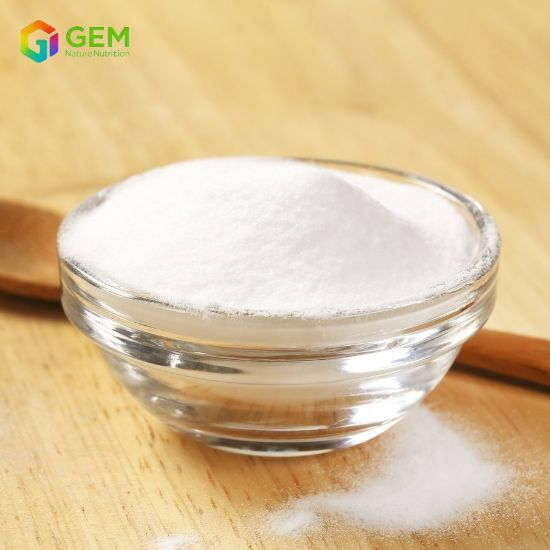
Xylo-oligosaccharide
Xylo-oligosaccharide bulk ingredient for B2B formulation sourcing. Request a specification sheet, batch COA, and documentation from GEM.
| 规格名称 | 规格值 |
|---|---|
| Source | Corncobs |
| Forms | Powder; Liquid |
| Assay | 35%–99% (Powder); 70%–80% (Liquid) |
| CAS No. | 87-99-0 |
| Shelf Life | 24 months |
| Stock | Regular storage |
Xylo-oligosaccharide
Xylo-oligosaccharide (XOS) is an oligosaccharide ingredient supplied in powder and liquid grades for B2B food, beverage, dairy, and supplement formulation. Confirm product-specific non-GMO status, quality documentation, and regulatory suitability before use.
Quick View
Specification: 35%–99% Powder; 70%–80% Liquid
XOS Powder Grades: 35% · 70% · 80% · 95% · 99%
XOS Liquid Grades: 70% · 80%
Source: Non-GMO corncobs
Composition: Short-chain xylose polymers (X2–X9) linked by β-1,4 glycosidic bonds
CAS No.: 87-99-0
Certificate: FSSC22000; BRC; Kosher; Halal; IP Non-GMO documentation may be available for qualified orders
Availability: Confirm current production capacity and availability with GEM
Shelf Life: 24 months
Application: Dietary supplements; Functional foods and beverages; Dairy products; Health-care foods; Normal food fortification
Packing: 20 kg/bag
Last updated: June 21, 2026
What Is Xylo-oligosaccharide?
Xylo-oligosaccharide (XOS) is an oligosaccharide ingredient that consists of short-chain polymers (X2–X9) linked by β-1,4 glycosidic bonds. It is used in food and supplement formulations. Its processing suitability, use level, and permitted claims should be confirmed with product-specific testing and local regulatory review.
Unlike many bulk fibers, XOS delivers its prebiotic effect at a comparatively small dose, which suits compact dosage forms and label-space-constrained products. Its naturally sweet taste lets formulators reduce added sugars without high-intensity artificial sweeteners, and its plant-derived, non-GMO profile pairs well with Inulin in synbiotic systems.
Source & Chemistry of Xylo-oligosaccharide
Xylo-oligosaccharide belongs to the oligosaccharide family and is built from xylose, a five-carbon (pentose) sugar. In nature, xylose units are joined end to end through β-1,4 glycosidic linkages to form xylan, one of the most abundant hemicellulose polymers in the plant cell wall. Corncob is a particularly rich and renewable source of xylan, which is why it has become a preferred feedstock for commercial XOS production.
GEM sources non-GMO corncobs and uses controlled enzymatic hydrolysis to cleave xylan into functional xylo-oligosaccharides with a degree of polymerization spanning X2 to X9. This preserves the natural β-1,4 structure that makes XOS resistant to digestion in the upper gastrointestinal tract.
XOS is commonly described as a non-digestible oligosaccharide. The extent of digestion, fermentation, and any physiological effect depends on the ingredient profile, finished product, and available evidence; do not convert general ingredient research into a finished-product health claim.
From a chemistry standpoint, XOS is mildly sweet, highly water-soluble, and stable across a wide pH and temperature range — practical advantages for food systems that we quantify under Key Technical Features.
Available Forms — Choose the Right Format for Your Line
GEM offers XOS in both dry and liquid presentations so that manufacturers can match the ingredient to their process and finished format.
XOS Powder (35% · 70% · 80% · 95% · 99%)
Ideal for capsules, tablets, stick packs, and dry powder blends. Higher assay grades (95% and 99%) suit concentrated prebiotic formulas with minimal excipient load. Lower assay powders (35%–80%) provide cost-effective options for heavily fortified foods and blends where XOS is one component among several.
XOS Liquid (70% · 80%)
Suitable for beverage fortification, dairy applications, and liquid supplement lines where dry blending is not required. Liquid XOS disperses readily in aqueous systems and is convenient for ready-to-drink and syrup-based products.
When selecting a grade, weigh your target daily serving, other formula ingredients, and processing conditions. Brands building protein-and-fiber products with Pea Protein Powder or Brown Rice Protein often choose a high-assay powder to keep total powder load manageable.
Quality Specification (95% Powder Grade)
The table below reflects the specification for the 95% powder grade. GEM maintains documented specifications for every grade it supplies; values such as moisture, water activity, and XOS content are verified by in-house and standard methods before release.
| Test Item | Specification | Test Method |
|---|---|---|
| Appearance | Powder | Visual |
| Color | White or light yellow | Visual |
| Odor | Peculiar smell of the product | Visual |
| Taste | Sweet | Visual |
| Impurity | No visible impurity | Visual |
| Moisture % | ≤ 5 | GB |
| Water Activity | ≤ 0.1 | In-house |
| Ash % | ≤ 0.3 | GB |
| pH | 3.5 – 6.0 | pH Meter |
| XOS Content (as dry basis) % | ≥ 95.0 | HPLC |
| XOS2–4 Content (as dry basis) % | ≥ 65.0 | HPLC |
| Total Plate Count | ≤ 1000 cfu/g | GB |
| Total Yeast & Mold | ≤ 25 cfu/g | GB |
| E. Coli | < 10 cfu/g | GB |
| Salmonella | Absent/25 mg | GB |
Remark: Specifications vary by grade (35%–99% powder; 70%–80% liquid). Contact GEM to request grade-specific Specification Sheet, COA, and MSDS.
Key Technical Features
1. Formulation concentration
Appropriate inclusion level depends on the ingredient grade, finished format, destination market, and substantiation available to the brand.
2. Research context
Research has examined XOS in microbiome-related contexts. That research does not establish a health outcome for every finished product.
3. Processing Stability
XOS maintains structural integrity under demanding food processing conditions:
- Acid/Base Resistance: No significant change in solutions from pH 2.5 to 11 when heated at 100 °C for 1 hour
- Heat Resistance: Maintains stability at 180 °C for 30 minutes (at pH 4.0), suitable for pasteurization, UHT processing, and baking
4. Minimal Human Digestibility (~0.4%)
With a digestibility rate of approximately 0.4%, XOS passes through the upper digestive tract largely intact, reaching the lower intestine where prebiotic activity occurs.
5. Ultra-Low Water Activity
XOS features water activity of ≤ 0.10, below the industry standard requirement of 0.15 for probiotic co-formulation. This may help maintain live bacteria stability during shelf life in probiotic blends.
Together, these characteristics let formulators add a potent prebiotic without the usual trade-offs of bulk fiber — smaller servings, stable processing, and compatible co-formulation with live probiotics.
Formulation and claim boundaries
XOS may be considered for food and supplement formulations where its identity, specifications, use level, and permitted wording have been reviewed. This ingredient page does not establish microbiome, nutrient-absorption, oral-health, or disease-related outcomes.
Application Fields
XOS adapts to many delivery systems thanks to its solubility, thermal stability, and neutral-to-slightly-sweet taste. It dissolves clearly in beverages, survives baking, and coexists with dairy cultures — while oral-care and animal-nutrition uses extend its reach into adjacent categories.
Production & Quality
GEM produces Xylo-oligosaccharide from non-GMO corncobs through a controlled, enzyme-based process: raw-material pretreatment liberates xylan, enzymatic hydrolysis cleaves it into functional xylo-oligosaccharides, and the hydrolysate is separated, purified, then concentrated (liquid) or spray-dried (powder) before batch testing and packing.
Quality is managed under recognized food-safety and quality systems. GEM holds ISO, FSSC22000, and BRC certifications, and supplies Kosher, Halal, and IP Non-GMO certificates for qualified commercial orders. These credentials support market access across regions with stringent import and labeling requirements.
Finished goods are released against documented specifications using in-house and standard methods. XOS content and XOS2–4 content are quantified by HPLC; water activity is measured in-house; microbial limits follow GB methods; and pH, moisture, and ash are verified per the test plan. GEM's annual capacity exceeds 100 tons, with standard packing of 20 kg per bag for pilot and full-scale runs.
Documentation is provided on request to support customer quality and regulatory workflows:
- Specification Sheet — full grade-specific test parameters
- COA (Certificate of Analysis) — batch-specific test results
- MSDS — safe-handling and storage guidance
Customers developing custom blends can request grade-specific data and application support before scale-up.
Frequently Asked Questions
1. Which XOS grades does GEM supply?
GEM supplies powder grades at 35%, 70%, 80%, 95%, and 99%, and liquid grades at 70% and 80%. Contact sales for grade-specific specifications and pricing.
2. What is a typical daily serving in finished products?
Industry formulations commonly use 0.7–3 g per day depending on grade and product format. Final dosage must comply with regulations in your target market.
3. Can XOS be combined with probiotics?
Yes. XOS is widely co-formulated with live probiotics as a synbiotic ingredient. Its ultra-low water activity (≤ 0.10) may help maintain probiotic stability during shelf life.
4. Is XOS suitable for heat-processed foods?
Yes. XOS maintains stability under extreme conditions including pH 2.5–11 at 100 °C for 1 hour, and 180 °C for 30 minutes at pH 4.0 — suitable for baking, pasteurization, and UHT processing.
5. What quality documents does GEM provide?
We provide Specification Sheet, COA (Certificate of Analysis), and MSDS upon request. Kosher, Halal, BRC, FSSC22000, and IP Non-GMO certificates are available for qualified commercial orders.
7. How does XOS compare with Inulin?
Both are prebiotic fibers with different dose profiles and processing characteristics. Inulin typically requires higher daily doses; XOS may be effective at lower inclusion levels. Many brands use both for complementary prebiotic coverage.
8. Is XOS tooth-friendly and suitable for oral-care products?
Yes. XOS is not fermentable by common cariogenic oral bacteria such as S. mutans, so it does not promote tooth decay. Its mild natural sweetness supports "tooth-friendly" positioning in sugar-free gum, lozenges, and chewable formats.
10. Can XOS be used in animal feed or pet nutrition?
Yes. As a plant-derived prebiotic, XOS is applied as a feed additive to support gut microbiota balance in livestock and companion-animal nutrition. Confirm permitted use levels and claim language with the regulations of your target market.
11. What is the difference between powder and liquid XOS grades?
Powder grades (35%–99%) suit dry formats such as capsules, tablets, stick packs, and powder blends, while liquid grades (70%–80%) suit beverages, dairy, and liquid supplement lines where dry blending is not required. Higher powder assays enable more concentrated formulas with less excipient load.
12. How is XOS produced and sourced?
GEM produces XOS from non-GMO corncobs through enzymatic hydrolysis of corncob xylan, followed by purification, concentration (liquid), or spray drying (powder). Corncob is a renewable agricultural byproduct, supporting a sustainable, plant-based supply chain.