
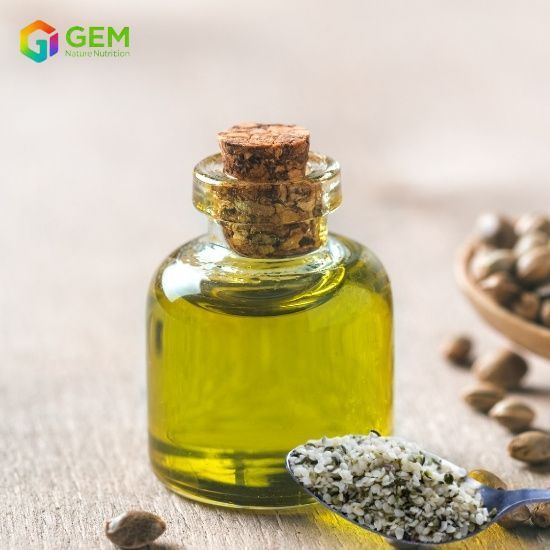
Hemp Seed Oil
Hemp Seed Oil bulk ingredient for B2B formulation sourcing. Request a specification sheet, batch COA, and documentation from GEM.
| 规格名称 | 规格值 |
|---|---|
| Extraction | Cold-pressed |
| Omega-6 / Omega-3 ratio | ≈ 4:1 |
| Total THC | ≤ 4.0 ppm (LOQ 0.1 ppm) |
| Acid Value | ≤ 3 mg/g |
| Appearance | Yellow with light green |
| Shelf Life | 18 months |
| Packing | 190 kg/drum; 950 kg/IBC |
Hemp Seed Oil
Hemp Seed Oil is a cold-pressed plant oil derived from Non-GMO hulled hemp seeds (Cannabis sativa L.), delivering a balanced 4:1 Omega-6 to Omega-3 ratio, natural Vitamin E, and THC ≤ 4 ppm. GEM supplies hemp seed oil bulk quantities for food, dietary supplement, and cosmetic manufacturers, supported by EU- and USDA-aligned quality controls. As a B2B ingredient partner, GEM delivers cold pressed hemp oil that meets the documentation, consistency, and traceability expectations of global formulators.
Hemp seed oil has attracted steady demand as a plant-based omega 3 6 oil for brands seeking marine-free essential fatty acids. Unlike cannabinoid extracts, this oil is pressed exclusively from the cleaned seed, which keeps it naturally low in THC and free of CBD. The result is a versatile, food-grade oil with a pleasant nutty note and a bright golden hue that performs across both ingestible and topical product lines.
GEM offers two commercial grades — a common (food) grade and a refined (cosmetic) grade — from a single supply chain. Both are produced without chemical solvents or additives, helping brand owners build clean-label positioning while keeping the paperwork required for regulated markets on hand.
Hemp Seed Oil Quick View
Other Name: Hemp hearts oil
Plant Source: Non-GMO hulled hemp seeds
Extraction: Cold-pressed (no chemical solvents or additives)
Fatty Acid Ratio: Omega-6 / Omega-3 ≈ 4:1
Certificate: ISO22000; ISO9001; BRC; HACCP; Kosher; Halal
Annual Production Capacity: 100+ tons
Application: Functional foods and beverages; Dietary supplement softgels; Cosmetic emollients; Functional oral oils; Skin care
Packing: 190 kg/drum; 950 kg/IBC
Shelf Life: 18 months (unopened)
Last updated: June 21, 2026
What Is Hemp Seed Oil?
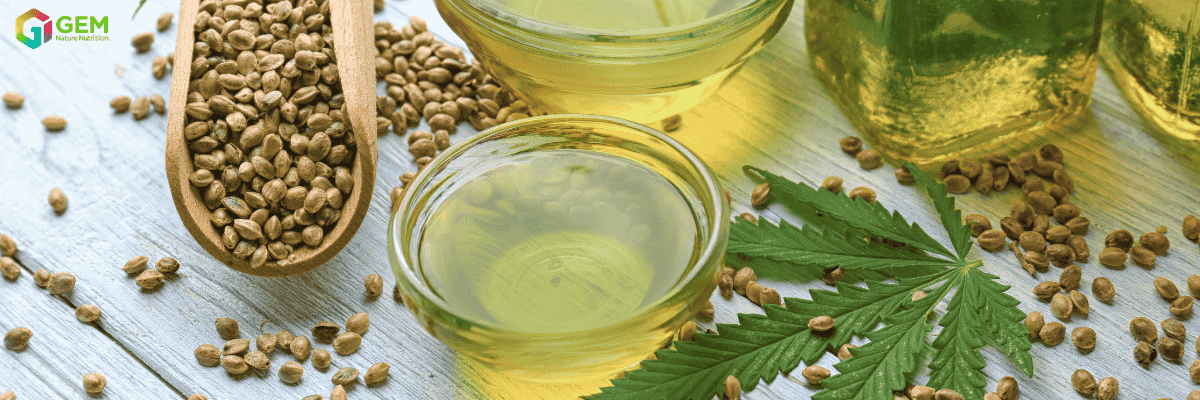
Hemp seed oil is obtained by cold-pressing hulled hemp seeds at low temperatures to minimize nutrient degradation. The mechanical screw-press process presses the seed and separates the crude oil from the solid cake without the use of hexane or other chemical solvents. Gentle temperatures protect heat-sensitive compounds such as polyunsaturated fatty acids and natural tocopherols (Vitamin E), which is why cold pressing is the preferred method for premium food and cosmetic grades.
Unlike CBD oil or full-spectrum hemp extract, hemp seed oil contains negligible cannabinoids. GEM controls total THC ≤ 4.0 ppm (LOQ 0.1 ppm) by LC-MS/MS, meeting the requirements of food and supplement markets in the EU and USA. The oil is therefore a true seed oil — not a cannabinoid product — and is suitable for mainstream food and personal-care applications.
The oil is naturally rich in polyunsaturated fatty acids with an approximate 4:1 ratio of Omega-6 to Omega-3 — a balance close to the ratio some nutrition guidelines suggest for dietary harmony. It also provides natural Vitamin E (44.7 mg/100 g per nutritional analysis), which contributes to inherent oxidative stability and a longer usable shelf life under proper storage.
GEM maintains acid value ≤ 3 mg/g and runs comprehensive testing for pesticides, aflatoxins, and heavy metals. These controls support clean-label positioning for premium food and supplement brands that need verifiable documentation rather than assumptions. The combination of a balanced fatty acid profile, low acidity, and full contaminant testing makes the oil a dependable base for both ingestible and topical formulations.
Source & Botany
Hemp (Cannabis sativa L.) is an annual, herbaceous plant in the family Cannabaceae, cultivated for thousands of years for its fibre, seed, and oil. The part used for this product is the seed — specifically cleaned, hulled hemp seeds sometimes called hemp hearts. Once the outer shell is removed, the soft inner kernel is pressed to yield the golden oil.
A key point for buyers: THC and other cannabinoids are concentrated in the glandular trichomes of the flowers and upper leaves — not in the seeds. Properly cleaned and dehulled seeds therefore yield oil that is naturally negligible in cannabinoids. Industrial hemp is legally defined by its low THC content in the plant (commonly below 0.3% in the United States and below 0.2–0.3% in parts of the EU), and GEM's finished oil is controlled to total THC ≤ 4 ppm by LC-MS/MS to remain well inside food- and supplement-grade limits.
Hemp seeds are naturally oily, carrying roughly 25–35% lipids depending on variety and growing conditions. They are also a good source of protein, which is why GEM offers a complementary Hemp Protein Powder for brands building complete hemp-based ingredient lines. The seeds used for GEM's oil are Non-GMO, supporting clean-label and non-GMO positioning for finished products.
Because hemp seed oil is a natural mixture of triglycerides rather than a single isolated compound, it does not carry a single CAS registry number. The identity and quality of the oil are documented through its full specification, fatty acid profile, and contaminant testing rather than a single molecular formula.
Quality Specification
The table below lists GEM's full release specification for hemp seed oil. Every lot is tested against these parameters before QC release, and the methods shown are the referenced national or international standards used for each test.
| Test Item | Specification | Test Method |
|---|---|---|
| Appearance | Yellow with light green | GB/T 5525-2008 |
| Flavour / Odour | Slight nutty | GB/T 5525-2008 |
| Lovibond Colour | Yellow ≤ 35; Red ≤ 3.0 | GB/T 22460-2008 |
| Moisture | ≤ 0.15% | GB 5009.236-2016 |
| Insoluble Admixture | ≤ 0.05% | GB/T 15688-2008 |
| Peroxide Value | ≤ 8 meq/kg | GB 5009.227-2016 |
| Acid Value | ≤ 3 mg/g | GB 5009.229-2016 |
| Total THC | ≤ 4.0 ppm (LOQ 0.1 ppm) | VA14110 LC-MS/MS |
| As | ≤ 0.1 mg/kg | GB 5009.268-2016 |
| Pb | ≤ 0.1 mg/kg | GB 5009.12-2017 |
| Hg | ≤ 0.1 mg/kg | GB 5009.268-2016 |
| Cd | ≤ 0.1 mg/kg | GB 5009.268-2016 |
| Pesticide Residue | Not Detected | BS EN 15662:2018 |
| Aflatoxin B1 | ≤ 2.0 ppb | DIN EN 14123:2008-03 |
| Aflatoxin B1+B2+G1+G2 | ≤ 4.0 ppb | DIN EN 14123:2008-03 |
The fatty acid profile behind the 4:1 Omega-6/Omega-3 ratio is detailed in the Nutrition Data table below. In hemp seed oil, the dominant fatty acids are linoleic acid (Omega-6), alpha-linolenic acid (Omega-3, ALA), and oleic acid (Omega-9). The low peroxide value (≤ 8 meq/kg) and low acid value (≤ 3 mg/g) indicate fresh oil with good oxidative stability, while the heavy-metal and mycotoxin limits confirm suitability for regulated food and supplement channels.
Nutrition Data (per 100 g)
The nutritional composition below is based on GEM's analytical profile and summarizes the oil's fat and fatty acid content per 100 g.
| Nutritional Information | Value | Unit |
|---|---|---|
| Fat | 99.8 | g |
| Saturated fatty acid | 10.3 | g |
| Vitamin E | 44.7 | mg |
| Total omega fatty acids | 85.2 | g |
| Omega-3 fatty acid | 17.5 | g |
| Omega-6 fatty acid | 55.6 | g |
| Omega-9 fatty acid | 12.0 | g |
Total omega fatty acids make up about 85.2 g per 100 g, with Omega-6 (55.6 g) and Omega-3 (17.5 g) delivering the characteristic ~4:1 ratio. The Omega-3 present is ALA (alpha-linolenic acid), a plant-source essential fatty acid; the oil does not naturally contain EPA or DHA. The 12.0 g of Omega-9 (oleic acid) contributes to the oil's smooth skin feel and mild flavour. Combined with 44.7 mg/100 g of natural Vitamin E, the profile supports both nutritional and cosmetic use.
Production & Quality
Production Process
GEM's hemp seed oil follows a straightforward, solvent-free mechanical route:
Finished Hemp Seeds → Cold Pressing & Defatting → Crude Hemp Oil → First Filtration → Second Filtration → Finished Hemp Hearts Oil → Packaging → QC Release
Cleaned, hulled hemp seeds are fed into a cold press where mechanical pressure extracts the crude oil. The crude oil then passes through two filtration stages to remove fine solids and impurities, producing a clear, finished hemp hearts oil. Before release, every batch is checked against the full specification and receives QC sign-off, including THC testing by LC-MS/MS. The process avoids chemical solvents and additives, keeping the oil suitable for natural and clean-label positioning.
Refined vs. Common Hemp Seed Oil
GEM supplies both a common (food) grade and a refined (cosmetic) grade. The table below shows how the two compare.
| Item | Common Hemp Seed Oil | Refined Hemp Seed Oil |
|---|---|---|
| Color | Yellow with light green | Yellow |
| Acid Value | ≤ 3 mg/g | ≤ 1 mg/g |
| Primary Use | Food, supplements, oral oils | Body care and cosmetic emollients |
The common oil keeps its natural light-green tint and nutty character, making it ideal for foods, supplements, and functional oral oils. The refined oil is lighter in color with a lower acid value (≤ 1 mg/g), giving a more neutral sensory profile that is preferred for body care and cosmetic emollient applications. GEM can advise on grade selection for a specific formula — contact us to choose the appropriate oil for your application.
Application Fields
Hemp seed oil spans food, nutrition, and personal care. The table below summarizes the main application fields and how the oil is typically used.
| Application Field | Details |
|---|---|
| Functional Foods & Beverages | Salad oils, functional drinks, and fortified foods where balanced plant omegas are desired |
| Dietary Supplements | Softgels, liquid omegas, and EFA blends; often paired with Sea Buckthorn Seed Oil or fish-alternative omega formulas |
| Cosmetics & Skin Care | Natural moisturizing emollient for lotions, serums, and hair care (refined grade recommended) |
| Plant-Based Nutrition | Vegan omega source for brands avoiding marine-derived oils |
In functional foods and beverages, hemp seed oil works as a salad or finishing oil and as an omega fortifier in drinks and bars where a mild, nutty flavour is acceptable. In dietary supplements, it is encapsulated as softgels or bottled as a liquid omega, frequently blended with other botanical oils such as Sea Buckthorn Fruit Oil to broaden the fatty acid and carotenoid spectrum.
For cosmetics and skin care, the refined grade acts as a light, fast-absorbing emollient that supports moisture and a smooth after-feel in lotions, serums, and hair care. In plant-based nutrition, the oil is a fully vegan omega source that lets brands avoid marine-derived ingredients entirely — and it pairs naturally with Hemp Protein Powder for complete hemp formulations.
Frequently Asked Questions
1. Does hemp seed oil contain CBD or significant THC?
No. Hemp seed oil is pressed from seeds, not flowers or leaves. GEM controls total THC ≤ 4.0 ppm — well below typical food and supplement regulatory thresholds. It is not a CBD product, and it should not be marketed as one.
2. What is the Omega-6 to Omega-3 ratio?
Approximately 4:1, based on nutritional analysis (55.6 g Omega-6 and 17.5 g Omega-3 per 100 g). This ratio is often cited as favorable for dietary balance compared with typical Western diets that are far higher in Omega-6.
3. What is the difference between common and refined hemp seed oil?
Common oil retains a light green tint and nutty character — ideal for food and supplements. Refined oil is lighter in color with a lower acid value (≤ 1 mg/g) — preferred for cosmetic emollient applications where a neutral sensory profile is desired.
4. Is hemp seed oil suitable for vegan products?
Yes. It is 100% plant-derived with no animal ingredients, suitable for vegan omega and skin care formulations.
6. What quality documents do you provide?
Specification Sheet, COA, MSDS, and THC test reports by LC-MS/MS. Kosher, Halal, BRC, and ISO certificates are available for qualified orders.
7. Can hemp seed oil replace fish oil in supplements?
Many brands position hemp seed oil as a plant-based omega alternative. It provides ALA (Omega-3) but not EPA/DHA — formulators often combine it with algal DHA or other marine-free sources for more complete omega coverage.
8. What packaging options are available?
Standard: 190 kg/drum or 950 kg/IBC. Custom packaging is available upon request for qualified orders.
9. What certifications does GEM hold for this product?
GEM's hemp seed oil is produced under ISO22000, ISO9001, BRC, and HACCP systems, and is available with Kosher and Halal certification. These documents support market access and retailer compliance.
10. Is hemp seed oil stable enough for cooking?
Because it is rich in polyunsaturated fatty acids, hemp seed oil is best used unheated — as a salad oil, finishing oil, or in cold preparations. High-heat cooking can degrade the delicate fatty acids, so it is not recommended as a frying oil.
11. Can it be used in organic products?
The oil is cold-pressed without chemical solvents or additives, which aligns with clean-label and natural positioning. Brands requiring formal organic certification should confirm the relevant certification separately, as processing method alone does not confer organic status.
Further Reading
Explore related GEM ingredients and resources to build or broaden your formulation:
- Hemp Seed Oil product page — specifications, grades, and inquiry
- Sea Buckthorn Seed Oil — a complementary botanical omega for supplement blends
- Sea Buckthorn Fruit Oil — carotenoid-rich oil for nutrition and skin care
- Hemp Protein Powder — pair with hemp oil for complete hemp-based lines
- Flaxseed Protein — another plant omega and protein ingredient for vegan nutrition
- Pea Protein Powder — plant protein for blended functional foods and beverages