
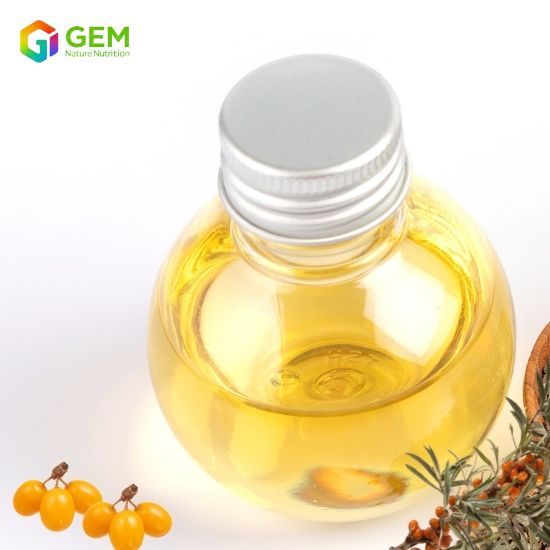
Sea Buckthorn Seed Oil
Sea Buckthorn Seed Oil bulk ingredient for B2B formulation sourcing. Request a specification sheet, batch COA, and documentation from GEM.
| 规格名称 | 规格值 |
|---|---|
| Linoleic acid (Omega-6) | 27–38% |
| Linolenic acid (Omega-3) | 22–32% |
| Oleic acid (Omega-9) | 16–32% |
| Vitamin E | ≥ 70 mg/100 g |
| Appearance | Clear orange oily liquid |
| Extraction | Supercritical CO₂ |
| Shelf Life | 18 months |
| Stock | Regular storage |
Sea Buckthorn Seed Oil
Sea Buckthorn Seed Oil is a golden to orange lipid pressed from the hard seeds of Hippophae rhamnoides L., and GEM supplies the supercritical CO₂–extracted, solvent-free grade — concentrated in Omega-3, Omega-6, and Omega-9 fatty acids with naturally occurring Vitamin E — to dietary supplement, functional food, and cosmetic manufacturers worldwide.
Quick View
Botanical Source: Hippophae rhamnoides L. (sea buckthorn seeds)
Active Profile: Linoleic acid (Omega-6) 27–38%; Linolenic acid (Omega-3) 22–32%; Oleic acid (Omega-9) 16–32%; Vitamin E ≥ 70 mg/100 g
Extraction Method: Supercritical CO₂ (solvent-free, low-temperature)
Certificate: ISO22000; ISO9001; HACCP; Kosher; Halal
Annual Production Capacity: 100+ tons
Features: Clear orange oily liquid; Natural lipid profile; No chemical solvent residue; Suitable for internal and topical formulations
Application: Dietary supplement softgels; Functional oral oils; Skin care and cosmetic emollients; Nutraceutical ingredients
Packing: 5 kg/aluminum barrel, 4 barrels/carton (custom packaging available)
Shelf Life: 18 months under recommended storage
Last updated: June 21, 2026
What Is Sea Buckthorn Seed Oil?
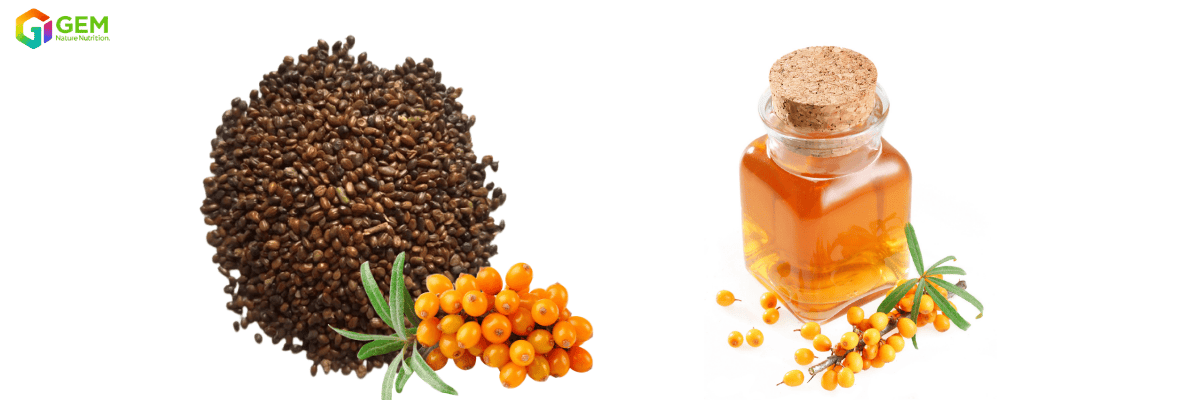
Sea buckthorn seed oil is obtained from the small, hard seeds of the sea buckthorn berry (Hippophae rhamnoides L.), a hardy shrub native to Europe and Asia. Unlike fruit pulp oil — dominated by Omega-7 (palmitoleic acid) — seed oil is characterized by a balanced profile of essential polyunsaturated fatty acids, particularly alpha-linolenic acid (Omega-3) and linoleic acid (Omega-6).
GEM produces the oil via supercritical CO₂ extraction, a solvent-free process that preserves heat-sensitive tocopherols and unsaturated fatty acids. The oil integrates over 180 bioactive compounds reported in sea buckthorn literature, with unsaturated fatty acids as the primary functional fraction.
Source & Botany
Sea buckthorn (Hippophae rhamnoides L.) is a deciduous, thorny shrub in the Elaeagnaceae family, native to temperate and subarctic Europe and Asia — from the Atlantic coast across central Asia to the Himalayas and northwestern China. It tolerates sandy, saline, and poor soils and survives cold climates.
A defining trait is nitrogen fixation through symbiotic root nodules, making the plant useful for soil rehabilitation and erosion control. Those strengths explain the spread of cultivated plantations across producing regions.
The berries are small, acidic, and bright orange, each enclosing several tiny, hard seeds separated during processing for oil extraction. The seed fraction holds less oil than the pulp, so the seed stream is processed alongside the fruit pulp. GEM sources from cultivated plantations and uses a controlled, solvent-free workflow that preserves the seed's natural fatty acid and tocopherol profile, supporting the traceability B2B customers require.
Quality Specification
| Test Item | Specification |
|---|---|
| Appearance | Golden yellow color, bright & vibrant oil |
| Odor & Taste | Characteristic |
| Acid Value | ≤ 15 mg KOH/g |
| Peroxide Number | ≤ 30 meq/kg |
| Density (20 °C) | 0.91–0.94 |
| Refractive Index (20 °C) | 1.45–1.48 |
| Water Content | ≤ 0.3% |
| Linoleic Acid (Omega-6) | 27–38% |
| Linolenic Acid (Omega-3) | 22–32% |
| Oleic Acid (Omega-9) | 16–32% |
| Vitamin E | ≥ 70 mg/100 g |
The specification defines the identity and purity of GEM sea buckthorn seed oil. Appearance, odor, and taste confirm the sensory profile, while density and refractive index at 20 °C are quick lab checks that the material matches the defined lipid type.
Acid value (≤ 15 mg KOH/g) reflects free fatty acids; a controlled ceiling indicates the oil has not degraded through hydrolysis. Peroxide number (≤ 30 meq/kg) measures primary oxidation products from unsaturated fatty acids reacting with oxygen; keeping it low confirms stability at release and supports shelf performance in softgels and topical emulsions. Water content is held at ≤ 0.3% to limit hydrolysis and microbial growth. The fatty acid and Vitamin E lines are the core of the spec — linoleic acid (Omega-6) 27–38%, linolenic acid (Omega-3) 22–32%, oleic acid (Omega-9) 16–32%, and Vitamin E ≥ 70 mg/100 g — describing a balanced essential-fatty-acid oil for EFA-focused formulations.
Remark: Specification Sheet, COA, and MSDS are available upon request for qualified B2B orders.
Application Fields
| Application Field | Details |
|---|---|
| Dietary Supplements | Standalone Omega-3/6/9 softgels; combined formulas with Sea Buckthorn Fruit Oil for complementary Omega-7 support |
| Functional Foods | Oral oils, functional beverages, and fortified food applications where plant-derived essential fatty acids are desired |
| Cosmetics & Skin Care | Emollient oil for serums, balms, and repair creams; often positioned for skin elasticity and barrier support |
| Private Label & Contract Manufacturing | Bulk oil supply for brand owners and CMOs seeking certified, traceable sea buckthorn ingredients |
Dietary supplements are the largest outlet. The oil fills softgels as a standalone essential-fatty-acid product or joins blended liquids where a plant source of Omega-3 and Omega-6 is desired, and pairs with fruit oil so a softgel carries Omega-3/6/9 from the seed plus Omega-7 from the pulp.
Functional foods use the oil in oral formats, beverages, and fortified foods where recognizable plant-derived essential fatty acids are wanted. Pairing it with ingredients such as Pea Protein Powder lets a brand build a plant-forward range from one supplier.
Cosmetics and skin care use the oil as an emollient in serums, balms, and repair creams. Its unsaturated fatty acids and tocopherols suit barrier-support positioning, while the natural orange hue signals a botanical product.
Private label and contract manufacturing benefit from GEM's bulk model: brand owners and CMOs receive certified, traceable ingredients in food-grade aluminum packaging, with specification, COA, and MSDS available for regulatory submission.
Production & Quality
Sea Buckthorn Seed Selection → Supercritical CO₂ Extraction → Oil Separation → Filtration → Packing → QC Inspection → Finished Product
Supercritical CO₂ extraction runs at low temperatures without organic solvents, preserving the seed oil's natural fatty acid and tocopherol profile. Carbon dioxide above its critical point acts as a tunable solvent that dissolves the oil and releases it cleanly when pressure drops, leaving no solvent residue.
Quality control spans the chain: incoming seeds are selected and verified, extraction parameters are held in range, and the oil is filtered before packing. Each batch passes QC inspection against the published specification before release.
GEM holds ISO22000, ISO9001, HACCP, Kosher, and Halal certifications, and supports annual production capacity of 100+ tons. For bulk buyers, the standard pack is a 5 kg aluminum barrel, with 4 barrels per carton; custom packaging is available on request. Under recommended storage the oil carries a shelf life of 18 months.
Storage matters for this unsaturated-rich lipid: keep containers sealed, cool, dry, and away from light and excess oxygen to protect the Omega-3 and Omega-6 fractions. For comparison, Hemp Seed Oil is another seed-derived lipid with similar bulk-handling needs.
Sea Buckthorn Seed Oil vs. Fruit Oil — Formulation Guide
| Factor | Seed Oil | Sea Buckthorn Fruit Oil |
|---|---|---|
| Primary fatty acids | Omega-3, Omega-6, Omega-9 | Omega-7 (palmitoleic acid) |
| Color | Golden to orange | Deep brownish red |
| Key actives | ALA, LA, Vitamin E | Palmitoleic acid, carotenoids |
| Typical use case | EFA softgels, skin barrier oils | Beauty-from-within, mucosal support |
| Extraction source | Seeds | Berry pulp |
Recommended strategy: Use seed oil for essential fatty acid positioning; add fruit oil when Omega-7 or carotenoid content is a formulation priority.
The two oils are complementary, not competitors. Seed oil answers the essential-fatty-acid brief (Omega-3, Omega-6, Omega-9) with Vitamin E, while fruit oil answers the Omega-7 and carotenoid brief with its deep red-orange pigment. A brand can stock one supplier and build two SKUs, or combine both streams in a single softgel or liquid blend. Color is a practical differentiator: seed oil's golden-to-orange tone suits clear softgels and light emulsions, while fruit oil's brownish-red tone fits opaque formats where the pigment is part of the positioning.
Frequently Asked Questions
1. What is the main difference between Sea Buckthorn Seed Oil and Fruit Oil?
Seed oil is rich in Omega-3, Omega-6, and Omega-9 essential fatty acids and appears golden to orange. Fruit (berry) oil is the primary plant source of Omega-7 (palmitoleic acid) and carotenoids, with a deep red-orange color. Both come from Hippophae rhamnoides but are extracted from different parts of the plant.
2. How is GEM Sea Buckthorn Seed Oil extracted?
We use supercritical CO₂ extraction — a solvent-free, low-temperature method that helps preserve unsaturated fatty acids and Vitamin E without chemical solvent residues.
3. Can Sea Buckthorn Seed Oil be used internally and topically?
Yes. It is commonly used in softgels and liquid supplements (oral) and in skin care formulations (topical) as an emollient and barrier-support ingredient. Confirm intended use and labeling with your regulatory team.
4. What quality documents do you provide?
We provide Specification Sheet, COA, and MSDS upon request. Kosher, Halal, and ISO certificates are available for qualified commercial orders.
5. How should Sea Buckthorn Seed Oil be stored?
Store in a cool, dry place away from direct sunlight and oxygen exposure. Keep containers sealed. Recommended shelf life is 18 months under proper conditions.
6. Can I combine seed oil and fruit oil in one formula?
Yes. Many brands use a dual-oil approach — seed oil for Omega-3/6/9 and fruit oil for Omega-7 and carotenoids — in softgel or liquid blends. GEM supplies both oils for integrated product development.
7. Is sea buckthorn seed oil suitable for vegan formulations?
Sea buckthorn seed oil is plant-derived and contains no animal ingredients, making it suitable for vegan-positioned supplement and cosmetic lines (confirm final product certification requirements separately).
8. What is a typical daily serving in finished products?
Industry softgel products typically deliver 500 mg–1 g of sea buckthorn seed oil per serving. Final dosage must comply with regulations in your target market — GEM provides formulation guidance but does not offer medical advice.
9. Do you offer samples and custom packaging for bulk orders?
Yes. GEM supports qualified B2B customers with samples and with custom packaging beyond the standard 5 kg aluminum barrel format. Contact our sales team with your target market and pack size so we can confirm suitability and documentation.
10. What is the typical minimum order quantity for bulk supply?
Minimum order quantities are confirmed per inquiry based on packaging format and formulation requirements; the standard trade pack is a 5 kg aluminum barrel with 4 barrels per carton. Discuss your annual volume with our team so we can align lead time and capacity within our 100+ ton annual production.
11. How is Sea Buckthorn Seed Oil shipped to preserve quality?
Bulk oil ships in sealed food-grade aluminum barrels inside protective cartons, and we recommend cool, low-light transport and storage to protect the unsaturated fatty acids. Specific incoterms, transit temperature guidance, and documentation are arranged per order with your procurement and regulatory teams.
Further Reading
Explore related GEM ingredients and resources to build a complete formulation or sourcing plan:
- Sea Buckthorn Fruit Oil — the Omega-7 and carotenoid companion oil for dual-oil sea buckthorn formulas.
- Hemp Seed Oil — another plant seed oil with a balanced fatty acid profile for supplement and cosmetic use.
- Pea Protein Powder — a plant protein base for functional food and nutrition systems.
- Brown Rice Protein — a hypoallergenic plant protein option for blended formulations.
- Flaxseed Protein — a plant-derived ingredient for omega- and fiber-forward product concepts.
- Major Pea Protein Factory Update — background on GEM's expanding plant-protein production capacity.