
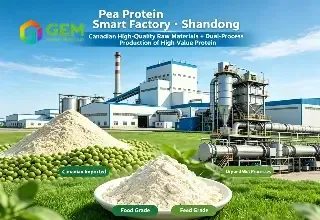
Pea Protein Supply in China: Processing and B2B Sourcing Guide
China is an important processing base for plant-protein ingredients. For B2B buyers, understanding how pea protein is processed and documented is an important part of supplier qualification. This guide covers Shandong processing clusters, wet and dry methods, grade selection, and due diligence; buyers should verify current capacity, origin, certifications, and commercial terms directly with each supplier.
Pea protein is a plant-derived ingredient used in food, beverage, and feed formulations. Supplier location, processing method, specification, and commercial availability should be verified for the offered material.
Key Takeaways
- China's pea protein manufacturing is concentrated in Shandong Province, where factories convert peas into starch, fiber, protein, peptides, TVP, and vermicelli.
- Raw-material origin varies by supplier and shipment; request origin and traceability documentation.
- Food and feed grades should be selected against a product-specific specification, not a generic percentage claim.
- Wet and dry processing can produce different functionality; validate samples in the intended application.
- Current capacity, export volume, and destination-market demand should be confirmed with current, verifiable sources.
What Is Pea Protein?
Pea protein is a plant-derived protein ingredient extracted from yellow peas (Pisum sativum), a legume crop cultivated in several regions. Pea protein does not inherently contain milk, soy, or wheat ingredients; allergen and cross-contact status must be verified for the specific product and facility.
In commercial form, pea protein appears in several grades. The most familiar is pea protein isolate, a high-purity powder with around 80% or more protein by weight. There are also concentrates, textured variants (TVP) used to mimic meat, and hydrolyzed peptides for specialized nutrition. Each form serves a different application, from beverages to pet food.
For buyers evaluating a Pea Protein Powder supplier, the form and grade matter as much as the price. The processing method—wet or dry—shapes the powder's solubility, color, and texture, all of which affect how it performs in a finished product.
The Chinese Pea Protein Manufacturing Landscape
Processing location and raw-material sourcing
China has multiple pea-protein processing regions. Factory location, raw-material origin, capacity, and export experience vary by supplier and shipment. Request dated origin, capacity, traceability, and commercial documentation before making sourcing decisions.
Supplier landscape and qualification
The supplier landscape changes with capacity, raw-material availability, and export requirements. Rather than relying on rankings or marketing claims, procurement teams should evaluate potential suppliers through a current questionnaire, third-party certifications where applicable, recent certificates of analysis, audit evidence, product samples, and destination-market documentation.
For procurement teams, the key advantage of a processing cluster is supplier choice. Use it to compare specification fit, traceability, quality systems, lead times, and sample performance before approving a source.
How Pea Protein Is Made: Wet vs. Dry Processing
Pea protein production is categorized into two main methods, and the choice between them influences the final powder's performance. Both are widely used across Shandong's pea protein factory base.
Wet Processing (Extraction and Precipitation)
Wet fractionation commonly uses aqueous dispersion, pH adjustment, separation of starch and fiber, isoelectric precipitation, washing, and drying. Fermentation may be used in some separate or hybrid processes but is not a universal wet-fractionation step. Functional properties must be confirmed in the intended application.
Dry Processing (Air Classification)
Dry processing skips the soaking phase entirely, processing the dry peas directly. After milling, the flour is separated by air classification, which uses particle size and density to concentrate the protein fraction away from starch. This mechanical route is simpler and lower cost, but it yields a product with slightly different characteristics.
Wet vs. Dry: Which Should You Specify?
The two methods result in slight variations in texture, solubility, and color. Here is a practical comparison:
| Attribute | Wet Processing | Dry Processing |
|---|---|---|
| Soaking step | Required (several hours) | Skipped |
| Process note | Fermentation + extraction | Air classification |
| Typical purity | Higher (isolate grade, 80%+) | Moderate (concentrate range) |
| Solubility | Generally higher | Good, slightly lower |
| Color | Lighter, more uniform | Slightly darker |
| Texture in application | Smoother | More native/whole-food feel |
| Relative cost | Higher | Lower |
Most suppliers, including GEM, can provide both wet- and dry-processed samples for your application testing, so you can validate performance in your own matrix before committing to a bulk order.
Pea Protein Powder Specifications and Grades
Understanding the specification sheet is essential for any B2B buyer. The two main commercial grades are food grade and feed grade.
Food Grade Pea Protein
The popular specification for food-grade pea protein is 80% protein content. While 85% and 90% concentrations are available upon request, they command a premium price because they require additional refinement and yield less per ton of raw peas.
Food grade is used in human nutrition: protein shakes, bars, dairy alternatives, bakery fortification, and plant-based meat. Solubility, color, and flavor consistency are the attributes buyers scrutinize most at this grade.
Feed Grade Pea Protein
Feed-grade pea protein is typically offered at 50% or 70% protein content. It is formulated for animal and pet nutrition, where absolute solubility matters less than protein density and cost per unit of protein.
| Grade | Typical Protein Content | Common Use |
|---|---|---|
| Food grade (standard) | 80% | Beverages, bars, meat alternatives |
| Food grade (premium) | 85% / 90% (on request) | High-protein formulations |
| Feed grade | 50% / 70% | Pet food, aquafeed, animal feed |
Pea Protein Nutrition Profile
Pea protein contains all nine essential amino acids, although sulfur-containing amino acids can be limiting. Protein quality and digestibility vary by product and should be assessed using the applicable method and product-specific data. The final formula, including any protein blend, should be validated against its intended nutritional and regulatory requirements.
Organic and conventional pea protein
Organic and conventional materials have different certification and documentation requirements. Pricing, availability, and residue limits vary by origin, crop year, supplier, and destination market. Buyers should review the applicable organic certificate and the relevant batch test results rather than infer a residue profile from product category alone.
Organic and conventional materials differ in certification, origin, availability, and pricing. Review the applicable certificate and batch test results; do not infer residue status or price from product category alone.
Applications of Pea Protein Across Industries
Pea protein is used across multiple sectors. Its sensory and functional properties, and any allergen or nutrition claims, must be validated for the specific product and facility.
Food, Beverage, and Sports Nutrition
In ready-to-drink shakes, protein bars, and powdered blends, pea protein can be evaluated as a protein source. Solubility, flavor, color, and suspension stability depend on processing conditions and the finished-product matrix and should be confirmed through application testing.
Plant-Based Meat, TVP, and Pea Vermicelli
Textured pea protein (TVP) provides the fibrous, chewy structure that mimics meat in burgers, sausages, and nuggets. Pea vermicelli, another output of the Shandong processing model, extends the ingredient into traditional and instant-noodle formats.
Feed Grade and Pet Food
Feed-grade pea protein can be specified for pet food, aquafeed, and livestock-ration applications. Protein content, allergen status, and non-GMO status must be verified for the offered material and destination market.
Buyers comparing plant proteins often evaluate Hemp Protein and other legume or seed proteins alongside pea. Each has a distinct amino-acid and functional profile, and the right choice depends on the target product.
Sustainability considerations
Peas are nitrogen-fixing legumes and may support crop rotation. Environmental impacts vary by cultivation, processing, transport, allocation method, and energy source; use a product-specific life-cycle assessment for quantified ESG or carbon claims.
B2B sourcing checks
When evaluating a supplier, compare the contractual specification, raw-material origin, current capacity, quality-system documentation, traceability, lead time, and sample performance in the target application. Pricing and availability should be confirmed through current quotations and supply agreements.
Market Context and Demand Trends
Demand varies by destination market, application, and customer requirements. Buyers should validate market size, export data, and current trade conditions using dated, attributable sources before using those figures in a procurement or marketing decision.
Frequently Asked Questions
What is pea protein made from? Pea protein is extracted from yellow peas (Pisum sativum), typically via wet alkaline extraction or dry air classification. The result is a concentrated protein powder used in food, beverage, and feed.
What is the difference between wet and dry processed pea protein? Wet fractionation commonly uses aqueous extraction, pH adjustment, separation, precipitation, washing, and drying. Dry processing uses milling and air classification. Functional properties and commercial cost depend on the supplier, process conditions, and finished-product matrix.
What protein content does food-grade pea protein have? The standard food-grade specification is 80% protein. Higher concentrations of 85% and 90% are available on request at a premium price.
What is feed-grade pea protein used for? Feed-grade pea protein, typically at 50% or 70% protein, is used in pet food, aquafeed, and animal feed where protein density and cost matter more than solubility.
Is organic pea protein worth the higher price? Organic and conventional materials differ in certification, origin, availability, and pricing. Review the applicable certificate and batch test results before selecting a material.
Where are most pea protein factories in China located? China has multiple pea-protein processing regions. Confirm a prospective supplier’s location, capabilities, and documentation directly.
Why do Chinese factories use Canadian peas? Raw-material origin varies by supplier and shipment. Request origin and traceability documentation for the offered lot.
How much pea protein does China export each year? Use dated, attributable trade data for the target product and period; export volume is not a fixed product attribute.
What should I check when choosing a pea protein powder supplier? Verify the protein grade (80%, 85%, or 90% for food; 50% or 70% for feed), processing method, residue profile (especially for organic), and the supplier's export and documentation experience. Request both wet and dry samples for application testing.
Can I get samples before placing a bulk order? Ask the supplier to confirm current sample availability and obtain samples for validation in your own product matrix before committing.
What are the main applications of pea protein? Primary uses include beverages and sports nutrition, plant-based meat and TVP, pea vermicelli, and feed-grade pet and animal nutrition.
How does pea protein compare with other plant proteins? Pea protein and other plant proteins have different amino-acid, sensory, and functional profiles. Compare product-specific analytical data and validate the intended blend against nutritional and regulatory requirements.
Further Reading and Related Plant Proteins
If you are building a multi-protein formulation or comparing suppliers, these related ingredient pages are useful next steps:
- Pea Protein Powder — core specifications and grades
- Brown Rice Protein — a complementary, methionine-rich plant protein
- Chickpea Protein — another legume protein for blends
- Hemp Protein — a seed-based alternative with a distinct profile
Sources
For B2B inquiries, specifications, and sample requests, contact GEM Nature Nutrition to discuss food- or feed-grade pea protein matched to your application.