
Ginseng Extract: Ginsenoside Profile and B2B Sourcing Guide
Ginseng has a long history of traditional use in East Asia and is a recognized botanical ingredient in global supplement, functional-food, and cosmetic development. This guide covers botanical identity, ginsenoside profiles, standardization, and sourcing. It does not establish that ginseng treats fatigue, diabetes, cardiovascular disease, immune disorders, cancer, or any other disease.
What Is Ginseng?
Ginseng refers to several species of slow-growing perennial plants in the genus Panax, a member of the Araliaceae family. The name Panax derives from the Greek panakes, meaning "all-healing," a nod to the plant's long history of use as a broad tonic. The most commercially and culturally significant species include Panax ginseng (Asian or Korean ginseng), Panax quinquefolius (American ginseng), and Panax notoginseng (Sanqi ginseng). In traditional Chinese medicine, Panax ginseng is known as "Renshen" and is regarded as the undisputed "King of Herbs."
Botany and Origins
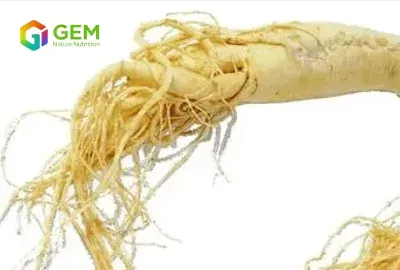
Wild ginseng is native to the cool, shaded deciduous forests of northeastern China, the Korean Peninsula, and parts of Russia's Primorye region, with related species growing in eastern North America. The plant is famously slow to mature; a cultivated ginseng root typically requires four to six years of careful growth before harvest, while wild roots can be decades old. Its defining feature is a forked, human-shaped root—the resemblance to the human body is, in fact, what inspired its earliest medicinal use under the "doctrine of signatures."
Ginseng is a shade-loving plant with palmate compound leaves, small greenish-yellow flowers, and bright red berries. Each part of the plant carries bioactive material:
- Roots – the traditional harvest, richest in ginsenosides.
- Stems and leaves – increasingly valued as a sustainable source of leaf-specific ginsenosides.
- Flowers – concentrated in certain flavonoids and minor saponins.
- Fruits (berries) – a source of polysaccharides and pigments with antioxidant activity.
A Whole-Plant Philosophy
Ginseng is often described in traditional culture as a broad tonic. For B2B sourcing, the relevant considerations are botanical identity, plant part, extraction route, standardized markers, and quality documentation. Processing can also use aerial plant material where its identity and specification are defined.
The Active Constituents: Ginsenosides
The principal standardized constituents in ginseng are ginsenosides, a class of dammarane-type triterpene saponins found primarily in the Panax genus. Their structural diversity makes them useful markers for identity and batch specification; laboratory or traditional-use research does not establish broad health effects in people.
Major Ginsenoside Fractions
Ginsenosides are typically classified by their sugar side chains into two groups: the Rb group (protopanaxadiols, such as Rb1, Rb2, Rc, Rd) and the Rg group (protopanaxatriols, such as Rg1, Rg2, Re). During processing—especially the steaming that produces red ginseng—these parent compounds are converted into less polar, often more bioavailable metabolites such as Rg3, Rh1, Rh2, and compound K.
| Ginsenoside | Group | Commonly Associated Activity |
|---|---|---|
| Rg1 | Protopanaxatriol | Common analytical marker |
| Rb1 | Protopanaxadiol | Common analytical marker |
| Rg3 | Processed metabolite | May increase after steaming |
| Rh1 / Rh2 | Processed metabolite | May increase after processing |
| Re | Protopanaxatriol | Common analytical marker |
Beyond ginsenosides, ginseng contains polysaccharides, peptides, polyacetylenes, and flavonoids. These constituents can be part of an ingredient’s compositional profile, but they do not establish a synergistic or health effect in a finished product.
Why Full-Spectrum Matters
Because different plant parts can have different ginsenoside profiles, an extract that blends root, leaf, and flower material may require a different analytical specification than a root-only product. Buyers should verify the declared plant part and marker profile on the specification sheet and COA.
Research and formulation context
Ginseng is often described as an adaptogen in traditional-use and market language. This term is not a clinical outcome or regulatory authorization. Ingredient research should be communicated as qualified context rather than evidence that a finished product changes stress, fatigue, cognition, immunity, or another health outcome.
The Stress-Response Axis
Research has examined ginsenosides and several biological pathways, including stress-response pathways. Results from laboratory, animal, or limited human research cannot be converted into claims that an ingredient normalizes hormones, improves mood, increases resilience, or treats a condition.
Multi-Target Pharmacology
Research has examined ginsenosides in receptor, oxidative-stress, cellular-energy, and immune-related models. Those findings help define areas for further study; they do not substantiate consumer-facing claims about focus, fatigue, endurance, oxidative stress, or immunity.
For B2B procurement, the most actionable outcome of this research is the need to specify plant part, extraction route, and standardized ginsenoside content for any credible ginseng extract. Laboratory and traditional-use context should not be translated into disease claims.
Traditional-use and formulation context
Traditional Chinese medicine classifies ginseng as a “Qi-tonifying” herb. Historical descriptions provide cultural context, not modern evidence that a raw ingredient diagnoses, treats, cures, or prevents disease.
Formulation categories
Ginseng appears in a range of supplement, functional-food, and cosmetic concepts. The following are formulation categories, not clinical claims:
- Daily wellness products: capsules, tablets, powders, and teas with market-appropriate positioning.
- Functional beverages and foods: where flavor, solubility, and label requirements have been validated.
- Cosmetic applications: where the ingredient and claims comply with cosmetic regulations.
- Combination botanical concepts: for example, L-Theanine or Milk Thistle Extract, subject to formula-specific review.
Ginseng Extract Specifications & Quality
For B2B buyers, the value of a ginseng ingredient is determined less by marketing language and more by measurable specifications. A trustworthy supplier documents every step from raw material to finished extract.
Key Quality Parameters
| Parameter | Typical Specification | Why It Matters |
|---|---|---|
| Ginsenoside content | 5%–80% (standardized) | Defines potency and dose efficiency |
| Ratio extract | 10:1, 20:1, etc. | Concentration relative to raw herb |
| Plant part used | Root / leaf / flower / blend | Determines ginsenoside profile |
| Heavy metals | Below pharmacopeia limits | Safety compliance |
| Microbial count | Within food/pharma limits | Shelf stability and safety |
| Solvents residue | Compliant with ICH/EP | Clean-label assurance |
| Country of origin | China / Korea / USA | Traceability |
Extraction and Standardization
GEM applies advanced extraction techniques—including solvent and water-based methods followed by concentration and drying—to isolate and preserve the active fractions from stems, leaves, flowers, and roots. Standardization to a defined ginsenoside percentage ensures batch-to-batch consistency, which is essential for finished-product labeling and regulatory stability. For applications requiring a milder, sweeter profile, Red Ginseng Extract—produced by steaming and drying Panax ginseng—offers a distinctive processed ginsenoside spectrum.
Applications of Ginseng Extract
Because ginseng is both functionally versatile and consumer-recognized, it appears across a wide range of product formats:
- Dietary supplements – capsules, tablets, and powders with market-appropriate positioning.
- Functional beverages – ready-to-drink teas, energy shots, and adaptogen sodas.
- Functional foods – elderberry- or cranberry-fortified gummies and chews, where Cranberry Extract pairs naturally with ginseng's tonic profile.
- Sports nutrition – pre-workout and endurance product concepts subject to formulation review.
- Cosmetics – products whose ingredient use and claims comply with applicable cosmetic rules.
- Traditional tonics – concentrated liquid extracts and teas for daily wellness routines.
For brands building plant-forward product lines, ginseng complements Pea Protein Powder in complete wellness shakes, combining adaptogenic support with clean protein nutrition.
Safety, Dosage & Regulatory Considerations
Ginseng is generally well tolerated when used at recommended doses, and it has a long history of traditional consumption. Commonly reported mild effects include sleep disturbance or mild gastrointestinal discomfort, usually associated with excessive intake or use late in the day. Certain populations—including pregnant or breastfeeding women, individuals on anticoagulant therapy, and those with hormone-sensitive conditions—should consult a qualified healthcare professional before use.
Standardized ginseng extracts are typically supplied at defined daily intakes that map to their ginsenoside concentration; formulators should calculate finished-product dosing against the standardized assay rather than raw herb weight.
Regulatory note: The information in this article is provided for educational and ingredient-sourcing purposes only and is not intended to diagnose, treat, cure, or prevent any disease. Health claims for ginseng vary by market and must be substantiated and approved according to local regulations (e.g., FDA, EFSA, or equivalent authorities) before use in product labeling.
FAQ
1. What is the difference between Asian and American ginseng?Panax ginseng (Asian/Korean) is traditionally considered more "warming" and stimulating, while Panax quinquefolius (American) is regarded as milder and more calming. Both contain ginsenosides, though in different relative proportions.
2. What are ginsenosides and why do they matter? Ginsenosides are the principal triterpene saponins measured in ginseng. They are commonly used as standardization markers for quality extracts; their presence does not establish a finished-product health effect.
3. Is ginseng an adaptogen? “Adaptogen” is a traditional-use and market term applied to ginseng. It should not be used to imply that a finished product treats stress, fatigue, or another health condition without appropriate evidence and authorization.
4. What does "full-spectrum ginseng extract" mean? It refers to an extract that captures active compounds from multiple plant parts—roots, stems, leaves, and flowers—rather than the root alone, yielding a broader ginsenoside and polysaccharide profile.
5. How is red ginseng different from white ginseng? Red ginseng is made by steaming fresh Panax ginseng before drying, which converts certain ginsenosides into processed metabolites (such as Rg3 and Rh2) and changes the compound profile compared with unsteamed white ginseng.
6. Can ginseng help with mental fatigue? This ingredient article does not establish an effect on mental fatigue, cognitive performance, or recovery. Any finished-product claim requires appropriate evidence and market-specific review.
7. Is ginseng safe for daily use? Suitability depends on the finished product, intake level, individual, and destination market. People with health concerns or who use medicines should seek guidance from a qualified healthcare professional before using a supplement.
8. What should buyers look for in a ginseng extract specification? Key markers include standardized ginsenoside percentage, extract ratio, plant part used, heavy-metal and microbial limits, solvent-residue compliance, and documented country of origin.
9. How should ginseng be stored? Ginseng extracts should be kept in a cool, dry place away from direct light, in sealed packaging, to preserve ginsenoside stability and prevent moisture uptake.
10. Which ginseng products does GEM supply? GEM offers Ginseng Extract and Red Ginseng Extract, produced through advanced whole-plant extraction for consistent, full-spectrum potency.
Further Reading & Related Products
Explore GEM's related botanical and functional ingredients to build complete, science-backed formulations:
- Ginseng Extract – standardized full-spectrum Panax ginseng for supplements and functional foods.
- Red Ginseng Extract – steamed Panax ginseng with a distinctive processed ginsenoside profile.
- Reishi Mushroom Extract – another traditional adaptogen for immune and stress-support stacks.
- L-Theanine – a calming amino acid that pairs well with ginseng in nootropic blends.
- Milk Thistle Extract – liver-support ingredient commonly combined with ginseng.
For more ingredient science and formulation insights, browse the GEM news and research library.
GEM supplies ginseng extract with defined botanical source, plant-part information, and standardized ginsenoside specifications for B2B formulation and sourcing review.