
Milk Thistle Extract: Silymarin Specifications and Sourcing Guide
Milk thistle extract is a botanical raw material for dietary supplements and functional-food applications. This guide focuses on botanical identity, silymarin standardization, extraction choices, and procurement controls; it does not establish disease-related effects or product claims.
What Is Milk Thistle?
Milk thistle extract is a natural plant-derived ingredient commonly used in botanical supplement formulas. It is produced from the seeds of milk thistle, a plant with a history of traditional use. Botanically, the plant is identified as Silybum marianum and belongs to the Asteraceae family — the same large plant family that includes daisies, sunflowers, and artichokes.
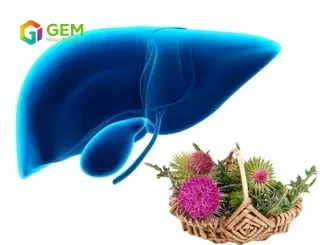
Milk thistle is a robust, thistle-like annual or biennial that can reach two meters in height. It is recognized by its upright stems, spiny leaf margins, and prominent purple flower heads. The leaves carry the characteristic milky-white marbling that gave the species its common English name. After flowering, the plant produces hard, striped seeds — technically achenes — and it is these seeds, not the leaves or flowers, that are processed into milk thistle extract.
At GEM, milk thistle is one of our core natural plant extracts. Our raw material seeds are harvested in the north of China, where the climate and soil conditions support steady crop maturation and reliable silymarin accumulation in the seed. For formulators and procurement teams, knowing the botanical identity and origin of the raw material is the first step toward choosing a dependable milk thistle extract supply.
Active Constituents of Milk Thistle Extract
Silymarin is the principal standardized constituent of milk thistle extract. Chemically, it is a group of flavonolignans that occur together in the seed. Its measured composition is central to ingredient identity and batch-to-batch specification; laboratory observations should not be presented as human health outcomes.
Silymarin is not a single molecule. It is a complex mixture of structurally related compounds, and the silymarin fraction mainly contains:
- Silybin (also written as silibinin) — the most abundant and most extensively studied constituent of the complex
- Isosilybin — a stereoisomer that contributes to the overall activity profile
- Silydianin (sometimes called silydianol)
- Silychristin (also written as silychristin)
Together these flavonolignans make up the standardized "silymarin" value that buyers see on a certificate of analysis.
Solubility and Why It Matters
Solubility is a practical property that every formulator should understand. Silymarin is insoluble in water and is easily soluble in acetone, ethyl acetate, and ethanol. This solubility behavior explains two things about the ingredient: first, why organic solvents — not water — are used to pull silymarin out of the seed during manufacturing, and second, why finished formulations often rely on lipophilic delivery formats such as softgels or standardized powder blends rather than simple water-based drinks.
Research context for silymarin
Silymarin is widely studied for antioxidant-related and cellular pathways. Such research provides context for product development, but it does not establish that milk thistle extract detoxifies the body, regenerates liver cells, or treats liver disease. Claims for finished products must be substantiated and permitted in the intended market.
Looking at the underlying science, the liver-support actions of silymarin are generally understood to work through several complementary pathways:
- Antioxidant pathways. Preclinical research explores how silymarin constituents interact with oxidative-stress pathways.
- Cellular models. Research has examined membrane and protein-synthesis pathways in laboratory systems.
- Glutathione-related pathways. These are areas of scientific investigation, not approved efficacy claims.
- Evidence limits. Ingredient research cannot be translated directly into claims to protect, repair, or treat the liver.
These research areas explain why the ingredient is discussed in traditional-use and botanical-formulation contexts. They do not substantiate detoxification, liver-repair, or disease-related claims for a finished product.
Traditional use and modern formulation
Milk thistle has a history of traditional botanical use. Historical descriptions are cultural context and do not substantiate modern health, detoxification, or disease-related claims.
Today, milk thistle extract is used in a range of finished botanical products. Common application formats include:
- Botanical supplements in capsule, tablet, and softgel form
- Multi-ingredient botanical formulations combined with other extracts
- Functional foods and beverages where a standardized powder is blended into the recipe
- Combination liver-care products paired with additional plant extracts
For companies developing botanical formulations, the ingredient’s established recognition may support category exploration. Buyers can review our standard offers on the milk thistle extract product page.
Extraction Process and Solvents
Turning raw seeds into a standardized milk thistle extract depends on solvent extraction. The choice of solvent affects both the final profile and the cost of the material.
How the Factory Gets Silymarin
Currently, there are three kinds of solvents popularly used in the market: acetone, ethanol, and ethyl acetate. Different solvents produce material at different price points. In typical production, the factory will add acetone to extract silymarin out from the seeds. Acetone is efficient at drawing the flavonolignans from the seed matrix, which is why it is common in commercial extraction.
Ethanol and ethyl acetate are the other two widely used options. Each solvent interacts slightly differently with the seed material, and the selected solvent is reflected in both the specification sheet and the commercial price.
Best Seller Specifications
Based on market demand, the most frequently ordered specifications are:
- 80UV & 30HPLC silymarin — produced by acetone or ethanol extraction
- 80UV & 50HPLC silymarin — produced by acetone or ethanol extraction
The "UV" and "HPLC" figures refer to two different analytical methods used to measure silymarin content. UV (ultraviolet spectrophotometry) gives a broader total reading, while HPLC (high-performance liquid chromatography) measures the defined silymarin markers more precisely. The 80UV / 50HPLC grade represents a higher marker concentration than the 80UV / 30HPLC grade.
Price Difference by Solvent
Solvent selection has a direct effect on price. Under the same specification condition, the typical cost order is:
| Extraction solvent | Relative cost |
|---|---|
| Acetone extract | Lowest |
| Ethyl acetate | Middle |
| Ethanol | Highest |
In other words, acetone extract < ethyl acetate < ethanol when comparing the same specification. Buyers balancing budget against process preferences can use this ordering to guide sourcing decisions.
Product Specifications and Quality
For B2B procurement, specification clarity is essential. The two frequently requested grades described above — 80UV & 30HPLC and 80UV & 50HPLC — are available from acetone or ethanol extraction routes, giving buyers options for solvent preference and budget.
When evaluating a milk thistle extract supplier, procurement teams should verify:
- Silymarin assay by both UV and HPLC methods, matched to the ordered grade
- Appearance and particle size suitable for the intended dosage form
- Heavy metals, microbial limits, and solvent residues within accepted standards
- Country of origin and harvest season of the seed raw material
- Certificates such as COA, and applicable food or quality documentation
Because our seeds are harvested in the north of China, GEM can provide traceable origin information and consistent seasonal supply for these standard grades.
Applications of Milk Thistle Extract
Milk thistle extract is suitable for several product categories when its specification, regulatory status, and permitted finished-product wording have been validated.
Typical application formats include:
- Hard-shell capsules and tablets — the most common form for standardized silymarin powder
- Softgels — useful given silymarin's lipophilic (fat-friendly) solubility
- Powder blends — for stick packs, functional beverages, or chewable formats
- Combination botanical formulas — paired with complementary botanicals
Formulators should keep silymarin's water insolubility in mind when designing a delivery system. Water-based liquid products may need solubilization support, whereas oil- or powder-based formats align well with the ingredient's natural properties. Brands building a broader botanical line may also find synergy with related GEM extracts such as soy isoflavones or red clover extract.
Safety and Quality Considerations
Safety and suitability depend on the finished product, intake level, individual, and destination market. As with any concentrated plant extract, consistent quality control — including identity testing, purity screening, and contaminant limits — is essential for responsible product development.
From a regulatory standpoint, milk thistle extract is supplied as a raw material ingredient for further formulation. It is not a finished drug, and statements about its effects are not intended to diagnose, treat, cure, or prevent any disease. Manufacturers remain responsible for confirming the regulatory status of their finished products in each target market.
Buyers should also confirm allergen and solvent-residue profiles, especially when selecting ethanol- or acetone-derived material, and should request full documentation before scaling production.
Frequently Asked Questions
1. What is milk thistle extract? Milk thistle extract is an ingredient made from the seeds of Silybum marianum. B2B buyers typically evaluate it by its silymarin specification, extraction route, and quality documentation.
2. What is silymarin? Silymarin is the main active ingredient of milk thistle extract. It is a natural flavonoid lignan compound — a mixture of related flavonolignans rather than a single molecule.
3. What compounds make up silymarin? The silymarin complex mainly contains silybin, isosilybin, silydianin, and silychristin. Silybin is usually the most abundant fraction.
4. Is silymarin soluble in water? No. Silymarin is insoluble in water but is easily soluble in acetone, ethyl acetate, and ethanol. This is why organic solvents are used in extraction.
5. Which solvents are used to extract milk thistle extract? The three solvents popularly used in the market are acetone, ethanol, and ethyl acetate. Factories commonly add acetone to extract silymarin from the seeds.
6. What are the common commercial specifications? The best-selling specifications are 80UV & 30HPLC silymarin and 80UV & 50HPLC silymarin, each available by acetone or ethanol extraction.
7. What do 80UV and 30HPLC mean? "80UV" means the total silymarin reading by ultraviolet spectrophotometry is about 80%, while "30HPLC" (or 50HPLC) means the marker measured by high-performance liquid chromatography is 30% (or 50%). HPLC gives a more precise marker value.
8. Why does the solvent change the price? Different solvents produce material at different costs. Under the same specification, acetone extract is the lowest cost, followed by ethyl acetate, then ethanol (acetone < ethyl acetate < ethanol).
9. How does milk thistle extract support liver health? This ingredient article does not support claims that milk thistle extract improves liver function, regenerates liver cells, or removes toxins. Any finished-product claim requires appropriate substantiation and market-specific review.
10. Where does GEM source its milk thistle seeds? GEM's raw material seeds are harvested in the north of China, supporting consistent supply and traceable origin.
11. Is milk thistle extract safe to use? Suitability depends on the finished product, intake level, individual, and destination market. Verified quality documentation, professional safety review, and market-specific regulatory review are recommended.
12. How should milk thistle extract be stored? Like most botanical extracts, it should be kept in a cool, dry place, sealed away from moisture and direct light, following the storage guidance on the supplier's certificate of analysis.
Further Reading and Related Products
Explore our standard milk thistle material and related botanical extracts:
- Milk Thistle Extract product page — specifications, grades, and sourcing details
- Soy Isoflavones — another standardized plant extract for formulation
- Red Clover Extract — botanical ingredient for wellness lines
- D-Mannose — a functional ingredient profiled in our article How D-Mannose Works for UTI Treatment
For procurement questions about milk thistle extract grades, solvent options, or custom specifications, contact the GEM team directly.