
Chlorella
Chlorella bulk ingredient for B2B formulation sourcing. Request a specification sheet, batch COA, and documentation from GEM.
| 规格名称 | 规格值 |
|---|---|
| Assay | Protein 50% |
| Forms | Powder; Tablets |
| Latin Name | Chlorella vulgaris |
| Part Used | Whole Plant |
| Shelf Life | 24 months |
Chlorella Quick View
Below is a fast snapshot of the chlorella powder and tablet specifications GEM supplies to B2B buyers. Every value is verified against our in-house specification sheet and confirmed by third-party laboratories where required.
Specification: 50% protein
Forms: Powder; Tablets (250 mg; 500 mg)
Grade: Food grade; Feed grade
Certificate: FSSC22000; ISO9001; GMP; HACCP; Kosher; Halal
Annual Production Capacity: 500+ tons
Shelf Life: 24 months
Features: Non-GMO; Non-ETO; Non-Irradiation; Nutrient-dense; Low heavy metals
Application: Dietary supplements; Functional foods; Pharmaceuticals; Cosmetics; Feed
Packing: 25 kg/drum
Last updated: June 21, 2026
What is Chlorella?
Chlorella: An Ancient Superfood.
Chlorella is a powerful, single-celled green freshwater alga and one of the oldest life forms on Earth, dating back over 2 billion years. These microscopic, spherical cells (only 3–8 microns in size) are masters of photosynthesis. By efficiently converting light into energy, Chlorella has thrived across the globe, offering a pure and ancient source of vitality.
Unlike larger seaweeds, chlorella is a true unicellular organism: each tiny sphere is a self-contained photosynthetic factory. A single gram of biomass can contain billions of these cells, which is one reason the alga is so concentrated in protein, chlorophyll, and micronutrients relative to its weight. The genus Chlorella includes several cultivated species, with Chlorella vulgaris and Chlorella pyrenoidosa being the most common in commercial food and supplement production.
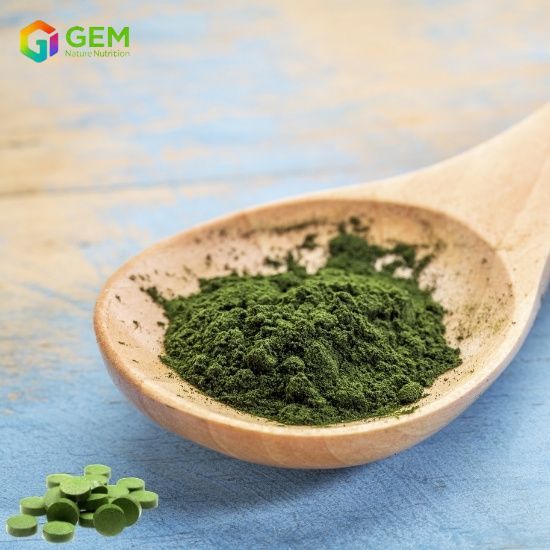
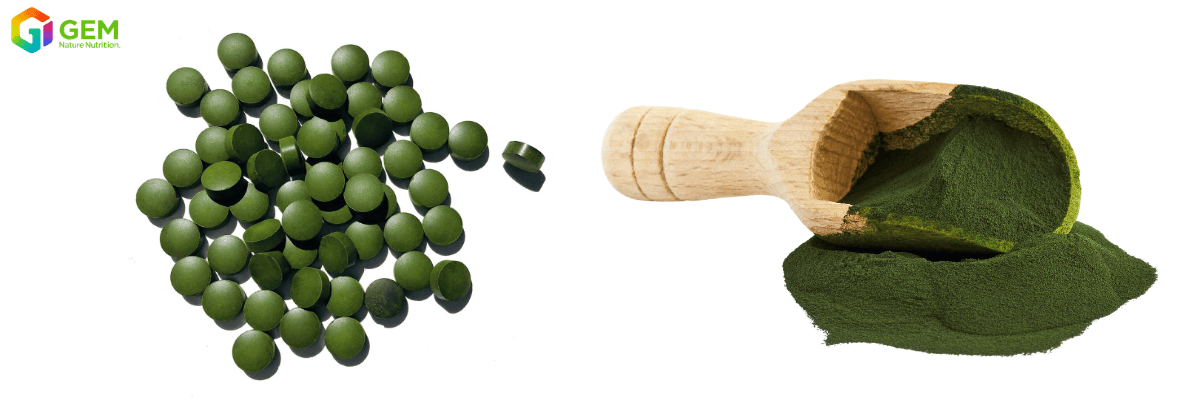
Forms: We have chlorella powder for powder products or capsules and chlorella tablets (250 mg/tablet; 500 mg/tablet). Powder is the most flexible bulk format for formulators, while tablets give brands a ready-to-ship finished dosage form that skips capsule filling entirely.
Chlorella Cultivation: Closed-Tank vs. Open Pond
The quality of any bulk chlorella powder begins long before milling — it starts in the cultivation system. Commercial growers use two principal methods, each with trade-offs that affect purity, cost, and consistency.
Open Pond Systems. Shallow, sunlit raceway ponds are the traditional and lowest-cost way to grow chlorella at scale. Warm climates and abundant sunlight keep operating costs down, and volumes can be very large. The drawback is exposure: open water shares the environment with wild algae, dust, birds, and weather, so growers must manage contamination risk and accept more batch-to-batch variation in dry matter and nutrient density.
Closed Photobioreactors (Closed-Tank). Sealed glass or plastic tube and panel reactors shield the culture from the outside world. Temperature, light, pH, and CO₂ are controlled precisely, which yields a cleaner, more uniform biomass with lower heavy-metal and microbial risk. Closed systems cost more to build and run, but they suit food-grade and nutricosmetic buyers who prioritize a low-impurity, reproducible raw material.
GEM sources chlorella from cultivated stock selected for stable protein and chlorophyll expression, then standardizes every lot to the published specification regardless of the growth system. For buyers comparing suppliers, the practical question is not only "open or closed?" but "which system does your certifier and your finished-product claim require?" — a point our sales team is happy to discuss against your target market.
Cracking the Chlorella Cell Wall
One feature sets chlorella apart from many other superfoods: its remarkably tough outer cell wall. The wall is built from a resilient, cellulose-like matrix that human digestive enzymes cannot easily break down. In its intact state, a significant share of the protein, chlorophyll, and intracellular nutrients stays locked inside the cell and passes through the gut undigested.
That is why commercial chlorella powder is almost always "cracked" or "broken-cell" material. Cracking ruptures the wall so the nutrients become bioavailable to the body. Common industry techniques include:
GEM's bulk chlorella powder is processed to a fine 95% pass 80 mesh grade that reflects both wall cracking and milling, supporting good dispersion in tablets, stick packs, and dry blends. Because no irradiation or ETO is used (see Features), the powder keeps its natural color and nutrient profile while meeting clean-label expectations.
Chlorella Nutrient Profile
What makes formulators return to chlorella powder again and again is the breadth of its nutrition in one green ingredient. While exact values vary by lot and strain, the headline components are well established.
High-Quality Plant Protein. At ≥50% protein on a dry basis, chlorella rivals many concentrated plant proteins and carries a broad spread of amino acids, including the essentials the body cannot synthesize on its own. That positions it as a protein contributor in vegan and vegetarian formulations.
Chlorophyll. Our specification requires ≥25 mg/g chlorophyll, the pigment that gives chlorella its vivid green color and a natural "green" positioning for superfood and cleansing formulas.
Chlorella Growth Factor (CGF). CGF is the umbrella term for the nucleotide-peptide fraction unique to chlorella — a mix of nucleic acids, peptides, and polysaccharides concentrated in the cell interior and released when the wall is cracked. It is a key reason formulators pair chlorella with other algae.
Micronutrients. Depending on cultivation water, chlorella also contributes iron, vitamin B12 (in forms still debated for bioavailability), and trace minerals, which is why it shows up in "greens" and "daily wellness" blends.
For a broader algae comparison, our spirulina powder page details a closely related blue-green microalga that pairs naturally with chlorella in many green formulations.
Chlorella Powder 50% Protein Specification:
| Testing Item | Specification | Test Method |
|---|---|---|
| Appearance | Light Green Powder | Visual |
| Taste&Odor | Taste like seaweed | Organ |
| Protein | ≥ 50% | GB 5009.5-2016 |
| Mesh | 95% pass 80mesh | Seive Machine |
| Moisture | ≤ 7% | GB5009.3-2016 |
| Ash | ≤ 7% | GB5009.4-2016 |
| Chlorophyll | ≥ 25mg/g | UV Spectrophotometry |
| Carotenoid | ≥ 5mg/g | AOAC 970.64 |
| Benzo(a)pyrene | < 5ppb | GS-MS |
| PAH 4 | < 25ppb | GS-MS |
| Lead (Pb) | ≤ 0.5 mg/kg | ICP/MS or AAS |
| Arsenic (As) | ≤ 0.5 mg/kg | ICP/MS or AAS |
| Cadmium (Cd) | ≤ 0.1 mg/kg | ICP/MS or AAS |
| Mercury (Hg) | ≤ 0.1 mg/kg | ICP/MS or AAS |
| Total Plate Count | ≤ 100,000 cfu/g | GB 4789.2-2010 |
| Molds and Yeasts | ≤ 300 cfu/g | GB 4789.15-2010 |
| Salmonella | Absence/25g | GB 4789.4-2010 |
| Coliforms | Absence/25g | GB 47891.3-2010 |
| Staphylococcus aureus | Absence/25g | GB 4789.10-2010 |
Every shipment is released against this table. Heavy-metal limits (lead, arsenic, cadmium, mercury) and polycyclic-aromatic-hydrocarbon limits (benzo(a)pyrene, PAH 4) reflect our "low heavy metals" and clean-label positioning, while the microbiology columns confirm food-safety suitability for supplement and food use.
Production Process & Quality Control
A reliable bulk chlorella powder depends as much on process discipline as on the raw alga. GEM's production flow is built to protect nutrient integrity while meeting the certificates listed in the Quick View.
Typical flow: strain and culture selection → controlled cultivation → harvesting by micro-screen filtration or centrifugation → gentle washing → cell-wall cracking → low-temperature drying → milling to 80 mesh → metal detection → 25 kg drum packing → finished-product release.
Quality control checkpoints include in-process checks on mesh and moisture, batch COA release against the full specification table, heavy-metal and PAH screening, and microbiology testing for plate count, molds/yeasts, and pathogen absence (Salmonella, Coliforms, Staphylococcus aureus). Certificates available for qualified commercial orders include FSSC22000, ISO9001, GMP, HACCP, Kosher, and Halal. Buyers planning large or repeated orders can request documentation packages in advance so regulatory review never becomes a bottleneck.
What's the Core Functions of Chlorella?
- Metabolic & Lipid Support: Supports healthy lipid metabolism and aids the body in processing dietary fats.
- Cellular Protection: Rich in specialized phytonutrients that help protect cells from oxidative stress and free radical damage.
- Comprehensive Wellness Support
Ongoing research highlights Chlorella's versatility in other areas of health, including:
Stress Management: Helps the body adapt to daily stress and supports muscle comfort and relaxation.
Application Fields & Formulation Tips
Chlorella powder's versatility is one of its strongest selling points. The same 50% protein, cracked-cell material serves very different finished products.
Dietary Supplements & Tablets. Our 250 mg and 500 mg chlorella tablets are a finished dosage form for brands that want to skip capsule filling. In powder form, chlorella flows into capsules, tablets, and stick packs; at 80 mesh it compresses and blends well.
Functional Foods & Beverages. Green juices, matcha-style lattes, energy bars, and "veggie" snack bites use chlorella for color and protein. Because the taste is seaweed-like, mask it with fruit flavors, cocoa, or mild sweeteners, and keep liquids well-mixed to manage the natural green sediment.
Aquafeed & Animal Nutrition. Feed-grade chlorella contributes protein and pigments to aquaculture and specialty pet diets. Its small cell size and nutrient density suit larval and juvenile feeds.
Blending ideas. Chlorella pairs well with other plant proteins: combine it with pea protein powder for a high-protein vegan bar, with rice protein for a lighter "greens" shake, or with hemp protein powder for a fatty-acid-plus-chlorophyll functional food. For the classic algae stack, blend it directly with spirulina.
Formulation tips: pre-blend chlorella with a neutral carrier (e.g., maltodextrin or another protein) to improve dispersion; keep moisture-controlled packaging once opened to protect the ≤7% spec; and verify tablet compression on your own tooling, since the fine green powder can be slightly cohesive.
Spirulina and Chlorella: A Powerful Algae Pair
Buyers often ask how to choose between the two best-known algae ingredients. The short answer: they are complementary, not competing.
Chlorella (Chlorella vulgaris) is a green, single-celled alga with a tough cellulose wall that must be cracked for nutrient access. It is especially rich in chlorophyll and the CGF nucleotide fraction, and it brings a deep green color to formulas.
Spirulina (Arthrospira platensis) is a blue-green filamentous cyanobacterium with no rigid cellulose wall, so its nutrients are naturally more accessible. It is typically higher in phycocyanin (the blue pigment) and offers a slightly different amino acid spread.
Together, "spirulina and chlorella" form the backbone of most algae-based superfood blends, giving formulators both green and blue-green pigments, a broader micronutrient range, and a stronger sustainability story. GEM supplies both as bulk powders and tablets, so brands can source a matched algae pair from one supplier. Explore our spirulina product page for specification and application details.
Market & Regulatory Context
Demand for microalgae ingredients has grown steadily as consumers seek plant-based protein, clean-label "greens," and sustainable nutrition. Chlorella's long history as a food in Japan and Taiwan, plus rising interest in alternative proteins, keeps it relevant across supplements, food, and feed.
Sustainability is an added selling point: chlorella converts light, CO₂, and water into dense nutrition with a small land footprint compared with terrestrial crops, which resonates with eco-positioned brands.
Bulk Chlorella Powder: B2B Buying & MOQ Guidance
Procuring chlorella powder at scale is straightforward when you plan around a few practical points.
Packing & volumes. Standard packing is 25 kg/drum, which suits palletized shipping and warehouse handling. With an annual production capacity of 500+ tons, GEM supports both trial quantities and steady contract volumes for private-label and white-label programs.
Samples first. We encourage formulators to request a sample before committing to a bulk run, so you can validate color, taste, mesh, and compressibility on your own line.
Documents. Qualified buyers receive the Specification Sheet, COA, and MSDS, plus GMP, Kosher, and Halal certificates where needed. For a look at how GEM scales plant-protein manufacturing, see our pea protein factory news story.
Lead times & MOQ. Minimum order quantities and lead times shift with season and capacity, so confirm current terms with our sales team when you request a quote. Sharing your target grade (food or feed), format (powder or tablets), and estimated annual volume helps us quote accurately and reserve production slots.
Storage. Keep drums in a cool, dry place away from direct sunlight; the 24-month shelf life assumes intact, properly stored packaging.
Frequently Asked Questions
1. What forms of chlorella does GEM supply?
Powder for blends and capsules, plus tablets at 250 mg and 500 mg for finished dosage supply.
2. What is the protein content?
Chlorella powder is standardized at ≥50% protein with chlorophyll ≥25 mg/g and carotenoid ≥5 mg/g per specification.
3. Is chlorella irradiated or GMO?
GEM chlorella is Non-GMO, Non-ETO, and Non-Irradiation — supporting clean-label supplement positioning.
5. Is feed grade available?
Yes. Both food grade and feed grade chlorella are available for supplement and animal nutrition markets.
6. What B2B documents does GEM provide?
Specification Sheet, COA, MSDS, plus GMP, Kosher, and Halal certificates for qualified orders.
7. What is the difference between chlorella and spirulina?
Chlorella is a green, single-celled alga with a tough wall that needs cracking, while spirulina is a blue-green filamentous alga with no rigid wall and higher phycocyanin. They complement each other in blends; see our spirulina page for details.
8. Why does chlorella need cell-wall cracking?
The natural cellulose-like wall resists human digestion, so intact cells trap much of their protein and nutrients. Cracking ruptures the wall to make the interior bioavailable — which is why GEM supplies cracked-cell powder milled to 80 mesh.
9. What mesh size is chlorella powder supplied at?
Our specification is 95% pass 80 mesh, a fine grade suited to tablets, capsules, stick packs, and dry blends.
10. Can chlorella powder be used in aquafeed?
Yes. Feed-grade chlorella contributes protein and pigments for aquaculture and specialty animal nutrition; both food and feed grades are available.
11. What is the shelf life and how should it be stored?
Shelf life is 24 months when stored in intact, cool, dry packaging away from direct sunlight. Keep drums sealed until use to hold moisture at ≤7%.
12. Do you provide samples before a bulk order?
Yes. We recommend requesting a sample to verify color, taste, mesh, and compressibility on your line before committing to a full production run.
Further Reading
- Spirulina Powder — the blue-green algae that pairs with chlorella in green superfood blends.
- Pea Protein Powder — a high-protein vegan base to blend with chlorella in bars and shakes.
- Major Pea Protein Factory News — how GEM scales bulk plant-protein manufacturing for B2B buyers.