
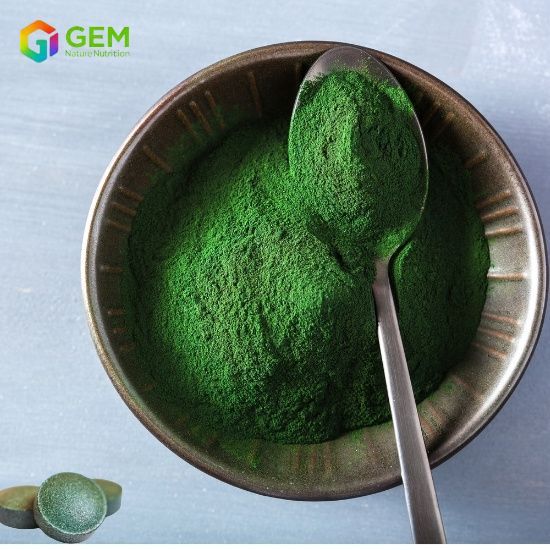
Spirulina
Spirulina bulk ingredient for B2B formulation sourcing. Request a specification sheet, batch COA, and documentation from GEM.
| 规格名称 | 规格值 |
|---|---|
| Assay | Protein 60% |
| Forms | Powder; Tablets |
| Latin Name | Arthrospira platensis |
| Shelf Life | 24 months |
| Stock | Regular storage |
Spirulina Powder
Spirulina powder is a nutrient-dense blue-green microalgae — a cultured cyanobacterium of the species Arthrospira platensis — valued by formulators for its roughly 60% protein content and its natural phycocyanin pigment. GEM supplies bulk spirulina powder and compressed tablets (250 mg and 500 mg) cultivated in Inner Mongolia, one of the world's leading spirulina-growing regions, for dietary supplements, natural colorants, and functional foods. As consumer demand shifts toward clean-label, plant-based, and sustainably produced ingredients, bulk spirulina powder has moved from a niche "superfood" into a mainstream B2B raw material used across nutraceuticals, beverages, cosmetics, and animal nutrition.
This page is built for procurement managers, product developers, and private-label brands who need a clear, fact-based reference: what the ingredient is, how it is grown and processed, what the specification means, where it fits in a formulation, and how to buy it at volume with confidence. Whether you are sourcing a single trial lot or contracting recurring container volumes, the details below give you the specification, documentation, and application guidance to qualify the material before it reaches your line.
Key takeaways
- Spirulina powder is a cyanobacterium (Arthrospira platensis) supplying ~60% protein and a natural blue pigment, phycocyanin.
- GEM's standard bulk grade is 60% protein with phycocyanin ≥8%, available as powder, 250 mg tablets, and 500 mg tablets.
- Food grade and feed grade are both produced under FSSC22000, ISO9001, GMP, HACCP, Kosher, and Halal systems, with USP & EP alignment.
- Annual capacity exceeds 500 tons, with a 24-month shelf life under storage at 0°C–20°C, away from light and heat.
- Bulk spirulina powder serves nutraceuticals, natural coloring, functional foods, cosmetics, and aquaculture — and pairs well with pea, rice, and hemp proteins.
Spirulina Quick View
Specification: 60% protein; Phycocyanin ≥8%
Forms: Powder; Tablets (250 mg; 500 mg)
Grade: Food grade; Feed grade
Certificate: FSSC22000; ISO9001; GMP; HACCP; Kosher; Halal
Annual Production Capacity: 500+ tons
Shelf Life: 24 months
Features: USP & EP aligned; Allergen free (soy, gluten); Non-GMO; Non-Radiation
Application: Dietary supplements; Natural pigment; Functional foods; Cosmetics; Feed
Storage: 0°C–20°C; avoid light and heat
Last updated: June 21, 2026
What is Spirulina?
Spirulina is a nutrient-dense blue-green algae (scientifically classified as a cyanobacterium) that thrives in both fresh and salt water. As one of the world's oldest life forms, it has evolved from an ancient food source into a globally recognized ingredient for modern nutrition and natural color. Strictly speaking, spirulina is not a plant but a photosynthetic bacteria — which is why it can convert sunlight and simple minerals into such a remarkably concentrated profile of protein, pigments, and micronutrients.
Sourced from the heart of Inner Mongolia, our spirulina benefits from a famous production hub. By leveraging local technical expertise and a rich supply of raw materials, we provide high-quality spirulina from this region where this biomass is the backbone of the local economy. The dry, sunny climate and controlled water systems of Inner Mongolia support stable, large-scale cultivation and help keep contaminant loads low.
We often describe it as a "multivitamin from nature" because spirulina packs a high concentration of nutrition into a tiny serving. Here is why health-conscious brands and even space agencies have studied it as a dietary essential: it delivers complete-protein-level amino acids, a vivid natural pigment (phycocyanin), and a broad set of vitamins and minerals in a single, shelf-stable powder.
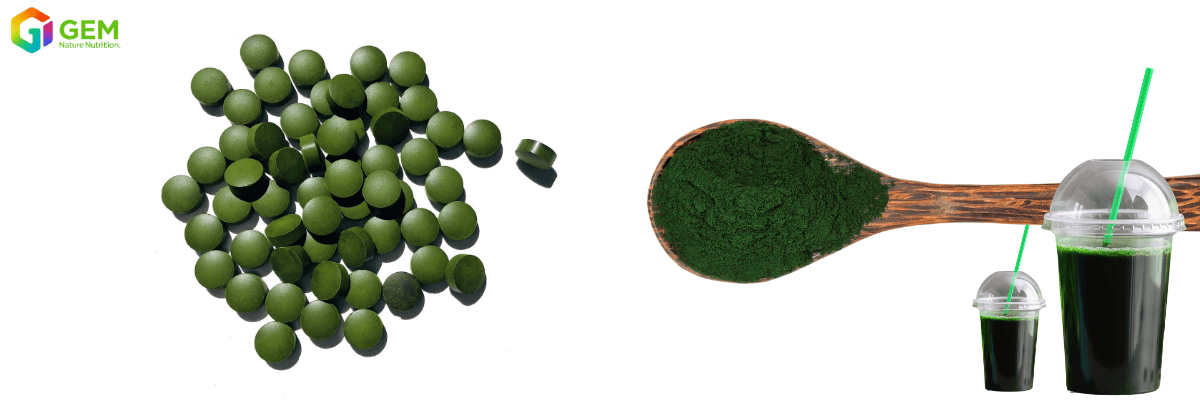
Forms: We supply spirulina powder for dry-mix products, plus spirulina tablets (250 mg/tablet; 500 mg/tablet) for convenient dosing. Bulk powder is also ideal for capsules, sticks, and blend applications. For buyers comparing microalgae options, our sister ingredient chlorella powder offers a complementary green-algae profile worth evaluating alongside spirulina.
How Spirulina Powder is Cultivated: Open Ponds vs. Photobioreactors
Understanding how spirulina is grown helps a buyer judge quality, consistency, and price. The organism grows in warm, alkaline water and multiplies quickly under strong sunlight. Commercial cultivation relies on two main systems, each with trade-offs that affect the final bulk spirulina powder.
Open raceway ponds are shallow, circulating channels exposed to sunlight. They are the workhorse of large-scale production — including in Inner Mongolia — because they are cost-efficient and scalable. Their downside is greater exposure to ambient conditions and the need for disciplined hygiene to keep out stray algae and microbes.
Closed photobioreactors are sealed glass or plastic systems that shield the culture from the environment. They deliver tighter control over purity, temperature, and contamination, which can raise phycocyanin retention and microbial cleanliness. The trade-off is higher capital and operating cost, which is why reactor-grown material typically commands a premium.
From a sustainability angle, spirulina is unusually resource-friendly. It does not require arable farmland, can be grown on brackish or non-potable water, needs no agricultural pesticides, and consumes carbon dioxide as it grows. That footprint is part of why governments and food brands increasingly view bulk spirulina powder as a strategic, climate-resilient ingredient — and why GEM's northern China base, with its clean growing environment, is well positioned to meet EU and USP reference standards.
A practical cultivation note for buyers: the phycocyanin level in the finished powder is influenced by the strain, the light exposure during growth, and the harvesting window. Well-managed open-pond systems can still deliver strong pigment when monitored daily, while closed reactors tend to produce the most consistent color batch to batch. Either way, the number that matters for your specification is the tested phycocyanin percentage on the Certificate of Analysis — which is why GEM reports it on every lot.
Product Specification
The table below defines GEM's standard food-grade bulk spirulina powder. Every batch is tested against these limits, and the values are confirmed by the listed methods. These numbers are the contract of safety and consistency behind every shipment.
| Testing Item | Specification | Test Method |
|---|---|---|
| Appearance | Dark Green Powder | Visual |
| Protein | 60% | GB5009.5-2010 |
| Mesh | 95% pass 80mesh | Seive Machine |
| Phycocyanin | ≥ 8% | SNT 1113-2002 |
| Benzo(a)pyrene | ≤10µg/kg | Internal Method,GC-MS |
| PAHs | ≤ 50µg/kg | Internal Method,GC-MS |
| Moisture | ≤ 7.0% | GB5009.3-2016 |
| Ash | ≤ 7.0% | GB5009.4-2016 |
| Lead (Pb) | ≤ 1.0 mg/kg | GB 5009.12-2017 |
| Arsenic (As) | ≤ 1.0 mg/kg | GB 5009.11-2003 |
| Cadmium (Cd) | ≤ 0.5 mg/kg | GB 5009.15-2014 |
| Mercury (Hg) | ≤ 0.1 mg/kg | GB 5009.17-2003 |
| Total Plate Count | ≤ 50,000 cfu/g | GB 4789.2-2010 |
| Molds and Yeasts | ≤ 100 cfu/g | GB 4789.15-2010 |
| Salmonella | Absence/25g | GB 4789.4-2010 |
| Coliforms | Absence/25g | GB 47891.3-2010 |
| Staphylococcus aureus | Absence/25g | GB 4789.10-2010 |
Reading the specification as a buyer. The protein figure (60%) anchors the nutritional value, while phycocyanin (≥8%) drives both the nutrient story and the natural-color performance. Heavy-metal and microbial limits follow Chinese national (GB) standards and GC-MS internal methods, and they sit comfortably inside the expectations of most international food and supplement buyers. If your market imposes tighter limits — for example, lower lead or stricter PAH thresholds — discuss it with our sales team when you request a quote, because incoming raw-water control in Inner Mongolia is designed to keep contaminant loads low from the start.
Phycocyanin: The Value-Added Blue-Green Pigment in Spirulina Powder
Spirulina's signature deep blue-green color comes from phycocyanin, a water-soluble pigment-protein complex unique to blue-green algae. GEM's bulk spirulina powder is specified at ≥8% phycocyanin — a level that supports both nutritional positioning and natural colorant performance. (For context, phycocyanin in well-managed cultures is often reported around 5–6%; our specification reflects a concentrated, pigment-rich biomass.)
This single molecule is what makes spirulina powder a dual-purpose ingredient: a nutrient source and a natural blue coloring food. Regulators have recognized phycocyanin as a safe natural color:
- In the United States, the FDA approved spirulina extract (C-phycocyanin) as a color additive and has repeatedly expanded its permitted uses — most recently broadening it to all foods at good-manufacturing-practice levels, making it the first natural blue color additive cleared for broad food use.
- In the European Union, authorities classify phycocyanin as a "coloring food" rather than a synthetic additive, which means it does not require a numerical acceptable daily intake (ADI) in the same way artificial dyes do.
- It is widely listed as Generally Recognized as Safe (GRAS) in relevant natural-color applications.
For formulators, phycocyanin opens clean-label opportunities that synthetic blues cannot match. It is used to color ice cream, confections, beverages, yogurts, and baked goods, and — when blended with natural yellow or red colorants — can produce green, purple, and other shades. Buyers who need a concentrated, higher-purity pigment for coloring-only applications can explore our dedicated phycocyanin powder product, which is built for the natural-colorant supply chain.
Choosing a phycocyanin grade. The ≥8% level in GEM's standard bulk powder suits the large majority of supplement and dual-purpose applications. If your product is coloring-led — a vivid blue beverage or confection where shade intensity is the deciding factor — the dedicated phycocyanin powder route (with its higher, standardized pigment concentration) is usually the more cost-efficient way to hit a precise hue than simply over-dosing spirulina powder. Matching the grade to the job keeps both your color and your formula cost predictable.
Nutrient Density: Why Spirulina Powder is Called a "Multivitamin from Nature"
The reputation of spirulina powder rests on its density of usable nutrition. A standard serving delivers a high proportion of protein by weight, alongside a supporting cast of micronutrients that make it attractive for fortification and functional-food concepts.
Because spirulina is relatively low in certain sulfur-containing amino acids (methionine and cysteine), many developers blend it with complementary plant proteins to round out the amino acid picture. A popular strategy is to pair spirulina powder with pea protein powder, rice protein, or hemp protein powder in plant-based nutrition systems where a balanced profile and a natural green tint are both desirable.
Production Process
From live culture to a uniform, shelf-stable powder, bulk spirulina powder passes through a controlled, repeatable flow. GEM's process is built so that the nutrient and pigment profile established in the pond is protected all the way to the drum.
Harvesting: Spirulina collection by centrifugation or filtration method;
Filtration & Rinsing: Separating biomass from water and washing with fresh water;
Dewatering/Pressing: Vacuum suction or mechanical pressing into a "green cake";
Drying: Spray Drying;
Milling/Grinding: Breaking dried flakes into a fine, uniform powder;
Packaging: Packed according to customer's request;
Why spray drying matters. Spray drying is the preferred route for spirulina because it removes water fast, at a temperature profile that protects heat-sensitive phycocyanin better than slow, high-heat drying. The result is a fine powder with 95% passing 80 mesh — a particle size that flows well on standard supplement lines and disperses cleanly in dry mixes and beverages. After milling, the powder is packed to the customer's request, with light- and oxygen-limiting formats used wherever the longest possible shelf life is required.
What's the Core Functions of Spirulina?
Why do formulators keep returning to spirulina as a hero ingredient? The reasons below explain its enduring appeal. (The points describe typical ingredient characteristics and formulation support; they are not medical claims and should be confirmed with your own regulatory team before labeling.)
1. Nutritional "Fuel"
Spirulina is most valued for its extraordinary nutrient density. A single serving provides a high percentage of high-quality protein, and it is naturally rich in B vitamins (B1, B2, B3), iron, and copper. It also contains gamma-linolenic acid (GLA), an essential fatty acid that contributes to its overall nutritional profile.
5. Energy & Athletic Recovery
Due to its iron content and broad nutrient profile, spirulina is often incorporated into products aimed at supporting healthy iron status and oxygen transport. Active consumers and athletes use it in blends positioned to support recovery from exercise-induced oxidative stress and to complement endurance nutrition.
6. The "Food of the Future": NASA-Approved Nutrition
The nutritional density of spirulina is so high that both NASA and the European Space Agency have researched it as a candidate food source for long-term space missions. Because it provides maximum nutrition with minimal weight, it is the perfect "astronaut food" concept for the most demanding environments — a powerful story for brands building future-facing, sustainable nutrition narratives.
Applications of Spirulina Powder
Spirulina is one of the most widely used biological resources on Earth. It is relatively easy to grow, and it carries both specialized proteins and valuable pigments that open many commercial doors.
1. Food and Nutrition (The Most Common Use)
Spirulina is primarily known as a functional food and "superfood" ingredient for humans:
Dietary Supplements: Available as powder, tablets, or capsules to boost protein, iron, and B-vitamin content in daily-wellness formats.
Natural Food Coloring: The blue pigment phycocyanin from spirulina is one of the few natural blue dyes used in ice cream, candies, snacks, and cakes — answering the clean-label demand to replace synthetic blues.
Functional Foods: It can be added to protein bars, juices, and snacks to improve a product's nutritional profile and deliver a recognizable "superfood" halo.
2. Cosmetics and Personal Care
Anti-Aging: It can be used in face masks and creams positioned to protect skin from oxidative stress.
Natural Pigment: Used in makeup (such as eyeshadows) as a safe, plant-based colorant.
Skin Moisturizing: The proteins and polysaccharides in spirulina help support skin moisture retention in topical formulations.
3. Animal Feed
Spirulina is not only used in the food industry but also valued in feed ingredients, where it plays a role in animal nutrition. Both food grade and feed grade spirulina are available.
Poultry: Adding spirulina to poultry diets is associated with more nutritious eggs and deeper yellow/orange yolks due to its high carotenoid content.
Aquaculture: Spirulina is a premium feed ingredient for fish such as salmon and for shrimp, supporting growth and enhancing the natural color of their flesh.
4. Environmental Applications
Spirulina is a useful tool for sustainability and "green" technology concepts:
Reducing Carbon Emissions: Like all photosynthetic algae, spirulina consumes CO₂ as it grows. At scale, cultivation can contribute to lowering greenhouse-gas intensity in the supply chain.
Formulation & Blending Tips for B2B Manufacturers
Translating bulk spirulina powder into a finished SKU is straightforward once you respect a few practical rules. These tips help R&D and procurement teams get consistent results.
Tableting and encapsulation. We supply 250 mg and 500 mg tablets directly, and bulk powder for capsules, stick packs, and pressed-tablet applications. Because the powder is fine (95% passing 80 mesh), it flows well in standard supplement manufacturing lines.
Beverage and smoothie mixes. Spirulina powder adds both nutrition and a natural green-blue tint to smoothie blends, protein shakes, and functional beverages. For cold or dry-mix formats, the color stays stable; for hot-filled or acidic drinks, expect some shift toward green and plan the shade accordingly.
Natural colorant use. When the goal is color rather than nutrition, only a small addition is needed — natural blue colorants are typically used at low gram-per-kilogram rates to achieve a vivid hue. Phycocyanin can be blended with yellow or red natural colors to build green, purple, and other shades for clean-label confectionery, dairy, and bakery.
Protein blending. To balance the amino acid profile, combine spirulina powder with complementary plant proteins. A spirulina + pea protein powder system, optionally extended with rice protein, is a common plant-based stack that pairs a complete-protein base with spirulina's micronutrients and pigment.
Sensory management. Spirulina has a distinctive earthy, marine note. In blends, it pairs well with cacao, citrus, berry, or tropical flavors, and its taste is easily buffered in bars, gummies, and seasoned savory applications.
Stability and storage. Keep finished goods at 0°C–20°C, away from light and heat, to protect phycocyanin and nutrient activity. Packaging should limit oxygen and light exposure for longest shelf life (24 months under recommended conditions).
Quality Control, Heavy-Metal Testing & Certifications
For B2B buyers, the specification table is more than numbers — it is a contract of safety and consistency. GEM's bulk spirulina powder is controlled against a multi-point testing plan:
- Heavy metals: Lead ≤ 1.0 mg/kg, Arsenic ≤ 1.0 mg/kg, Cadmium ≤ 0.5 mg/kg, Mercury ≤ 0.1 mg/kg, plus Benzo(a)pyrene ≤ 10 µg/kg and total PAHs ≤ 50 µg/kg, tested by GC-MS internal methods.
- Microbiology: Total plate count ≤ 50,000 cfu/g and molds/yeasts ≤ 100 cfu/g, with Salmonella, coliforms, and Staphylococcus aureus all specified as absent in 25 g.
- Identity and composition: Appearance (dark green powder), protein (60%), mesh (95% pass 80 mesh), moisture (≤ 7.0%), and ash (≤ 7.0%) are verified against Chinese national standards (GB methods).
These controls are backed by a certificate portfolio that includes FSSC22000, ISO9001, GMP, HACCP, Kosher, and Halal, and by product features aligned with USP & EP reference standards. The material is allergen free (soy, gluten), Non-GMO, and Non-Radiation. For qualified commercial partners, GEM provides a Specification Sheet, COA, and MSDS, plus the relevant certificates on request — everything a buyer needs for supplier qualification and import documentation.
Market Outlook & Regulatory Context for Bulk Spirulina Powder
Spirulina is no longer a fringe ingredient — it is a growing platform raw material. Independent market research estimates the global spirulina market at roughly USD 0.6–0.85 billion in 2024, with forecasts projecting growth toward USD 1.4 billion by the early 2030s at a compound annual growth rate of about 8–9%. Within that market, Arthrospira platensis is the dominant cultivated species, powdered formats account for the largest share of revenue, and Asia-Pacific — led by China, the largest producer and consumer — is the fastest-growing region, while North America remains the largest single regional market.
Three forces are pushing demand for bulk spirulina powder upward:
- Clean-label and natural colorants. As brands reformulate away from synthetic dyes, phycocyanin from spirulina is one of the few approved natural blues, with expanding regulatory permission in the US and a "coloring food" status in the EU.
- Plant-based and preventive nutrition. Heightened consumer interest in plant proteins and functional foods sustains supplement and functional-beverage demand.
- Sustainability messaging. Low-land, low-pesticide, CO₂-consuming cultivation aligns with ESG and climate-resilient sourcing narratives.
For buyers, the practical implication is a maturing, well-supplied supply base with increasingly standardized quality expectations. GEM's own bulk-ingredient manufacturing scale — detailed in our major pea protein factory update — reflects the same commitment to volume, consistency, and certified quality that B2B spirulina customers rely on.
Private Label & ODM
Spirulina powder is rarely the only ingredient in a finished product, and GEM supports brand owners who want more than a raw material. Our private-label and ODM services cover custom blends, tablet formats (250 mg and 500 mg), granulation for improved flow and dissolution, and phycocyanin-adjusted ratios matched to your sensory and cost targets.
A single-source supply strategy reduces paperwork, lead time, and quality risk across a multi-ingredient program. Beyond spirulina, GEM's plant-protein and natural-extract portfolio spans chlorella powder, pea protein powder, rice protein, hemp protein powder, and phycocyanin powder — enabling combined ODM projects from one qualified manufacturer.
Typical ODM engagement steps: (1) share your target application, format, and budget; (2) GEM proposes a grade or blend with samples; (3) you pilot and refine; (4) we lock the spec, certificates, and packing for recurring production. Certificates available include FSSC22000, ISO9001, GMP, HACCP, Kosher, and Halal. For algae-based supplement lines, pairing spirulina with our sister chlorella powder in a single ODM program is a common way to build a differentiated microalgae SKU from one supplier.
B2B Buying Guide: MOQ, Packing & Lead Times
Procuring bulk spirulina powder is straightforward when you align specification, grade, and documentation early. A few guiding points:
- Grade selection. Choose food grade for human supplements, colorants, and functional foods; choose feed grade for poultry, aquaculture, and pet-nutrition applications. Both are produced to the same cultivation and hygiene discipline.
- Specification baseline. The 60% protein / ≥8% phycocyanin grade is our standard and suits most supplement and coloring uses. Confirm your target phycocyanin range if color performance is critical.
- Minimum order quantity. MOQ depends on grade, packing, and documentation needs. GEM's annual production capacity of 500+ tons supports both trial and recurring bulk volumes — contact our sales team with your target tonnage and destination market for a quote and lead time.
- Packing. Final packaging is arranged according to the customer's request, supporting everything from drums to customized bulk formats for private-label lines.
- Shelf life and logistics. With a 24-month shelf life and storage at 0°C–20°C away from light and heat, spirulina powder ships and warehouses like a typical dry botanical powder — just protect it from heat and sunlight in transit and storage.
- Documentation for import. Request the Specification Sheet, COA, and MSDS up front, and confirm which certificates (FSSC22000, ISO9001, GMP, HACCP, Kosher, Halal) your market requires.
Frequently Asked Questions
1. Why source spirulina from Inner Mongolia?
Inner Mongolia is a major spirulina cultivation hub with established technical expertise, raw material supply, and quality infrastructure. Its dry, sunny climate and controlled water systems support stable, large-scale production and help keep contaminant loads low.
2. What is the protein and phycocyanin content?
GEM spirulina powder is 60% protein with ≥8% phycocyanin — supporting both nutrition and natural blue-green colorant applications. The phycocyanin level reflects a concentrated, pigment-rich biomass.
3. What tablet sizes are available?
250 mg and 500 mg tablets, plus bulk powder for capsules, sticks, and blend applications. The fine powder (95% passing 80 mesh) is suited to standard supplement manufacturing.
4. Is spirulina allergen-free?
GEM spirulina is allergen free (soy, gluten) and aligned with USP & EP standards for international markets. It is also Non-GMO and Non-Radiation.
5. How should spirulina be stored?
Store at 0°C–20°C, protected from light and heat to preserve phycocyanin and nutrient activity. Under these conditions the shelf life is 24 months.
6. What B2B documentation is available?
Specification Sheet, COA, MSDS, plus GMP, Kosher, and Halal certificates for qualified commercial partners. FSSC22000, ISO9001, and HACCP documentation support supplier qualification.
7. What is the difference between spirulina and chlorella?
Both are microalgae used in supplements, but they differ in species, cell structure, and typical use. Spirulina (Arthrospira platensis) is a filamentous cyanobacterium with a soft cell wall and a high protein and phycocyanin profile, while chlorella is a single-celled green algae often positioned for its own nutrient set. Buyers can compare our chlorella powder side by side with spirulina when designing algae-based blends.
8. Is spirulina powder a complete protein?
Spirulina powder is approximately 60% protein and supplies a broad spectrum of amino acids, making it a strong plant-based protein contributor. It is relatively lower in sulfur-containing amino acids (methionine and cysteine), so developers often blend it with complementary plant proteins such as pea or rice protein to round out the profile.
9. Can spirulina powder be used as a natural blue colorant?
Yes. The phycocyanin in spirulina is a natural blue pigment approved for food coloring in major markets (FDA-cleared in the US; "coloring food" status in the EU). It is used in ice cream, confections, beverages, and yogurts, and can be blended with other natural colors to make green or purple shades. For concentrated coloring-only needs, see our phycocyanin powder.
10. What is the typical MOQ for B2B orders?
MOQ depends on grade, packing, and documentation. GEM's 500+ ton annual capacity supports both trial and recurring bulk volumes. Share your target tonnage, destination market, and required certificates with our sales team to receive a quote and lead time.
11. Does spirulina contain vitamin B12?
Spirulina naturally contains various B vitamins, including B1, B2, and B3. Reported B12-type compounds in algae are a known area of scientific discussion regarding bioavailability, so we recommend that buyers verify any B12 labeling claim with their own laboratory analysis and regulatory team before making it.
12. How does spirulina compare to other plant proteins for blending?
Spirulina brings protein plus phycocyanin pigment and a dense micronutrient set that other plant proteins lack. It pairs well with pea protein powder, rice protein, and hemp protein powder to build balanced, plant-based nutrition systems where a natural green tint and "superfood" story add brand value.
Further Reading
- Phycocyanin Powder — concentrated natural blue pigment for coloring-food applications.
- Chlorella Powder — sister microalgae for algae-based supplement blends.
- Pea Protein Powder — a complementary plant protein for amino-acid-balanced formulations.
- Rice Protein — a neutral-tasting plant protein to balance spirulina's amino acid profile.
- Hemp Protein Powder — a nutrient-dense plant protein for blended nutrition systems.
- Major Pea Protein Factory Update — how GEM scales certified bulk-ingredient manufacturing.