
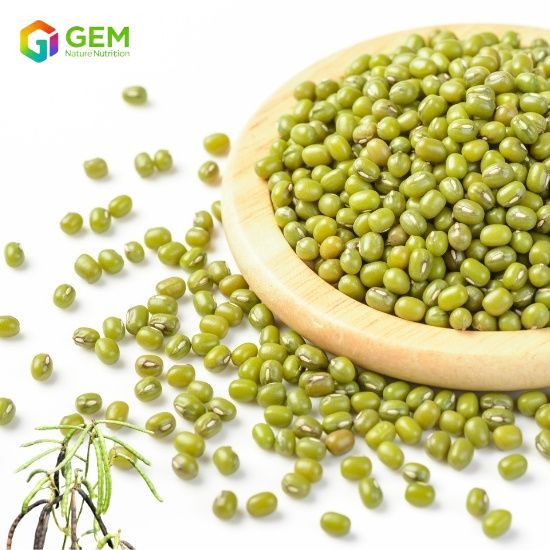
Mung bean protein
Mung bean protein bulk ingredient for B2B formulation sourcing. Specification: 80% protein; 100 mesh. Request a batch COA and documentation from GEM.
| 规格名称 | 规格值 |
|---|---|
| Appearance | Light yellow fine powder |
| Protein Content | 80% |
| Mesh | 100 mesh |
| Shelf Life | 24 months |
| Main Function | Muscle and tissue health support |
Mung Bean Protein
Mung Bean Protein is a plant-based protein isolate extracted from Vigna radiata (mung bean), a traditional Asian legume valued for clean-label nutrition and a naturally mild flavor. GEM supplies 80% protein at 100 mesh for sports nutrition, meat alternatives, plant-based beverages, and hypoallergenic protein product lines.
As plant-based foods move from niche to mainstream, formulators are looking beyond the usual soy and pea isolates for an ingredient that delivers both functionality and a clean sourcing story. Mung bean protein powder fits that brief unusually well. It is naturally free from the most common allergens linked to dairy and soy, carries a mild, fresh-bean flavor that is far easier to formulate with than the grassy notes of many legume proteins, and comes from a crop with deep roots in Asian cuisine. For brands building vegetarian eggs, plant-based meat, ready-to-drink beverages, bakery, or protein supplements, mung bean protein offers a versatile base that pairs cleanly with other plant proteins such as Pea Protein Powder and Rice Protein.
This page explains what mung bean protein is, how it is produced, its amino-acid and nutrition profile, its functional properties in food systems, how it compares on flavor, where it works best in finished products, and the practical details B2B buyers need — from specifications and certifications to sampling, private label, and order volumes.
Mung Bean Protein Quick View
Specification: 80%
Mesh: 100 mesh
Certificate: ISO22000; ISO14001; ISO9001; FSSC22000; BRC; Kosher; Halal
Packing: 25 kg/drum, 2 layers PE bags inside
Annual Production Capacity: 100+ tons
Shelf Life: 24 months
Features: Fresh bean flavor; Vegan; Natural plant protein; Zero-waste crop utilization
Application: Sports nutrition; Protein bars; Meat alternatives; Food & beverages; Dietary supplements
Last updated: June 21, 2026
What is Mung Bean Protein?
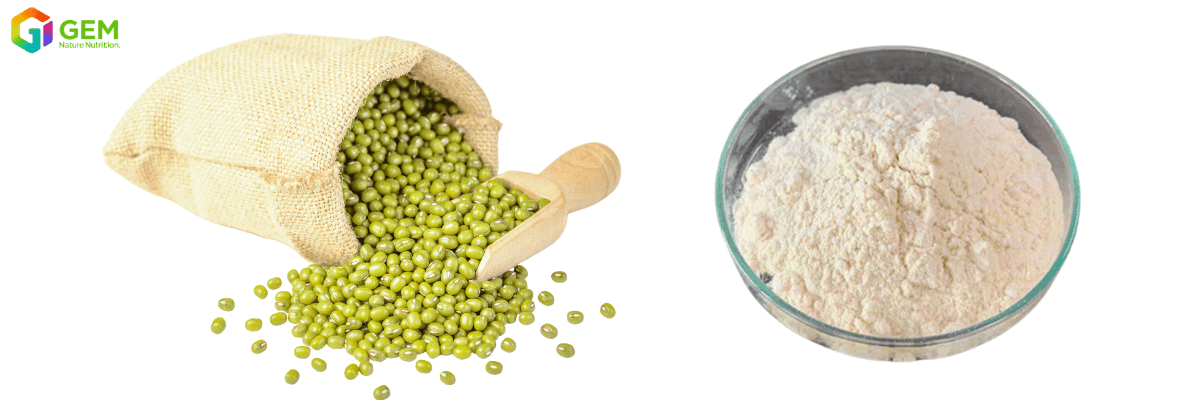
Mung bean protein powder is a kind of plant-based protein extracted from the Vigna radiata bean, which is also a staple of Asian cuisine. Mung bean protein has emerged as a high-performance, sustainable alternative to soy, pea, and whey proteins.
The mung bean itself is a small, green legume cultivated across China, India, and Southeast Asia for thousands of years. Although it is best known in everyday cooking as the base for sweet soups, sprouts, and glass noodles, the seed is also remarkably protein-dense. Modern wet-processing methods separate that protein from starch and fiber to yield a light-yellow, high-purity powder. The result is a plant protein that carries the nutritional credibility of a heritage crop while meeting the functional demands of contemporary food manufacturing.
A Heritage of Health & Wellness
In traditional Asian food culture, the mung bean is often valued for its light, cooling, and wholesome character. It is widely recognized in everyday use for qualities such as a refreshing, clean taste and a long history in soothing sweet soups and beverages.
These traditional associations are part of why mung bean translates so naturally into modern wellness products. Rather than positioning the ingredient as a medicine, brands typically build on this cultural familiarity to communicate a light, clean, and naturally wholesome identity. For product developers, that means mung bean protein arrives with a story consumers already understand — an advantage that soy and pea proteins have had to build from scratch in Western markets.
Sustainable & Efficient Production
The production of mung bean protein is a model of full-crop utilization. By processing the whole bean, we create a range of high-value by-products, ensuring zero waste: Mung Bean Protein, Mung Bean Starch, Mung Bean Vermicelli.
This "zero-waste crop utilization" approach matters on two fronts. First, it improves the economics of the supply chain: every fraction of the bean becomes a saleable ingredient rather than a discarded byproduct. Second, it strengthens a brand's sustainability narrative. When a single crop yields protein, starch, and vermicelli, the environmental footprint per kilogram of finished protein drops — a point that resonates with buyers building ESG or carbon-reduction claims into their sourcing decisions.
How Mung Bean Protein Powder Is Produced
Mung bean protein is made through a wet separation process (protein isolation) that isolates the protein fraction from starch and insoluble fiber. The steps are engineered to protect protein quality while keeping the final powder light in color and mild in flavor.
The process line is:
Mung Bean-Screening-Dehulling-Milling-Soaking-Separating-Sterilization-Neutralization-Centrifugation-Washing-Centrifugation-Precipitation-Flash Evaporation-Spray Drying-Packing-Metal Detecting-Mung Bean Protein.
Each stage contributes something specific to the final specification:
- Screening removes foreign material and off-size beans so only clean raw material enters production.
- Dehulling strips the seed coat, which is the main source of color and "beany" flavor in legumes — a critical step for the fresh, neutral profile buyers expect.
- Milling grinds the dehulled cotyledons into a fine flour that can be efficiently wetted and separated.
- Soaking hydrates the flour and begins to solubilize the protein.
- Separating and centrifugation remove starch and insoluble fiber from the protein-rich liquid.
- Sterilization and neutralization control microbiology and bring the system to the right pH for precipitation.
- Washing and a second centrifugation purify the protein curd.
- Precipitation (typically near the protein's isoelectric point) causes the protein to drop out of solution as a concentrated mass.
- Flash evaporation removes excess water, and spray drying turns the concentrate into a free-flowing powder.
- Packing and metal detecting finalize the product to food-safety standards.
Because the process is aqueous rather than solvent-based, the powder stays close to the natural composition of the bean while reaching a reliable 80% protein concentration at 100 mesh. That particle size blends smoothly into beverages and bars without a gritty mouthfeel.
Mung Bean Protein 80% Specification:
The specification below defines the commercial grade GEM supplies. Every batch is tested against these limits before release, and a Certificate of Analysis (COA) is issued per shipment.
| Test Item | Specification | Test Method |
|---|---|---|
| Appearance | Light yellow powder | Q/YST 0012S-2020 |
| Protein(dry basis),g/100g | ≥80% | GB 5009.5-2016 |
| Moisture, g/100g | ≤7% | GB 5009.3-2016 |
| Ash(dry basis),g/100g | ≤5% | GB 5009.4-2016 |
| Crude fat | ≤5% | GB 5009.6-2016 |
| Soy | <20ppm | Elisa |
| Lead,mg/kg | ≤0.5mg/kg | BS EN ISO 17294-2 2016 mod |
| Arsenic,mg/kg | ≤0.5mg/kg | BS EN ISO 17294-2 2016 mod |
| Mercury,mg/kg | ≤0.2mg/kg | BS EN ISO 17294-2 2016 mod |
| Cadmium,mg/kg | ≤0.5mg/kg | BS EN ISO 17294-2 2016 mod |
| Total Plate Count | ≤30000CFU/g | GB 4789.2-2022 |
| Yeast & Molds | ≤100CFU/g | GB 4789.15-2016 |
| Coliforms | ≤90CFU/g | GB 4789.3-2016 |
| Salmonella | Negative | GB 4789.4-2016 |
| E. Coli | Negative | GB 4789.38-2012 |
| Staphylococcus aureus | Negative | GB4789.10-2016 |
A few points stand out for formulators. The soy limit of <20 ppm confirms the product is suitable for soy-free positioning, an increasingly important claim as soy allergies and GMO concerns shape purchasing decisions. The heavy-metal limits (lead, arsenic, mercury, cadmium) align with international food-safety expectations, and the microbiological negatives for Salmonella, E. coli, and Staphylococcus aureus support clean-label and export documentation. Moisture at ≤7% and ash at ≤5% help protect shelf stability across the 24-month shelf life.
Understanding Protein Grades
GEM's commercial mung bean protein is supplied at 80% protein on a dry basis — the global industry-standard concentration for legume isolates and the workhorse grade for food and beverage applications. For buyers comparing options, it is worth noting that some legumes are also offered in higher concentrations; for example, Pea Protein Powder is available at 80%, 85%, and 90% food grade. Mung bean protein at 80% already delivers a high protein-to-calorie ratio and a clean, light-yellow powder suitable for most finished formats. If your application demands an even higher protein density, discuss custom grading with our technical team during sampling.
Amino Acid Profile & Digestibility
Protein quality is not only about the percentage on the label — it is about which amino acids are present and how well the body can use them. Mung bean protein delivers a well-rounded profile with several standout values.
The headline is leucine at 7.27 g/100g. Leucine is the branched-chain amino acid (BCAA) most directly tied to stimulating muscle protein synthesis, which is why it matters for sports nutrition and recovery products. The profile is also rich in glutamic acid (14.9 g/100g) and aspartic acid (10.1 g/100g), which contribute to the protein's functional behavior and savory (umami) contribution in foods. Lysine (5.74 g/100g) is notable because it is the amino acid most often limiting in cereal grains — which is exactly why mung bean protein complements rice- and wheat-based systems so well.
One honest limitation is methionine at 1.08 g/100g. Methionine is the sulfur-containing amino acid typically lowest in legumes. The practical fix is blending: pairing mung bean protein with a cereal or seed protein such as Rice Protein or Chickpea Protein balances the essential-amino-acid spectrum and lifts the overall biological value of the blend.
Amino Acid Testing Data
| Item | Results | Unit |
|---|---|---|
| Alanine | 3.27 | g/100g |
| Arginine | 5.75 | g/100g |
| Aspartic acid | 10.1 | g/100g |
| Glutamic acid | 14.9 | g/100g |
| Glycine | 2.73 | g/100g |
| Histidine | 2.38 | g/100g |
| Hydroxyproline | <0.05 | g/100g |
| Isoleucine | 3.77 | g/100g |
| Leucine | 7.27 | g/100g |
| Lysine | 5.74 | g/100g |
| Ornithine | <0.05 | g/100g |
| Phenylalanine | 5.67 | g/100g |
| Proline | 3.31 | g/100g |
| Serine | 4.32 | g/100g |
| Threonine | 2.25 | g/100g |
| Tyrosine | 2.57 | g/100g |
| Valine | 4.48 | g/100g |
| Cystine+Cystein | 0.35 | g/100g |
| Tryptophan | 0.609 | g/100g |
| Methionine | 1.08 | g/100g |
Test Method: ISO 13903:2005; EU 152/2009 (F)
Nutrition Data
The nutrition table below summarizes the macros and energy of the finished powder. With 84.8 g of protein per 100 g, essentially zero fat, and 7.6 g of carbohydrate, mung bean protein is a concentrated protein source that adds minimal fat or sugar to a formulation. The sodium level (892 mg/100g) is moderate and should be accounted for in low-sodium product designs.
| Nutritional information | Results | Unit |
|---|---|---|
| Energy | 1571 | kJ/100g |
| Total Carbohydrates | 7.6 | g/100g |
| Protein | 84.8 | g/100g |
| Fat | 0 | g/100g |
| Na(Sodium) | 892 | mg/100g |
Remark: Amino acid and nutrition values are typical, not to be construed as specifications.
The zero-fat figure is useful for lean and weight-management formats, while the high protein-to-calorie ratio supports "high-protein" and "protein-forward" label claims. As the remark states, these amino-acid and nutrition values are typical and are not specifications — the binding limits are the specification table above.
Functional Properties: Emulsification, Gelation & Water Binding
Mung bean protein is valued by formulators not only for its nutrition but for a set of physical functions that shape texture, stability, and mouthfeel in finished foods. Like other legume proteins, it is surface-active and forms structured networks under heat and shear. These properties are studied and used in food systems; any final-product claim should be validated against the buyer's local regulations.
Emulsification
Mung bean protein acts as a natural emulsifier, helping to stabilize oil-in-water systems by adsorbing at the oil–water interface. This is useful in plant-based milk, protein beverages, salad dressings, and emulsified meat systems, where it supports a stable, uniform texture. Its fresh, mild profile means the emulsion carries little of the off-note that can accompany stronger-flavored legume proteins.
Gelation
Under heat, mung bean protein forms a cohesive protein gel network. This heat-induced gelation is the mechanism behind its use in meat analogues, vegetarian egg structures, and tofu-like products, where a firm yet tender network is needed to mimic the bite of animal protein. Gel strength and texture can be tuned with pH, salt, and hydrocolloid partners during formulation.
Water & Fat Binding
The protein binds both water and fat, which improves yield and juiciness in emulsified and restructured meat products and helps retain moisture in bakery and extruded systems. Strong water binding also contributes to a softer crumb and extended perceived freshness in protein-fortified baked goods.
Foaming
Mung bean protein whips into a stable foam, a property that underpins its classic role in vegetarian egg-white alternatives and aerated products such as meringue-style toppings and light vegan desserts. The foaming behavior pairs naturally with the crop's established use in egg-replacement systems.
Clean, Neutral Flavor Advantage vs Pea and Soy
Flavor is where mung bean protein quietly wins. The "Features" line on the spec sheet lists Fresh bean flavor, and that single attribute changes how easy the ingredient is to work with.
Soy protein often carries a bitter, astringent note that requires heavy masking in beverages. Pea protein, while improved by modern processing, can still read as earthy or "beany," especially at higher use rates. Mung bean protein's fresh, light character lets it sit comfortably in delicate applications — clear beverages, dairy-alternative drinks, and mildly flavored snacks — without dominating the sensory profile.
That mildness is a direct result of the dehulling step in production. Removing the seed coat strips away much of the pigment and the compounds responsible for off-notes, leaving a light-yellow powder that behaves more like a neutral carrier than a strongly flavored legume. For brands targeting Asian-inspired or clean-tasting products, this is a meaningful formulation advantage. When a blander base is needed, mung bean protein can also be blended with a neutral cereal protein such as Rice Protein to further soften the sensory signature.
Application of Mung Bean Protein Products:
Mung bean protein's clean flavor and functional protein content open a wide range of finished-product formats. The core application fields are outlined below, each with concrete use cases.
1. Plant-based meat products
Mung bean protein can be added into vegetarian eggs, vegetarian steaks, vegetarian ground beef, vegetarian chicken, and more.
Beyond those examples, mung bean protein contributes protein and structure to plant-based burgers, nuggets, and meatballs. Its mild flavor means it does not fight the savory seasoning systems used in meat analogues, and its protein network helps bind formulated products during cooking. Its foaming and gelation properties also make it a natural fit for vegetarian egg-white alternatives.
2. Dairy beverages and plant-based milk
It is a very good choice to build a formula with mung bean protein, which makes final products more nutritional.
In ready-to-drink protein beverages and plant-based milk, mung bean protein raises the protein content while keeping the flavor light. Its fresh profile is especially suited to lightly sweetened or unsweetened drinks where a heavy legume note would be unwelcome. Its emulsifying properties help stabilize the beverage system.
3. Cooked meat products
Mung bean protein can also be incorporated into cooked meat products, where it functions as a protein enhancer and texture modifier. In emulsified or restructured meat systems, plant protein can improve water binding and yield, supporting both label and cost objectives when used at appropriate levels.
4. Protein supplement ingredients
Just like pea protein and rice protein, mung bean protein has become increasingly popular in the protein supplement market.
Powdered blends, capsules, and bars all benefit from a plant protein that is allergen-friendly and easy to digest. Mung bean protein is increasingly specified in multi-source vegan protein blends, where it balances the amino-acid gaps of other plant proteins. For blended systems, Fava Bean Protein and Hemp Protein Powder are additional soy-free options worth evaluating alongside mung bean.
5. Bakery & extruded snacks
Mung bean protein fortifies bread, muffins, cookies, and extruded snacks with added protein while its water-binding properties help retain moisture and soften crumb structure. Because the powder is mild in flavor, it does not interfere with delicate bakery notes, and its clean-label, vegan, soy-free positioning supports "high-protein" and "plant-based" claims on pack.
6. Asian-inspired functional foods
Mung bean is already familiar to consumers across Asia in sweet soups, sprouts, and glass noodles, so mung bean protein slots naturally into Asian-inspired functional foods — from protein-enriched desserts and beverages to vermicelli and noodle systems built on the same crop. This cultural familiarity gives brands a ready-made, trustworthy story for clean-label launch.
Formulation Tips for Mung Bean Protein Powder
Getting the most from mung bean protein is largely about where and how you use it. A few practical pointers help new formulators succeed on the first batch.
For meat-alternative and egg-replacement systems, mung bean protein is often used alongside starch and hydrocolloids to build the fibrous or cohesive texture consumers expect. Small pilot batches are the best way to dial in the exact ratio for your matrix.
Market & Regulatory Context for Plant Protein
Demand for plant protein continues to broaden beyond early adopters. Clean-label expectations, allergen awareness, and interest in sustainable sourcing all push formulators toward proteins that are easy to explain on a label — and mung bean protein fits that need.
From a regulatory standpoint, the certification package is what unlocks international trade. GEM's mung bean protein carries ISO22000, ISO14001, ISO9001, FSSC22000, BRC, Kosher, and Halal certifications, which support export documentation for markets in Europe, North America, and beyond. Kosher and Halal certificates in particular open halal and kosher product lines without a separate ingredient qualification step.
Mung bean processing follows the same full-crop logic used across China's integrated legume facilities, which is why co-products like mung bean starch and vermicelli exist alongside the protein. For brands comparing soy-free legume options, Chickpea Protein and Fava Bean Protein are worth evaluating alongside mung bean, each with its own flavor and functional profile.
B2B Buying & MOQ Guidance for Mung Bean Protein
Buying mung bean protein at scale is straightforward when you know what to request. GEM's annual production capacity for this grade is 100+ tons, supplied at 80% protein, 100 mesh, in 25 kg drums with two layers of PE bags inside, and protected by a 24-month shelf life.
For a new project, the typical workflow is:
- Share your application and target specs. Tell us whether the protein goes into beverages, meat analogues, supplements, or baked goods, and confirm the protein concentration and any residue or allergen limits you require.
- Request samples. Pilot quantities let your R&D team validate flavor, solubility, and performance in your own matrix before committing to bulk.
- Confirm documentation. We provide a Specification Sheet, COA, and MSDS, plus Kosher, Halal, and ISO/FSSC certificates on qualified commercial orders.
- Agree on volume and lead time. Minimum order quantities are confirmed per inquiry based on current capacity; multi-ingredient programs can often be consolidated with other GEM plant proteins such as Pea Protein Powder and Rice Protein to simplify logistics.
Because mung bean protein is part of a zero-waste cropping model, buyers also gain a credible sustainability story to share with their own customers — an increasingly decisive factor in procurement reviews.
Private Label & ODM Services
GEM supports private label and ODM programs for mung bean protein. We can supply the standard 80% / 100 mesh grade under your brand, or develop a custom blend that combines mung bean protein with other plant proteins — for example Pea Protein Powder, Rice Protein, Chickpea Protein, or Hemp Protein Powder — to hit a specific amino-acid target, flavor, or price point. Private label and ODM engagements typically include the full document package (Specification Sheet, COA, MSDS, and certificates), co-packed 25 kg drums, and pilot-scale support to validate the blend in your matrix. Minimum volumes and lead times are confirmed per project.
Frequently Asked Questions
1. What makes mung bean protein different from pea protein?
Mung bean protein offers a distinct amino acid profile and traditional wellness positioning, with GEM's whole-bean process also yielding starch and vermicelli co-products. Its fresh, mild flavor is generally easier to formulate with than the earthier notes of pea protein, while both remain soy-free and allergen-friendly plant proteins.
2. What protein concentration does GEM supply?
Standard grade: ≥80% protein on dry basis at 100 mesh. This 80% specification is the commercial workhorse for food applications and matches the global plant-protein norm for isolate-style powders.
3. Is mung bean protein hypoallergenic?
Mung bean is a legume alternative to soy and dairy, suitable for many allergen-conscious and vegan formulations — confirm full allergen testing for your label. The specification also limits soy to <20 ppm, supporting soy-free positioning where required.
4. What co-products come from mung bean processing?
GEM's full-crop model produces mung bean protein, starch, and vermicelli — a zero-waste approach for sustainable sourcing stories. Each fraction is a separate saleable ingredient, improving both economics and environmental footprint.
5. What applications suit mung bean protein?
Sports nutrition, protein bars, meat alternatives, bakery, Asian-inspired functional foods, and dairy-alternative beverages where clean plant protein is required. It also fits cooked meat products and blended supplement powders.
6. What documents are provided for B2B orders?
Specification Sheet, COA, MSDS, plus Kosher, Halal, and ISO/FSSC certificates upon request. These documents support import clearance, label verification, and customer audits.
7. How does mung bean protein compare to soy protein?
Mung bean protein is naturally soy-free and carries a fresher, milder flavor than soy, which often needs stronger masking. It is also free from dairy, making it suitable for vegan and allergen-conscious products where soy is excluded by formulation or labeling choice.
8. Is mung bean protein a complete protein?
It contains all the essential amino acids and is notably rich in leucine, lysine, and glutamic acid. Like most legumes it is lower in methionine; blending with a cereal protein such as rice protein balances the profile for a more complete essential-amino-acid spectrum.
9. Can mung bean protein be used in clear beverages?
Yes. At 100 mesh with a light-yellow appearance and fresh flavor, it disperses well in beverages, especially when formulated away from its isoelectric point. Typical use rates of 5–15% deliver a protein claim without dominating taste or clarity.
10. What mesh size does GEM supply, and why does it matter?
GEM supplies mung bean protein at 100 mesh, a fine particle size that blends smoothly into powders, bars, and drinks while avoiding a gritty texture. Finer mesh generally improves dispersion and mouthfeel in beverage systems.
11. Is mung bean protein suitable for vegetarian and vegan products?
Yes. It is a vegan, natural plant protein with no animal-derived components, making it appropriate for vegetarian, vegan, and plant-forward product lines across food, beverage, and supplement categories.
12. What is the minimum order quantity and lead time for bulk orders?
MOQ and lead time are confirmed per inquiry based on application, documentation needs, and current capacity (100+ tons annually). We recommend starting with samples to validate performance, then scaling to drum quantities with the full certificate package. Private label and ODM programs are scoped individually.
Further Reading
If you are comparing plant proteins or building a multi-ingredient formulation, these related GEM pages are useful next steps:
- Pea Protein Powder — a complementary legume protein with a strong BCAA profile
- Rice Protein — a methionine-rich partner for balanced blends
- Chickpea Protein — another soy-free legume alternative
- Fava Bean Protein — a further soy-free legume for blend comparison
- Hemp Protein Powder — a seed protein option for plant-based blends
For specifications, samples, and bulk pricing on mung bean protein, contact GEM to discuss your application.