
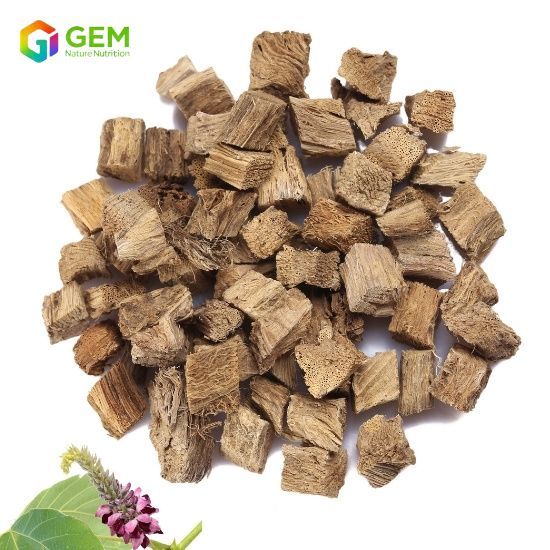
Pueraria Root Extract
Pueraria Root Extract bulk ingredient for B2B formulation sourcing. Request a specification sheet, batch COA, and documentation from GEM.
| 规格名称 | 规格值 |
|---|---|
| Part Used | Pueraria Root |
| Latin Name | Pueraria lobata (Willd.) Ohwi |
| Mesh | 80mesh |
| Solvents | Water and Ethanol |
| Shelf Life | 24 months |
Pueraria Root Extract
Last updated: June 21, 2026
Product Quick View
Specification:Puerarin 15%-98% HPLC Pueraria flavonoids 40%-80% UV/HPLC Pueraria Isoflavones 40%-80% UV/HPLC
Certificate: ISO9001; Kosher; Halal
Annual Production Capacity: More than 100 tons
Features: Non-GMO; Non-ETO; Non- Radiation; USP&EP Standard; Allergen (soy, gluten) free
Application: Pharmaceutical and medicine; Dietary supplement; Basic nutritional ingredients; Food additives and Cosmetics; Feed and pet ingredients. etc.
Packing: 25kg/drum, 2 layer PE bags inside.
What Is Pueraria Root Extract?
Pueraria root extract, also called Pueraria lobata, Kudzu Root Extract, Pueraria is also a traditional Chinese medicine. Kudzu Root Extract is a bioactive substance extracted from the dried roots of Pueraria lobata (Willd.) Ohwi or Pueraria thomsonii Benth., which are plants in the Pueraria genus of the Fabaceae (legume) family.
We just use water and ethanol to extract the roots, it contains many active ingredients, such as Isoflavones, Kudzu flavonoids, Puerarin, Daidzein+Daidzin, Genistein, etc.
The kudzu vine is a fast-growing, perennial legume native to East Asia, where its starchy root — known as ge gen in Chinese herbal practice and kuzu in Japanese tradition — has been consumed as both food and botanical material for more than two thousand years. The root is harvested, dried, and milled before solvent extraction, yielding a brown-yellow powder whose value is defined by its isoflavone profile rather than by a single molecule.
For modern formulators, Pueraria root extract sits at the intersection of two strong market themes: the global revival of traditional botanical ingredients and the rising consumer demand for plant-derived isoflavone formulations. Brands frequently pair it with other legume-family actives such as Soy Isoflavones or Red Clover Extract to build isoflavone-forward product lines.
Active Compounds — Puerarin, Daidzein, Genistein
The functional identity of Pueraria root extract comes from its family of isoflavones, a class of plant polyphenols structurally related to estrogen that are found abundantly in legumes. The three compounds most often discussed in formulation and quality work are puerarin, daidzein, and genistein.
Puerarin (CAS 3681-99-0; molecular formula C21H20O9) is the principal C-glycoside isoflavone in kudzu root and the compound most manufacturers standardize against. Because puerarin is water-soluble and present at meaningful concentrations only in Pueraria species, it serves as both the marker compound and the quality signature of a genuine kudzu extract.
Daidzein (CAS 486-66-8; C15H10O4) and genistein (CAS 446-72-0; C15H10O5) are aglycone isoflavones that occur alongside daidzin (the glycoside form of daidzein) in the root. Together with puerarin they account for the bulk of the standardized isoflavone and flavonoid content shown on a typical specification sheet.
From a mode-of-action perspective, the isoflavones in Pueraria lobata root extract are studied for several supporting roles that formulators can reference in structure/function positioning:
These mechanisms are best communicated as supports and helps maintain — never as treatments. For a deeper dive into another traditional botanical with a comparable heritage story, see our feature on Chinese Magic Herb Ginseng.
Product Specification (40% Isoflavones Grade)
| Test Item | Specification | Test Methods |
|---|---|---|
| Appearance | Brown yellow powder | Visual |
| Odor&Taste | Strong&Characteristic | Organoleptic |
| Extraction Rate | 10% | Process Monitoring |
| Marker Compound | Isoflavones≥40.0% | HPLC |
| Puerarin | HPLC | |
| DDG | HPLC | |
| MOP | HPLC | |
| Daidzein+Daidzin | HPLC | |
| Genistein | HPLC | |
| Identification | Must positive | TLC |
| Loss on Drying(5h at 105℃) | ≤ 5.0% | GB 5009.3 |
| Ash(3h at 600℃) | ≤ 5.0% | GB 5009.4 |
| Pesticide | 666≤0.1mg/kg | GB/T 5009.19-2008 |
| DDT≤0.1mg/kg | GB/T 5009.19-2008 | |
| Total Heavy Metals | ≤10.0mg/kg | GB 5009.74-2014 |
| Lead | ≤1.5mg/kg | GB 5009.12-2017 |
| Arsenic | ≤1.0mg/kg | GB 5009.11-2014 |
| Mercury | ≤0.3mg/kg | GB 5009.17-2014 |
| Cadmium | ≤0.3mg/kg | GB 5009.123-2014 |
| Total Plate Count | ≤1000CFU/g | GB 4789.2-2010 |
| Yeasts&Molds | ≤100CFU/g | GB 4789.15-2016 |
| Salmonella | Negative | GB 4789.4-2016 |
| E-Coli | Negative | GB/T4789.3-2003 |
| Staphylococcus aureus | Negative | GB 4789.10-2016 |
The 40% isoflavones grade is our most commonly requested commercial specification for beverage and tablet applications, because it balances cost with a meaningful, HPLC-verified isoflavone content. GEM can also supply higher puerarin concentrations (up to 98% HPLC) for brands that want a puerarin-led positioning rather than a broad isoflavone profile.
Production Process
Raw material selecting-Pretreatment-Concentration-Drying and crushing-Testing and packing.
Behind that compact flow sits a disciplined quality system. GEM begins with raw material selecting — only dried Pueraria lobata roots that pass identity and contaminant screening enter production. Pretreatment cleans, slices, and mills the root to uniform particle size for efficient extraction. A water-and-ethanol extraction followed by Concentration removes solvent and narrows the actives into a liquid concentrate.
Drying and crushing converts the concentrate into the characteristic brown-yellow powder, after which Testing and packing confirms identity (TLC), assays the marker compounds by HPLC, and verifies microbial and heavy-metal limits against the GB methods listed in the specification table. Only material that passes every checkpoint is released for 25kg/drum packing with double PE liners.
Pueraria Extract Target Audience / Recommended For
The versatility of Pueraria root extract means a single bulk ingredient can serve several distinct consumer segments. The categories below map the extract's traditional use pattern onto modern product concepts.
1. Men's Health & Lifestyle Support
- Frequent Drinkers & Smokers: Ideal for individuals who consume alcohol or tobacco regularly.
- Alcohol Metabolism Recovery: Specifically formulated for those suffering from alcohol-induced toxicity (acetaldehyde poisoning) or hangovers.
A growing category of "social wellness" products — drink mixes, effervescent tablets, and morning-after capsules — uses kudzu extract for its traditional association with alcohol metabolism support. Formulators frequently pair it with complementary isoflavone botanicals such as Soy Isoflavones and Red Clover Extract to build isoflavone-forward after-drink and women's-health lines.
2. Liver Protection & Repair
- Cellular Repair: Supports the recovery and regeneration of damaged liver cells.
- Neurological Support: Often used by those suffering from chronic migraines or vascular tension.
- Menopausal Support: Provides natural relief for women undergoing menopause.
Isoflavones are plant-derived phytoestrogens, which is why kudzu extract is a popular ingredient in women's midlife and menopausal support formulas. For brands comparing isoflavone sources, Red Clover Extract offers a complementary profile worth reviewing.
5. Beauty & Healthy Aging
- Complexion Vitality: Women seeking to improve skin radiance and "beautify from within" (Skin Rejuvenation).
- Geriatric Nutrition: An excellent daily dietary regulator for middle-aged and elderly populations.
Formulation Tips for B2B Formulators
Pueraria root extract is straightforward to work with, but a few practical notes help avoid rework on the production line.
Solubility and color. The 40% isoflavones grade is a brown-yellow powder with a strong, characteristic odor and taste. It disperses in water but will tint the final product; in clear beverages, expect a noticeable amber hue. Mask the taste with fruit concentrates, citrus acids, or a flavored stick-pack format. For beverage systems, formulators commonly combine the extract with natural sweeteners such as Stevia and bulking fibers such as Inulin to round the flavor and restore the mouthfeel that sugar reduction removes.
Dosing guidance (formulation support only). Finished products commonly deliver puerarin-equivalent amounts in the low-to-mid hundreds of milligrams per serving, depending on the standardized grade chosen. Because regulatory limits differ by market, GEM provides specification data for your formulation team but does not set dosage or make medical claims.
Blending strategy. Kudzu extract pairs well with complementary botanicals: Reishi Mushroom Extract for wellness-oriented stacks, Soy Isoflavones or Red Clover Extract for isoflavone-forward women's-health lines, and gentle botanicals for relaxation or sleep-adjacent formulas.
Stability. Keep the powder dry. Isoflavones are stable under normal storage, but moisture pickup can affect flow and assay over time. The double PE liner in our 25kg drum is designed for this; reseal promptly after partial use.
Grade selection. Choose the 40% isoflavones grade for cost-sensitive beverage and tablet lines, or a higher puerarin concentration (up to 98% HPLC) when the label calls out puerarin as the hero compound.
Quality Control & Certifications
GEM's Pueraria root extract is built on a clean, defensible specification profile. The key feature claims are:
Certifications held include ISO9001, Kosher, and Halal, supporting entry into diverse geographic and faith-based markets. Every lot is released against the HPLC and microbial limits in the specification table, and GEM can provide a Specification Sheet, Certificate of Analysis (COA), and MSDS on request for qualified commercial orders.
Market & Regulatory Context
The global botanical extract market continues to expand as consumers seek plant-based, traditional, and "clean" ingredients with documented heritage. Kudzu (Pueraria lobata) root sits in a favorable position: it is a well-established traditional food and herbal material in Asia, and its isoflavone content aligns with the broader phytoestrogen and women's-health trend that also drives demand for Soy Isoflavones and Red Clover Extract.
Regulatory status varies by region. In many markets kudzu root is recognized as a traditional food or botanical ingredient; in others it may be regulated as a novel food, a dietary supplement ingredient, or a traditional herbal product, each with its own notification or registration path. GEM supplies ingredient-level documentation to support your submissions, but market authorization and labeling compliance remain the responsibility of the brand and its local regulatory counsel.
Sustainability and traceability are also rising purchase criteria. Because kudzu is a fast-growing vine, responsibly cultivated root is a renewable botanical resource — a point worth highlighting in B2B and consumer storytelling alike.
B2B Buying & MOQ Guidance
GEM supplies Pueraria root extract in commercial volumes with flexible grade options to match your SKU roadmap.
- Packing: 25kg/drum, 2 layer PE bags inside — the standard export configuration for bulk botanical powders.
- Annual production capacity: More than 100 tons, supporting both trial and recurring large-volume orders.
- Minimum order quantity: Contact GEM for current MOQ by grade; sample quantities are available for formulation and lab verification before a full commitment.
- Customization: Puerarin strength (15%–98% HPLC), isoflavone/flavonoid ranges (40%–80%), and mesh size can be adjusted to your process.
- Documentation: Specification Sheet, COA, and MSDS provided on request; Kosher, Halal, and ISO certificates available for qualified orders.
- Lead time: Confirm at quotation; standard grades typically ship faster than fully custom specifications.
GEM's broader natural plant extract portfolio — including Red Ginseng Extract, Reishi Mushroom Extract, Inulin, and Stevia — lets brand owners consolidate sourcing and run combined ODM programs from one qualified manufacturer, reducing paperwork, lead time, and quality risk across multi-ingredient SKUs.
For product developers comparing botanical actives, our feature on Magical Red Clover Extract provides useful cross-reference material on a complementary isoflavone source.
Frequently Asked Questions
1. What is Pueraria root extract and where does it come from?
Pueraria root extract is a botanical ingredient made by extracting the dried roots of Pueraria lobata (Willd.) Ohwi or Pueraria thomsonii Benth., legumes in the Fabaceae family. The root — known as ge gen in traditional Chinese practice — is the source material, and water or ethanol is used to pull out the active isoflavones.
2. What is the difference between Pueraria root extract and kudzu root extract?
They refer to the same ingredient. "Kudzu" is the common English name for Pueraria lobata, so kudzu root extract, Pueraria root extract, and Pueraria lobata root extract are interchangeable terms for the extract described on this page.
3. What are the main active compounds in the extract?
The dominant actives are isoflavones: puerarin (the principal C-glycoside and marker compound), daidzein and daidzin, and genistein. Together they define the standardized puerarin, flavonoid, and isoflavone values on the specification sheet.
4. What puerarin strengths does GEM offer?
GEM supplies Pueraria root extract with Puerarin 15%–98% HPLC, alongside Pueraria flavonoids 40%–80% and Pueraria Isoflavones 40%–80% (UV/HPLC). The 40% isoflavones grade is the most common commercial choice; higher puerarin grades suit puerarin-led positioning.
5. Is Pueraria root extract Non-GMO and allergen free?
Yes. The product is Non-GMO, Non-ETO, and Non-Radiation, and is produced to be allergen (soy, gluten) free. It is also manufactured to USP & EP reference standards. Confirm specific documentation with your GEM account manager for your target market.
6. What certifications does GEM hold for this ingredient?
Current certificates include ISO9001, Kosher, and Halal. These support entry into mainstream, faith-based, and quality-system-driven B2B channels. COA and MSDS are available per lot on request.
7. What is a typical use level in beverages or supplements?
Finished products commonly use puerarin-equivalent amounts in the low-to-mid hundreds of milligrams per serving, scaled by the standardized grade. Exact use levels must follow the regulations of your target market; GEM supplies specification data but does not set dosage or make medical claims.
8. Can Pueraria root extract be combined with other botanical extracts?
Yes. It is frequently co-formulated with Reishi Mushroom Extract for wellness-oriented stacks and with Soy Isoflavones or Red Clover Extract for isoflavone-forward women's-health and menopausal formulas.
9. What is the packing and minimum order quantity?
Standard packing is 25kg/drum with two PE bags inside. Annual capacity exceeds 100 tons. Minimum order quantities vary by grade — contact GEM for the current MOQ and to request samples before a full production run.
10. How is the extract produced and what quality control applies?
Production follows raw material selecting, pretreatment, concentration, drying and crushing, then testing and packing. Each lot is identity-checked (TLC) and assayed for marker compounds by HPLC, with microbial and heavy-metal limits verified against the GB methods in the specification table.
11. How should the powder be stored and what is the shelf life?
Store in a cool, dry place, away from moisture and direct sunlight, with the drum resealed after partial use. Under these conditions the powder remains stable for routine commercial shelf-life expectations; confirm the exact shelf-life statement on your COA.