
Lion's Mane Mushroom Extract
Lion's Mane Mushroom Extract bulk ingredient for B2B formulation sourcing. Request a specification sheet, batch COA, and documentation from GEM.
| 规格名称 | 规格值 |
|---|---|
| Active Compounds | Polysaccharides&β-Glucans |
| Plants Part | Hericenones (Fruiting Body) & Erinacines (Mycelium) |
| Extract Solvents | Water |
| Solubility | Water-soluble available; Standard powder for capsules |
| Shelf Life | 24 months |
Lion's Mane Extract Quick View
Specification: 10%-50% polysaccharides by UV
Latin Name: Hericium erinaceus
Mesh: 80mesh
Certificate: ISO22000; ISO9001; HACCP; Kosher; Halal
Factory Annual Production Capacity: More than 100 tons
Features: Non-GMO; ETO free; Non-Radiation; USP&EP Standard; Allergen (soy, gluten) free.
Application: Pharmaceutical and medicine; Dietary supplement; Nutraceuticals; Basic nutritional ingredients; Food and beverages; Food additives and Cosmetics; Feed and pet industry. etc.
Formulation context: Mushroom-derived ingredient for food and supplement formulations; no cognitive, neurological, or gastrointestinal outcome is implied.
Packing: 25kg/drum, 2 layers PE bag inside.
Last updated: June 21, 2026
What Is Lion's Mane Extract?
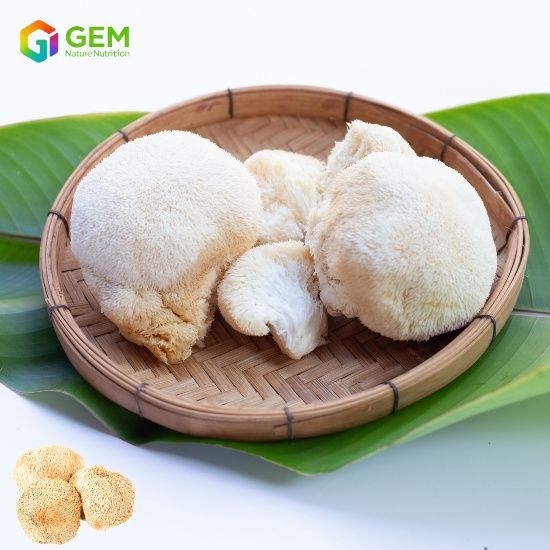
Lion's Mane Mushroom, scientifically known as Hericium erinaceus, is a prestigious functional mushroom with a dual legacy as both a culinary delicacy and a valued traditional botanical. In Western markets it is also called monkey head mushroom, bearded tooth fungus, satyr's beard, or pom-pom mushroom — names inspired by its cascading, hair-like spines rather than any connection to grains or common herbs.
Beyond its gourmet reputation for unique appearance and delicate aroma, it holds a long-standing place in Traditional Chinese Medicine (TCM) for its restorative qualities. Since ancient times it has been praised in the phrase "mountain treasure hericium erinaceus, sea bird's nest," and it is counted among the four famous traditional dishes for its excellent color, aroma, and taste. Today that heritage meets modern nutraceutical demand, and Lion's Mane Extract has become a staple in nootropic and wellness product lines as the market for lions mane supplement products keeps expanding.
GEM Lion's Mane Extract is produced by concentrating the mushroom to preserve its vital bioactive compounds:
Because the active profile differs between the fruiting body and the mycelium, GEM offers both source grades so formulators can match the ingredient to the intended product positioning. The sourcing section below provides the full comparison between the two raw-material streams.
Source & Botany of Hericium erinaceus
Hericium erinaceus is a white-rot basidiomycete fungus belonging to the family Hericiaceae. Unlike gilled mushrooms, its fruiting body is a rounded, cushion-like mass covered in long, hanging spine-like teeth that can reach several centimeters, giving the mushroom its characteristic "lion's mane" or "monkey head" look. The spines hang downward in dense clusters, and the fresh mushroom is white to cream in color before drying to the brown fine powder seen in the finished extract.
In the wild, Lion's Mane is a saprophyte and weak parasite that colonizes dead or dying hardwood — most often oak, beech, walnut, and birch — in temperate broadleaf forests across North America, Europe, and East Asia. It fruits in late summer through autumn on fallen trunks and standing dead trees, where the clean white clusters are easy to spot against the darker bark.
Commercial supply today is overwhelmingly cultivated rather than wild-harvested. GEM's raw material is grown on sterilized hardwood-sawdust substrate under controlled environmental conditions, which delivers consistent polysaccharide content, removes dependence on seasonal foraging, and supports the factory's annual capacity of more than 100 tons. Cultivation also makes it practical to separate two distinct raw-material streams that matter for every Lion's Mane Extract buyer:
- Fruiting body grade — the mature mushroom cap and spines, richest in meroterpenoid hericenones.
- Mycelium grade — the vegetative network grown on grain or in liquid fermentation, richest in erinacines.
This botanical distinction is the single most important sourcing decision for a formulator, because the two grades carry different compound classes, different price points, and different ideal applications. The table directly below summarizes how they compare.
Fruiting Body vs. Mycelium Extract
A growing number of brands now ask for full-spectrum material that blends fruiting body (β-glucans, hericenones) with mycelium (erinacines) in a single extract, broadening the compound coverage. GEM can supply fruiting body, mycelium, or combined grades to match a label claim, and the choice should be documented on the certificate of analysis so downstream brands can substantiate their marketing.
Lion's Mane Extract Specification
The specification table below defines the standard quality parameters for GEM Lion's Mane Mushroom Extract. Every batch is released against these limits before packing, and the values are verified by the listed test methods.
| Test Item | Specification | Test Method |
|---|---|---|
| Assay(Polysaccharides) | ≥10% | UV |
| Appearance | brown Fine Powder | Visual |
| Odor | Characteristic | Organoleptic |
| Taste | Characteristic | Organoleptic |
| Mesh size | 100% pass 80 mesh | 80mesh screen |
| Loss on Drying | ≥7% | 5g/100°C/2.5hrs |
| Ash | ≥9% | 2g/525°C/3hrs |
| As | ≤1.0mg/kg | AAS |
| Pb | ≤2.0mg/kg | AAS |
| Hg | ≤0.2mg/kg | AAS |
| Cd | ≤1.0mg/kg | AAS |
| Pesticides residues | Meet USP or EP standard | GC |
| Total plate count | ≤10000CFU/g | CP2015 |
| Yeast & Mould | ≤100CFU/g | CP2015 |
| Salmonella | Negative | CP2015 |
| E.Coli | Negative | CP2015 |
| Staphylococcus | Negative | CP2015 |
Remark: Any special quality request please email to us.
The 10–50% polysaccharides by UV assay range is the most commonly requested standardization, and GEM can adjust the concentration within this band to suit a finished-product formula. Buyers should always confirm whether a quote is based on fruiting body or mycelium source, since that affects both price and the hericenone/erinacine profile described in the sourcing section. Mesh size is standardized at 100% pass 80 mesh for smooth blending into powders and capsules, and the brown fine powder appearance is verified visually on every lot.
Application Fields
Lion's Mane Extract fits a wide range of finished-product categories. The table below maps common application fields to formulation details.
| Application Field | Details |
|---|---|
| Dietary Supplements | Nootropic capsules and powders; combined with Reishi Mushroom Extract or Ginseng Extract |
| Mushroom wellness concepts | Formulas using fruiting body, mycelium, or combined grades with market-appropriate positioning |
| Food and beverage concepts | Powder blends formulated for sensory and processing requirements |
| Functional Foods | Mushroom coffee, hot chocolate, and beverage powder blends |
| Private Label & Contract Manufacturing | Fruiting body, mycelium, and full-spectrum grades for CMOs |
Production & Quality
Production Process
GEM's Lion's Mane Extract follows a controlled, batch-traceable process:
Selected lion's mane mushroom(Hericium Erinaceus)→Extraction→Concentration→Refining→Drying→Sieving&Mixing→Testing→Packing→Finished Products.
Each step is documented so a single batch can be traced from raw material to finished drum. The extraction and concentration stages are where polysaccharides and beta-glucans are consolidated into the standardized powder, and the sieving and mixing stage ensures uniform mesh and assay before the material is released for packing.
Quality Systems & Testing
GEM operates under ISO22000, ISO9001, and HACCP food-safety systems, and the extract is produced to USP & EP reference standards. Additional credentials include Kosher and Halal certification, and the material is Non-GMO, ETO free, Non-Radiation, and free from soy and gluten allergens — a combination that simplifies compliance for export-focused brands.
Every batch is tested for:
- Heavy metals — arsenic (As), lead (Pb), mercury (Hg), cadmium (Cd) by AAS.
- Pesticide residues — screened to USP or EP limits by GC.
- Microbiology — total plate count, yeast & mould, and absence of Salmonella, E. coli, and Staphylococcus per CP2015.
Documentation supplied on request includes the Specification Sheet, COA, and MSDS. ISO, HACCP, Kosher, and Halal certificates are available for qualified orders. For reference, Milk Thistle Extract follows the same rigorous documentation workflow for liver-support formulations, and Rice Protein is handled under the same quality system for food applications.
Packing & Storage
Packing: 25kg/drum, 2 layers PE bag inside.
For best stability, store the sealed drum in a cool, dry place away from direct sunlight and strong odors, and use the contents promptly after opening. Proper storage preserves the characteristic odor, free-flowing powder quality, and polysaccharide activity through the stated shelf life. Drums should be kept off the floor and away from damp walls in a low-humidity warehouse.
Frequently Asked Questions
2. What is the "full spectrum" trend?
Full-spectrum standardization combines fruiting body (β-glucans, hericenones) and mycelium (erinacines) in one extract for broader compound coverage.
3. What polysaccharide specification is most common?
10–50% polysaccharides by UV is the standard range. Confirm fruiting body vs. mycelium source when comparing quotes.
4. What quality tests does GEM conduct?
Pesticide residue analysis (Eurofins/USP standards) and heavy metal testing (Pb, As, Hg, Cd) on every batch.
5. What quality documents do you provide?
We provide Specification Sheet, COA, and MSDS upon request. ISO, HACCP, Kosher, and Halal certificates are available for qualified orders.
6. How should Lion's Mane Extract be stored?
Keep the sealed 25 kg drum in a cool, dry location away from direct light and moisture. Reseal tightly after each use and consume within the recommended shelf life to maintain the powder's free-flowing texture and bioactive polysaccharide content.
7. Is this ingredient suitable for vegan and allergen-free products?
Yes. Lion's Mane Extract is mushroom-derived and is produced free from soy and gluten allergens. It is also Non-GMO, ETO free, and Non-Radiation, which supports clean-label and vegan finished products.
8. Can Lion's Mane Extract be used in hot beverages?
Yes. It is commonly formulated into mushroom coffee, hot chocolate, and beverage powder blends thanks to its water-soluble polysaccharides and characteristic mild taste. Stability and taste should be verified in the specific matrix during product development.
9. What grades and concentrations does GEM offer?
GEM supplies Lion's Mane Extract at 10–50% polysaccharides by UV, in fruiting body, mycelium, or full-spectrum grades. Custom concentration within that band can be discussed for qualified orders.
11. What is the typical order size and lead time?
GEM's factory annual production capacity exceeds 100 tons, supporting both trial and bulk orders. Exact minimum order quantity and lead time depend on grade and specification; contact the sales team for a current quotation.
12. Do you offer organic certification?
The standard certificate package is ISO22000, ISO9001, HACCP, Kosher, and Halal. Organic certification can be evaluated for qualified, volume-backed orders — please discuss your requirements with the GEM team.
Further Reading
Explore related GEM ingredients and resources: